

Maddy summaryThis bill creates a new visa category for temporary workers in mobile entertainment, such as carnival and circus staff who travel across the U.S. It directly affects carnival operators, seasonal workers, and food/concession vendors at fairs and festivals. The key provision requires Department of Labor certification to ensure U.S. workers are not displaced and that hiring foreign workers won’t lower wages or working conditions. It defines "mobile entertainment provider" to include traveling carnivals, circuses, and affiliated seasonal services like food concessions at local events.
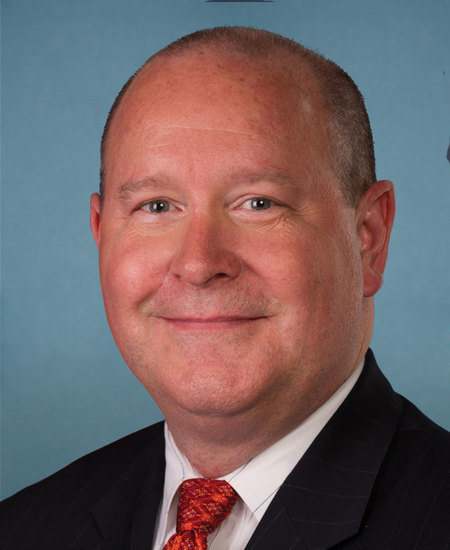
Rep. Larry Bucshon
Sponsored bills
Maddy summaryHCONRES 17 is a non-binding congressional resolution expressing that the U.S. Congress believes the federal government should not impose restrictions on crude oil or petroleum product exports. It cites the 2015 repeal of export bans, U.S. growth as a top oil producer, and 2019 status as a net petroleum exporter as reasons for this position. The resolution specifically urges against overly restrictive regulations on energy production and any export restrictions under the Energy Policy and Conservation Act. It does not change existing law but formally states congressional sentiment on this policy matter.
Maddy summaryHCONRES 14 is a concurrent resolution expressing Congress's disapproval of President Biden's 2021 revocation of the Presidential permit for the Keystone XL pipeline, which had been granted in 2019 to TransCanada (now TC Energy). The resolution has no legal effect but formally states the House's opposition to the executive action that canceled the pipeline project's permit. Introduced on February 7, 2023, it serves as a symbolic statement without altering any policy or affecting any entity.
This resolution supports the preservation of the stepped-up basis tax rule that allows recipients of inherited assets such as land, equipment, or buildings to adjust the cost basis of the assets to reflect their fair market value. The resolution opposes any efforts to impose new taxes on family farms or small businesses and recognizes the importance of generational transfers of farm and family-owned businesses.
Maddy summaryThis bill amends the Toxic Substances Control Act to address reviews of chemical substances critical to energy infrastructure. It requires the EPA Administrator to consider economic, societal, and environmental costs/benefits when reviewing such substances (defined by the Secretary of Energy as essential to U.S. energy systems with vulnerable supply chains), overriding a standard prohibition against these factors. If the EPA fails to act within the review timeline, companies can proceed with their planned actions without further EPA review, and the EPA is relieved of making that determination. The bill also mandates the EPA conduct a preliminary review and provide a draft determination before asking a company to withdraw a submission or pause the review period.
Maddy summaryHR 1155, the Keeping America’s Refineries Act, exempts certain petroleum refineries from a specific requirement under the Clean Air Act. It directly affects refineries operating alkylation units that use hydrofluoric acid (HF), specifically those with valid Clean Air Act permits or that meet American Petroleum Institute safety standards. The bill prohibits the EPA from mandating that these refineries assess "safer technology" or alternative risk management measures for HF use in their hazard assessments. This change removes a regulatory step requiring refineries to evaluate safer alternatives for HF acid, focusing solely on their existing operational compliance.
Maddy summaryHR 1140 allows the Environmental Protection Agency (EPA) Administrator to temporarily waive certain environmental requirements for facilities processing "critical energy resources" (like essential energy sources with vulnerable supply chains) during national or energy security emergencies. The waiver, valid for up to 90 days (renewable), permits increased processing or refining at designated facilities to meet urgent security needs, without violating other environmental laws during the waiver period. Facilities operating under this waiver are protected from legal penalties for actions that would otherwise conflict with other environmental regulations. The bill applies specifically to energy resources critical to U.S. energy systems, as defined by the Secretary of Energy.
Maddy summaryThis bill makes the Federal Energy Regulatory Commission (FERC) the sole lead agency for environmental reviews (NEPA) required for natural gas pipeline approvals. It requires other federal, state, and tribal agencies to coordinate with FERC early in the process, adhere to a strict 90-day deadline for decisions, and avoid duplicating environmental reviews. Pipeline developers benefit from a more predictable timeline, while the public gains access to online tracking of each agency's progress on permits. The bill also mandates FERC to consult with transportation security officials on pipeline safety measures during reviews.
Maddy summaryHR 1141, the Natural Gas Tax Repeal Act, repeals a specific provision (Section 136) of the Clean Air Act that established an incentive program for reducing methane emissions and waste in natural gas systems. This bill directly affects natural gas producers and operators who previously participated in or were subject to the methane emissions reduction program. The key mechanism is the removal of this incentive program, eliminating federal requirements and financial incentives related to methane waste reduction for the natural gas industry. The bill also rescinds unobligated funds allocated for this program. This is a policy change removing a regulatory incentive, not a tax repeal.
Maddy summaryHR 1058 streamlines approval for new cross-border energy infrastructure projects in the U.S., directly affecting energy companies seeking to build oil/gas pipelines or electricity transmission lines across U.S. borders with Canada or Mexico. It replaces Presidential permits with a new "certificate of crossing" process managed by FERC (for pipelines) or the Department of Energy (for electricity), requiring decisions within 120 days unless the project lacks public interest. The bill also mandates that natural gas import/export applications be approved within 30 days and repeals a requirement for Federal Power Act approval for electricity projects. Existing facilities and projects with pending permits as of the bill's enactment are exempt from these new rules.