

Maddy summaryThe Heating and Cooling Relief Act significantly expands the Low-Income Home Energy Assistance Program (LIHEAP) to help low-income households with rising energy costs. It increases annual funding to $400 billion for fiscal years 2024-2033 (up from $2 billion), adds $1 billion yearly for cooling assistance during heat events, and expands eligibility to include households with a 3% energy burden. The bill requires states to provide protections against home energy shutoffs and late fees for program participants, and to prioritize energy-efficient, renewable energy solutions. It also creates new "just transition" grants to help communities move away from fossil fuels while reducing energy burdens for vulnerable households.
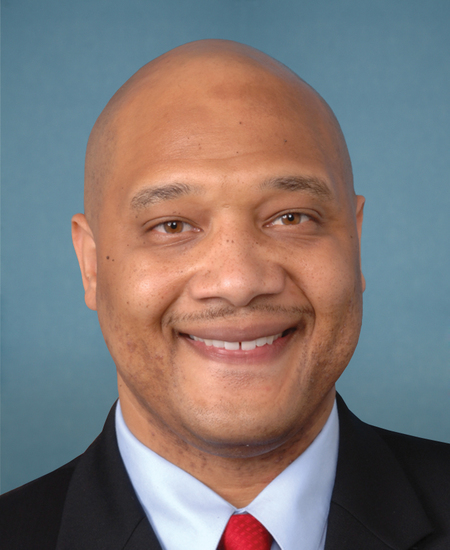
Rep. André Carson
Sponsored bills
Maddy summaryHRES 128 is a symbolic House resolution honoring baseball legend Hank Aaron's career and legacy. It recognizes his historic 715th home run breaking Babe Ruth's record in 1974, his 23-year MLB career (including 23 seasons with the Braves), and his role as a civil rights symbol who overcame pervasive racism. The resolution formally acknowledges Aaron's achievements on the field - such as 755 career home runs and the 1974 record-breaking moment - as well as his off-field impact in advancing equality. It was introduced in the U.S. House of Representatives on February 14, 2023, and serves as a ceremonial tribute without creating new laws or affecting any policies.
Maddy summaryThe American Opportunity Accounts Act establishes savings accounts for children born after December 31, 2005, to help them build financial assets. The government will make an initial $1,000 contribution to each eligible child's account (for those born after 2023) and provide annual contributions based on family income, ranging from $2,000 for low-income families to $0 for higher-income families. Account holders can access funds for education, home ownership, or other qualified expenses after age 18, with certain exceptions for higher education costs. The accounts are excluded from federal benefit eligibility calculations, and the government will manage the accounts through an American Opportunity Fund Board.
Maddy summaryThis bill authorizes a single Congressional Gold Medal to honor all U.S. Army Dustoff crews who served during the Vietnam War (1962-1973). It recognizes their critical role in evacuating nearly 900,000 wounded personnel, including U.S., South Vietnamese, and allied forces, under extreme combat conditions. The medal, designed with input from the Secretary of Defense, will be presented to the U.S. Army Medical Department Museum for permanent display. Duplicate bronze medals may be sold to cover costs, but the primary action is the commemorative recognition of these crews' service.
Maddy summaryHR 1002, the "Saving the Civil Service Act," restricts how federal government positions can be moved between competitive hiring (where most federal jobs are filled through merit-based exams) and non-competitive "excepted service" positions. The bill prevents agencies from moving positions out of the competitive service unless they fit specific schedules in place as of September 2020, requires Office of Personnel Management (OPM) approval for certain transfers, and mandates employee consent for any position transfer between service types. It also limits the number of employees that can be moved from competitive to excepted service during a presidential term - capping it at 1% of an agency's workforce or five employees, whichever is greater. The bill directly affects federal employees and agencies by making it harder to shift positions out of the competitive hiring system without strict oversight.
Maddy summaryThis bill amends the Food and Nutrition Act to allow Puerto Rico to transition from its current block grant nutrition assistance program to the federal Supplemental Nutrition Assistance Program (SNAP), aligning it with how states like Hawaii and Guam operate. Puerto Rico must submit a transition plan to the U.S. Department of Agriculture within 60 days, which the agency must review and approve within 180 days. The bill extends Puerto Rico’s existing block grant funding for up to five years or until the transition is complete, whichever comes first, and requires annual progress reports to Congress. This change directly affects Puerto Rico residents currently receiving nutrition assistance under the block grant, potentially providing them with benefits consistent with the SNAP program.
Maddy summaryThe AIM Act of 2023 removes numerous restrictions on the Bureau of Alcohol, Tobacco, Firearms and Explosives (ATF) that were previously placed in annual appropriations bills. The bill eliminates prohibitions on sharing firearms trace data with law enforcement, requirements for physical inventory checks of firearms dealers, and the 24-hour destruction rule for background check records. It also revises standards for revoking firearms licenses, changing the requirement from "willful" to "knowing" violations, and removes barriers to processing Freedom of Information Act requests related to firearms. This legislation directly affects the ATF's operations and firearms dealers who must comply with federal licensing requirements.
Maddy summaryThe Saracini Enhanced Aviation Safety Act of 2023 requires the Federal Aviation Administration (FAA) to mandate secondary cockpit barriers on all commercial passenger aircraft operating under standard airline regulations. Specifically, it directs the FAA to issue an order requiring installation of these barriers within 18 months of the law's enactment. This applies to most major airlines operating scheduled passenger flights in the U.S. The key provision is the new safety requirement for barriers to prevent unauthorized cockpit access during flights. The law directly affects commercial airlines and their aircraft, focusing on a concrete operational safety change without specifying cost or implementation details.
Maddy summaryHR 782 prohibits state officials from interfering with abortion services provided across state lines. It specifically blocks states from restricting: (1) out-of-state patients traveling for legal abortions, (2) providers offering such services, (3) assistance for travel or care, or (4) the interstate shipment of FDA-approved abortion drugs. The bill allows the federal Attorney General or affected individuals to sue violators for injunctions, damages, and attorney fees. It directly affects patients seeking care in other states, healthcare providers, transportation services, and pharmacies handling FDA-approved abortion medications. The law focuses on preventing state laws from blocking access to legally permitted abortion services.
Maddy summaryHR 767 modifies the FDA's safety program for mifepristone (a medication used in medication abortion) to improve access. It requires the FDA to remove in-person dispensing rules, allow prescriptions via telehealth, and permit certified pharmacies to mail the medication directly to patients. This bill directly affects patients seeking medication abortion and healthcare providers who prescribe or dispense mifepristone. The changes apply specifically to mifepristone's safety program under federal law, ensuring broader access through existing pharmacy channels.