

This resolution condemns the great replacement theory, which it describes as a white supremacist conspiracy theory that has been used to falsely justify racially motivated, violent acts of terrorism domestically and internationally.
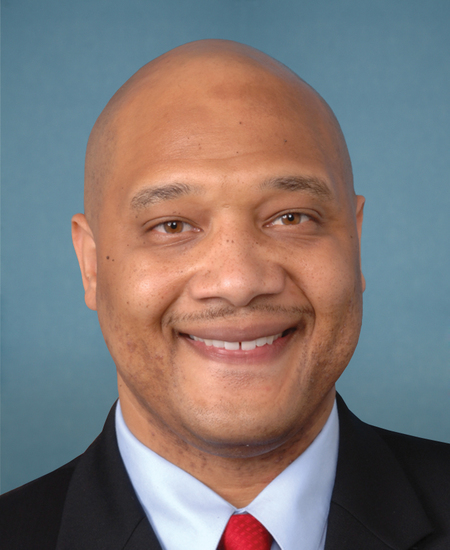
Rep. André Carson
Sponsored bills
Maddy summaryHR 3409, the Healthy Families Act, requires most employers to provide employees with paid sick leave. Employees earn 1 hour of paid sick time for every 30 hours worked, up to a maximum of 56 hours per year, which can be used for their own illness, caring for family members, or addressing domestic violence, sexual assault, or stalking situations. Smaller employers with fewer than 15 employees can provide unpaid sick leave instead of paid leave. The bill includes protections against retaliation for using sick leave and requires employers to inform employees about their rights under this law.
Maddy summaryThis bill requires public schools (K-12) to integrate Asian American, Native Hawaiian, and Pacific Islander (AANHPI) history into their American history and civics curricula. It amends the Elementary and Secondary Education Act to mandate that all required history content "shall include" AANHPI history, updating existing standards for teachers, textbooks, and national assessments. The law directs the Smithsonian Institution’s Asian Pacific American Center to provide educational resources for schools implementing this change. It directly affects school districts, educators, and curriculum developers by requiring concrete revisions to history instruction. The bill does not fund new programs but modifies existing federal education law to ensure AANHPI contributions and experiences are included in required teaching.
Maddy summaryHR 3422, the Judiciary Act of 2023, would amend the structure of the U.S. Supreme Court by increasing the number of associate justices from eight to twelve. It would also raise the required quorum for court proceedings from six to eight justices. This bill directly affects the Supreme Court's operational structure and composition. The change is purely procedural, altering the Court's size and voting requirements without impacting other legal processes or specific groups of people.
Maddy summaryHR 3445, the Equity and Inclusion Enforcement Act of 2023, strengthens civil rights enforcement in federally funded education programs. It allows individuals to sue for "disparate impact" discrimination (where policies unintentionally harm specific groups) under Title VI of the Civil Rights Act, similar to suing for intentional discrimination. The bill requires schools and programs receiving federal education funds to designate a compliance coordinator and notify students/employees of their contact information. It also creates a new Special Assistant for Equity and Inclusion within the Department of Education to coordinate enforcement efforts and inform the public about their rights under Title VI.
Maddy summaryThe Strength in Diversity Act of 2023 creates a federal grant program to help school districts address racial and socioeconomic isolation in public schools (K-12). Eligible school districts, states, or consortia with significant segregation gaps can apply for planning or implementation grants to develop strategies like equitable school assignments, transportation plans, or teacher recruitment programs. Grants require community engagement, data tracking on academic outcomes and diversity metrics, and plans to sustain efforts after funding ends. The program aims to increase student diversity and improve outcomes for students of color and low-income students in segregated schools.
This resolution commends U.S. Capitol Police Officer Caroline Edwards for protecting Members of Congress, staff, and others during the events of January 6, 2021.
Maddy summaryHRES 289 is a resolution recognizing the week of April 11-17, 2023, as the sixth annual "Black Maternal Health Week" to raise awareness about maternal health disparities. It highlights that Black women in the U.S. face disproportionately high rates of pregnancy-related deaths (2.6 times more likely than White women) and complications, driven by systemic inequities. The resolution urges national attention on these issues and supports policy solutions like the Black Maternal Health Momnibus Act to address racial gaps in maternal care. As a non-binding recognition, it does not enact new laws but aims to amplify community-driven efforts to improve outcomes.
Maddy summaryThis bill extends eligibility for the WIC nutrition program to new mothers for 24 months after childbirth (up from six months) and extends breastfeeding support periods to 24 months (up from one year). It directly affects new mothers and infants who rely on WIC for nutrition assistance, breastfeeding support, and health services. Key provisions include amending the Child Nutrition Act to lengthen these benefit periods and requiring a report within two years evaluating health outcomes, breastfeeding rates, and family experiences. The report must assess impacts on maternal/infant health, racial disparities, and program effectiveness. This is a substantive policy change focused on improving access to critical postpartum support.
Maddy summaryHR 3336, the Diwali Day Act, would add "Diwali Day" to the list of federal holidays recognized in Title 5 of the U.S. Code, specifically placing it after Columbus Day. This bill does not create new government programs or change existing laws; it solely recognizes Diwali as a day for federal employees to observe. The bill's "sense of Congress" section describes Diwali as a significant cultural celebration for millions of Americans across multiple religious communities. As a procedural measure, it directly affects federal government operations by adding a recognized holiday for federal employees.