

Maddy summaryThe provided context for HR 4060 (Food Access and Stability Act of 2023) only describes a technical amendment to an existing law (the Fiscal Responsibility Act of 2023), specifically modifying section 311(b)(2) by replacing subsection (a) with subsection (a)(1). It does not explain the policy substance, who is affected, or the practical impact of this change. Without additional details on the amendment's purpose or resulting policy shifts, a substantive summary cannot be generated. This appears to be a procedural adjustment rather than a new policy measure.
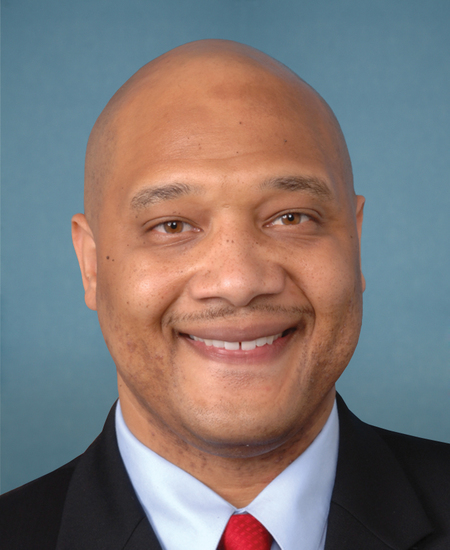
Rep. André Carson
Sponsored bills
Maddy summaryThe Forest Data Modernization Act of 2023 updates the U.S. Forest Service's national forest inventory program to improve data collection on forest resources, with specific focus on forest carbon. It mandates new surveys of timber products and woodland owners, standardizes definitions for forest data reporting, and requires the Forest Service to develop a strategic plan every five years integrating remote sensing technology and carbon data (including soil carbon). The bill ensures collected data is publicly accessible while protecting the confidentiality of individual landowners' non-aggregated information. These changes aim to enhance the accuracy of forest resource tracking for management and policy decisions across public and private lands.
Maddy summaryThis bill adds spotted lanternfly control to the list of high-priority research initiatives funded by the USDA. It enables federal grants for developing and sharing practical tools to combat this invasive insect pest, directly affecting agricultural researchers and farmers in affected areas (like Pennsylvania, where the pest causes significant crop damage). The key provision modifies existing law to specifically include lanternfly research under funding programs, without changing current grant rules. The bill also extends the funding authorization period for such initiatives through 2028.
Maddy summaryThis bill establishes a federal pilot program to help homeless individuals access SNAP (Supplemental Nutrition Assistance Program) benefits. It authorizes $12.5 million annually (2024-2029) to fund grants for community organizations, homeless service providers, and public housing agencies to provide direct outreach, application assistance, transportation to SNAP offices, and staff training. The program specifically targets barriers like lack of documentation and awareness, focusing on helping homeless households enroll in SNAP by connecting them with existing resources. Grantees must report annually on outcomes, including the number of homeless individuals served and enrollment impacts. The pilot runs for up to 5 years, with funds supplementing (not replacing) existing state/local programs.
This concurrent resolution opposes actions that undermine Israel's future as a Jewish, democratic state. The resolution expresses that democracy is at the core of the special relationship between the United States and Israel, and that Congress stands with all Israelis seeking to defend liberal democracy, judicial review, and independent political institutions.
This resolution condemns Iran for the 1988 massacre of political prisoners. It also urges the Biden Administration and U.S. allies to publicly condemn the massacre and to pressure Iran to provide information to the families of the victims.
Maddy summaryThis bill requires the Attorney General to publish an annual public report detailing the Bureau of Alcohol, Tobacco, Firearms, and Explosives' (ATF) inspections of gun dealers, including the number of inspections, serious violations found (such as illegal transfers or record falsification), and actions taken like license revocations. The report must include specific data points - such as the number of licenses revoked or not renewed, reasons for not revoking licenses, and geographic breakdowns - and be posted online. It also mandates a Government Accountability Office (GAO) study examining ATF's enforcement of firearm license rules, focusing on systemic issues, geographic enforcement differences, and outcomes of license revocation processes. The bill increases transparency around gun dealer oversight without changing legal requirements for dealers.
Maddy summaryThe FAIR Leave Act (HR 5037) repeals a time limitation on leave for spouses that was part of the Family and Medical Leave Act (FMLA). This provision previously restricted the amount of leave employees could take to care for a spouse with a serious health condition. By removing this restriction, the bill allows workers to take more leave without a prior cap for this specific purpose. The policy change directly affects employees needing leave to support a spouse's medical needs under the FMLA.
Maddy summaryHR 5064, the Public Housing Fire Safety Act, requires the Department of Housing and Urban Development (HUD) to inspect public housing for automatic sprinkler systems and report findings to Congress within three years. It establishes a competitive grant program using $25 million annually (2024-2033) from the Capital Fund to retrofit older public housing projects without sprinklers, excluding newly rebuilt properties. The bill directly affects public housing agencies managing buildings that lack sprinklers, providing funding to install them while clarifying that inspections and grants do not mandate retrofits for all properties. Key provisions include mandatory reporting on fire safety gaps and targeted funding to improve safety in older housing units.
Maddy summaryThis bill prohibits U.S. courts from using race, ethnicity, gender, religion, or sexual orientation in calculating future earnings damages for plaintiffs in civil cases. It requires the Secretary of Labor to develop inclusive future earnings tables within 180 days that exclude these protected characteristics, and mandates studies on how damages are awarded by case type and protected class. The bill affects civil plaintiffs (e.g., in personal injury or discrimination cases) and courts by changing how future earnings are calculated, while explicitly stating it does not prevent damages based on membership in a protected class under civil rights laws.