

Maddy summaryHR 3980 establishes the National Oceanic and Atmospheric Administration (NOAA) as an independent agency within the executive branch, headed by an Administrator appointed by the President with Senate confirmation. The bill defines NOAA's core functions, including conducting scientific research across atmospheric, oceanic, climate, and space weather domains, maintaining the National Weather Service, and managing oceanic and coastal resources. It requires the Administrator to develop a reorganization plan within 18 months to improve efficiency and coordination across NOAA's operations, and mandates a study on consolidating Endangered Species Act and Marine Mammal Protection Act management functions. The bill also creates a Science Advisory Board to provide scientific advice to NOAA and Congress, while ensuring existing NOAA functions and authorities continue without disruption.
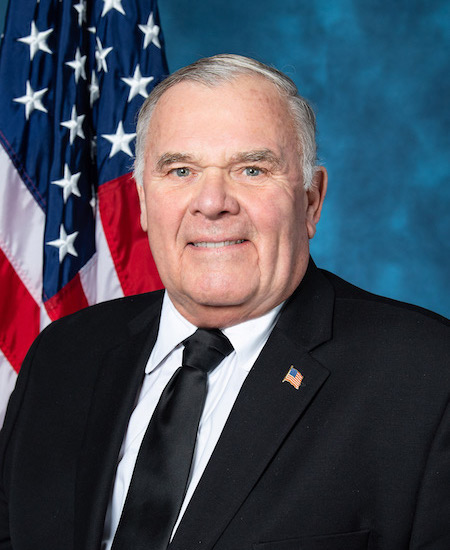
Rep. James R. Baird
Sponsored bills
This bill expands the definition of critical mineral under the Energy Act of 2020 to include copper. Thus, this bill requires the Department of Energy and other agencies to conduct a variety of efforts to ensure a secure and reliable supply chain of copper.
Maddy summaryHR 3808 extends the visa cap for Afghan allies from 38,500 to 58,500, covering Afghan nationals who worked with U.S. forces or international missions in Afghanistan (e.g., interpreters, translators) under the 2009 Afghan Allies Protection Act. It requires the State Department to create a strategy within 180 days to improve processing efficiency, including reviewing staffing, data collection, and appeal procedures for pending applications. The bill also adds provisions for reimbursing applicants' medical exam costs, allowing virtual interviews for visa applications, and ensuring denials include appeal options. These changes directly affect Afghan allies awaiting visas and aim to accelerate their resettlement in the U.S.
Maddy summaryHR 3802, the Precipitation Forecasting for Agriculture Act, establishes a 5-year pilot project within NOAA's National Weather Research Program to improve longer-term weather predictions for agriculture in the central United States. The bill directs the project to address specific scientific challenges like modeling soil moisture, warm-season rainfall, and large-scale weather patterns to create more accurate forecasts for farmers. It authorizes $15 million annually (2024-2028) for this work, requiring coordination with existing NOAA entities like the Midwestern Regional Climate Center and adherence to the National Weather Service's 2019 forecasting recommendations. The pilot aims to develop practical forecasting tools directly benefiting agricultural operations in the central U.S. region.
Maddy summaryHR 3792 extends U.S. security funding for Israel through 2028 (Section 3) and expands energy cooperation to include advanced nuclear technologies and carbon capture (Section 5). It requires annual reports on regional security partnerships involving Israel (Section 6) and ensures countries in the Abraham Accords can access U.S. development programs (Section 8). The bill also mandates reports on diplomatic efforts against ICC investigations targeting the U.S. and Israel (Section 10) and encourages people-to-people programs to strengthen the Abraham Accords (Sections 7, 9). These provisions directly affect Israel’s diplomatic engagement, security partnerships, and economic cooperation in the Middle East.
Maddy summaryThe SHOPP Act (HR 3127) expands the types of healthy foods SNAP participants can buy with their benefits. It allows fresh frozen fruits and vegetables to count toward nutrition incentives year-round and adds legumes (like beans and lentils) to the list of eligible items. This directly affects SNAP recipients by increasing access to affordable, nutritious options beyond just fresh produce. The changes take effect March 6, 2024, modifying the 2008 Food, Conservation, and Energy Act.
Maddy summaryHR 3036, the Increased TSP Access Act of 2023, amends conservation program rules to expand access to third-party providers (TSPs) who offer technical assistance to farmers on conservation practices. It creates new pathways for non-Federal entities like agricultural cooperatives or professional associations to certify TSPs, streamlines certification processes (requiring Secretary review within 10 business days), and sets payment rates for TSPs equivalent to government-provided technical assistance. The bill mandates public reporting on certification numbers, payment details, and a target utilization rate for TSPs to improve conservation program delivery. It directly affects farmers participating in USDA conservation programs by increasing options for technical support and requiring transparency in how TSPs are certified and compensated.
Maddy summaryThis resolution (HRES 443) is a symbolic gesture by the U.S. House of Representatives supporting National Poppy Day, observed on the Friday before Memorial Day. It formally endorses the tradition of wearing red poppies to honor veterans who died serving in the U.S. Armed Forces, referencing the poppy’s historical symbolism from World War I. The resolution encourages all U.S. citizens, residents, and visitors to wear a poppy that day as a sign of appreciation for military service. It does not create new laws, programs, or obligations - it is purely a statement of recognition.
Beautifying Federal Civic Architecture Act This bill declares U.S. policy applicable to public buildings and establishes the President's Council on Improving Federal Civic Architecture. The policy includes that applicable federal public buildings should uplift and beautify public spaces, command respect from the general public, be visually identifiable as civic buildings, respect regional architectural heritage, and meet other specified criteria; in the District of Columbia, classical architecture is the preferred and default architecture for federal public buildings absent exceptional factors; buildings that do not meet specified criteria should be considered for redesign where feasible and economical, particularly with respect to the exterior of the applicable federal building; and the General Services Administration (GSA) should seek input from future users of the applicable federal public buildings and the general public in the community where such buildings will be located before selecting an architectural firm or design style and give the general public's input substantial consideration. The GSA must adhere to the policy. If the GSA proposes to approve a design for a new applicable federal public building that diverges from the preferred architecture, it must notify the Office of the Domestic Policy Advisor and Congress not later than 30 days before the date on which the GSA could reject the design without incurring substantial expenditures and describe the reasons for proposing to approve the design.
Maddy summaryHR 3624, the Travel Trailer and Camper Tax Parity Act, amends the tax code to include certain towable travel trailers and campers under floor plan financing rules. This change directly affects recreational vehicle (RV) dealers and manufacturers who sell trailers designed for temporary living quarters (like camping or seasonal use) that are towed by or attached to a motor vehicle. The key provision expands the definition in tax law so these vehicles qualify for the same business tax treatment as other floor plan inventory, allowing dealers to deduct financing costs over time instead of upfront. The law applies to taxable years starting after December 31, 2022.