

Maddy summaryHRES 684 is a symbolic congressional resolution passed by the U.S. House of Representatives on September 14, 2023, condemning New Mexico Governor Michelle Lujan Grisham's emergency order that temporarily suspended open and concealed carry firearm rights for 30 days. The resolution asserts the order violated the Second Amendment, citing Supreme Court precedents (Heller, McDonald, Bruen) and noting a federal judge had already blocked the order's firearm restrictions. It does not change any laws or impose legal consequences - it is solely a formal expression of disapproval from Congress. The resolution directly addresses the Governor's actions but has no effect on New Mexico's laws or citizens' rights.
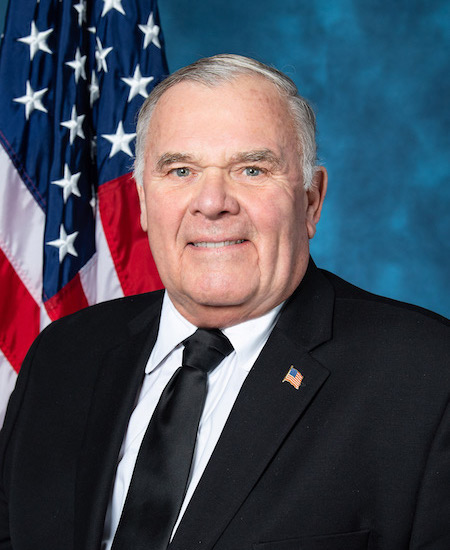
Rep. James R. Baird
Sponsored bills
Maddy summaryThe Biomanufacturing and Jobs Act amends the USDA's BioPreferred Program to increase federal purchasing of biobased products made from agricultural commodities like corn and soybeans. It requires federal agencies to annually update their procurement targets for biobased products, establishes a new USDA task force to coordinate biobased product programs, and creates new labeling and reporting requirements. The bill affects federal procurement agencies, USDA's programs, and manufacturers of biobased products including personal care items, paints, construction materials, and textiles. Key mechanisms include mandatory federal procurement targets, annual updates to procurement requirements, training for procurement staff, and public marketing initiatives to promote biobased products.
Maddy summaryHR 5106 requires the Secretary of Agriculture to publish food safety criteria for meat and poultry processing plants seeking to operate under alternative inspection rates (above standard rates) within 90 days of enactment. It mandates that the Secretary review and respond to such requests within 90 days, automatically approving requests if they miss the deadline. Existing plants already using alternative rates can continue operating while their requests are reviewed, provided they maintain food safety standards, and must be given a 180-day grace period to address any noncompliance before potential revocation. The bill also requires the Secretary to minimize disruptions during rate adjustments by consulting affected plants and considering impacts on animal producers and contractual obligations.
Maddy summaryThe Life.Gov Act (HR 5406) requires the U.S. Department of Health and Human Services to create a federal website called life.gov within one year of enactment. The website will provide pregnant and postpartum women with locally tailored resources - such as health services, financial assistance, and mental health support - via zip code searches, multilingual access, and user feedback tools. States must submit resource recommendations meeting strict criteria (e.g., no abortion providers, 3+ years of service), and the website cannot list "prohibited entities" (defined as abortion providers or supporters). The Secretary must report to Congress within 180 days on website usage, user feedback, and gaps in resources, using existing HHS funding.
Maddy summaryHR 3152, the "Fight CRIME Act," aims to maintain international restrictions on Iran's missile-related activities by requiring diplomatic efforts to extend these restrictions before they expire in October 2023. The bill mandates annual reports detailing U.S. diplomatic strategies, potential impacts of expiration, and measures to deter missile technology transfers to Iran. It establishes sanctions against foreign individuals or entities that knowingly support Iran's missile or drone programs, including asset freezes and visa restrictions. These sanctions apply regardless of whether UN restrictions remain in effect after their expiration, directly affecting foreign entities involved in these activities.
Maddy summaryThis bill requires the Bureau of Prisons to develop and implement a strategy for scanning all incoming mail at federal prisons to stop fentanyl and other synthetic drugs from entering facilities. It directs the Bureau to evaluate existing scanning technology within 180 days and submit a detailed plan to Congress within 90 days, including how to provide digital copies of mail to inmates within 24 hours and physical copies within 30 days (if safe). The strategy must achieve 100% mail scanning capacity at all federal prisons, prioritize high-security facilities, and include a budget proposal for fiscal years 2024-2026. This directly affects federal prisons, inmates, and Bureau employees by changing mail processing procedures to enhance safety and reduce staffing burdens from manual mail checks.
Maddy summaryThe ReConnecting Rural America Act of 2023 provides federal funding through grants, loans, and combinations of both to build broadband infrastructure in rural areas. It requires projects to provide at least 100 Mbps downstream and 100 Mbps upstream service, with priority given to areas where at least 90% of households lack such service. The bill authorizes $650 million annually from 2024-2028 for this program, targeting rural communities that currently lack adequate broadband access, while requiring cost-sharing of up to 25% and technical assistance for applicants. Eligible entities include state/local governments, tribes, cooperatives, and corporations, but not individuals or general partnerships. The program will expire on September 30, 2028.
Maddy summaryThe ACES Act directs the Department of Veterans Affairs to fund a National Academies study examining cancer rates among active-duty military aircrew members (including pilots and navigators in fixed-wing aircraft). The study will identify potential military-related exposures linked to specific cancers - such as lung, prostate, melanoma, and others - and analyze existing VA, Defense, and CDC health data. It requires the National Academies to report findings to Congress on cancer prevalence and mortality among these service members. This bill focuses on gathering scientific data to inform future policy, not on immediate benefits or changes.
This resolution honors and recognizes the patriotism and contributions made by generations of veterans service organizations, veteran advocacy groups, and volunteers and commends the members of such organizations for their dedicated service to members of the Armed Forces, veterans, their families, and their communities. The resolution also encourages the people of the United States to promote awareness of the contributions and dedication of members of veterans service, organizations, veteran advocacy groups, and volunteers to members of the Armed Forces, veterans, and their families. Additionally, the resolution calls on citizens to follow the example of such groups and volunteer support and services to those who have served the country.
Maddy summaryThe ACES Act of 2023 requires ByteDance (TikTok's Chinese parent company) to divest all U.S. assets related to TikTok - including user data collected in the United States - within 90 days of enactment, with possible 30-day extensions. It mandates weekly compliance reports to CFIUS, a final data destruction certification, and prohibits U.S. app stores or internet services from supporting TikTok operations after a 45-day grace period. The bill directly affects ByteDance and TikTok, forcing separation of U.S. operations from Chinese ownership to address national security concerns. CFIUS oversees verification, including facility inspections and audits, to ensure full compliance with the divestment requirements.