

Maddy summary# Summary of the Energy Development and Permitting Bill This document is a comprehensive energy policy bill focused on streamlining permitting processes, accelerating energy development, and reducing regulatory burdens for oil, gas, and geothermal projects on public lands. ## Key Provisions: 1. **Leasing and Permitting Reforms:** - Requires annual oil and gas lease sales in the Gulf of Mexico and Alaska regions - Sets 30-day deadlines for processing permit to drill applications - Mandates annual reports on permit processing status - Establishes 50-year terms for pipeline rights-of-way (replacing previous 30-year terms) 2. **Environmental Review Streamlining:** - Introduces "categorical exclusions" for certain activities that don't require environmental review - Sets page limits for environmental documents (150 pages for EIS, 75 for EA) - Establishes deadlines for completing environmental reviews (1-2 years) - Limits judicial review of environmental decisions - Requires "statement of purpose and need" in environmental impact statements 3. **Special Provisions:** - Allows drilling on non-Federal surface estate without Federal permit (if State permit is provided) - Prohibits Chinese Communist Party ownership interest in Federal leases - Sets royalty rates at not more than 12.5% for onshore Federal oil and gas leases - Exempts certain activities from "major Federal action" definition 4. **Transparency Requirements:** - Requires public posting of pending applications and processing status - Mandates annual reports on permit processing timelines - Requires publication of data on lease sales and permit approvals 5. **Judicial Limitations:** - Bars claims for judicial review of environmental decisions unless filed within 120 days - Limits challenges to environmental reviews to specific issues - Prohibits injunctions against lease sales unless imminent environmental harm is proven This bill represents a significant effort to accelerate energy development on public lands while reducing regulatory complexity and environmental review requirements, with particular emphasis on oil, gas, and geothermal projects.
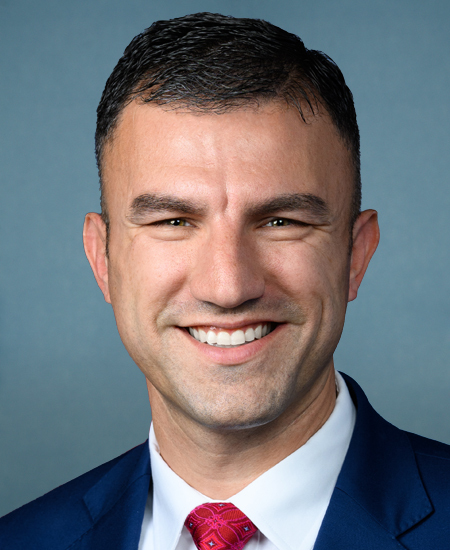
Rep. Rudy Yakym III
Sponsored bills
Maddy summaryThe Employee Rights Act (HR 2700) amends key labor laws to strengthen employee rights in collective bargaining and privacy. It requires employers to use secret ballot elections for selecting bargaining representatives and to provide labor organizations with voter lists containing employee names and one form of contact information (chosen by the employee) within two business days of an election. The bill prohibits employers from using employee personal information for non-organizing purposes and mandates written authorization for using union dues on non-bargaining activities, with authorizations expiring after one year. Additionally, it clarifies joint employment standards to prevent misclassification and adds tribal sovereignty protections to labor law definitions.
Maddy summaryHR 2928, the Responsible Borrower Protection Act of 2023, blocks the Federal Housing Finance Agency (FHFA) and mortgage enterprises (Fannie Mae and Freddie Mac) from implementing specific changes to mortgage credit fees announced in January 2023. The bill directly affects mortgage borrowers and lenders by reversing a pricing framework update that would have altered fees for single-family mortgages. It prohibits the FHFA from enforcing the January 2023 pricing changes detailed in FHFA's announcement and related lender letters. The bill clarifies that enterprises may still use risk-based pricing for mortgage fees, but the specific fee adjustments from the 2023 framework are canceled. This is a direct policy change to mortgage fee structures, not a broader reform.
Maddy summaryHR 2592, the Safe Schools Act, allows states and school districts that received pandemic relief funds (ESSERF) to redirect unspent funds toward school security measures instead of their originally designated purposes. It prohibits the federal government from blocking or discouraging this reallocation, even if the security use isn’t tied to pandemic response. The bill defines specific security measures, including metal detectors, threat assessment teams, anonymous reporting systems, security training, and physical safety upgrades like reinforced doors or campus fencing. It applies directly to schools and districts with unused ESSERF funds from pandemic relief programs.
This joint resolution nullifies a Department of Labor final rule entitled Adverse Effect Wage Rate Methodology for the Temporary Employment of H-2A Nonimmigrants in Non-Range Occupations in the United States and published on February 28, 2023. This rule makes changes to the methodology used to set adverse effect wage rates for H-2A workers (temporary agricultural workers), including by using Bureau of Labor Statistics wage surveys in certain instances. (Generally, the minimum wage for an H-2A worker is the highest of the adverse effect wage rate, the applicable minimum wage, the prevailing wage for that occupation in that area, or any agreed-upon collective bargaining wage.)
Maddy summaryHR 2845, the Enhancing K-12 Cybersecurity Act, creates a centralized School Cybersecurity Information Exchange website managed by CISA to provide K-12 schools, school districts, and state education agencies with tailored cybersecurity resources, best practices, and funding opportunities. It establishes a voluntary registry for schools to report cyber incidents (like ransomware attacks) and requires CISA to publish annual, anonymized reports on incident trends. The bill also funds a K-12 Cybersecurity Technology Improvement Program to deploy protective tools, offer training, and prevent threats, with $10 million authorized annually for 2024-2025. This directly supports schools in strengthening digital security for students and staff, focusing on practical, accessible solutions rather than legislative changes.
Maddy summaryHR 2826, the Save Local Business Act, clarifies when multiple businesses can be held jointly responsible for labor laws. It amends the National Labor Relations Act and Fair Labor Standards Act to state that a business is only a joint employer if it directly controls key employment terms like hiring, pay, schedules, or discipline for another business's workers. This directly affects franchisors, contractors, and similar business models that might previously have been deemed joint employers under broader interpretations. The bill aims to limit joint employer liability to cases where one business has clear, day-to-day control over essential worker conditions.
Maddy summaryHR 734, the Protection of Women and Girls in Sports Act of 2023, amends Title IX to prohibit federally funded schools and athletic programs from allowing individuals assigned male at birth to participate in women's or girls' sports teams. The bill defines "sex" for this purpose as "reproductive biology and genetics at birth," making it a violation of federal law to permit such participation in designated women's or girls' programs. It allows males to train with women's teams only if no female is deprived of a roster spot, competition opportunity, scholarship, or other benefit tied to the team. This law directly affects public and private schools receiving federal financial assistance that operate athletic programs.
Maddy summaryThis bill requires the CDC to collect and publicly share information about concussions and brain injuries affecting public safety officers (including police, firefighters, and emergency responders). It directs the CDC to update its website with this information and develop targeted resources for medical professionals, employers, mental health providers, and families. The CDC must also consult with these groups to ensure the information meets their needs and support the creation of model treatment guidelines through grants. The law aims to improve diagnosis, treatment, and prevention strategies for brain injuries in this workforce.
Maddy summaryHR 2743 prohibits large financial institutions (over $100 billion in assets) from denying banking services to lawful businesses based on subjective political reasons, industry type, or reputational concerns. It requires these institutions to use objective, risk-based assessments for service decisions and provide written justifications for denials. The law applies to banks, credit unions, and payment networks, with civil penalties for violations including fines up to $10,000 per incident. It specifically ensures businesses operating legally under federal law receive fair access to financial services without discrimination. The bill mandates that denials be based on documented risk factors, not political bias or category-based exclusion.