

Maddy summaryHR 4382 authorizes the U.S. Mint to produce commemorative coins for the 2028 Los Angeles Olympics/Paralympics and 2034 Salt Lake City Winter Olympics/Paralympics. It specifies gold, silver, and half-dollar coin designs with defined mintage limits (e.g., up to 100,000 $5 gold coins for each event), all bearing inscriptions like "2028" or "2034" and standard coin features. A surcharge ($5-$50 per coin) is added to sales, with all funds directed to the respective Olympic committees to support event hosting and legacy programs like youth sports. The bill ensures no net cost to the government by requiring surcharge revenues to cover all design, production, and marketing expenses before funds are disbursed.
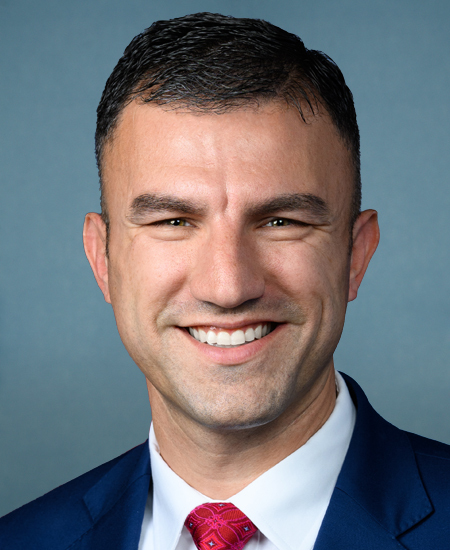
Rep. Rudy Yakym III
Sponsored bills
Maddy summaryHR 4363, the Defend Girls Athletics Act, requires public K-12 schools and colleges to certify annually that they comply with Executive Order 14201, which mandates keeping men out of women's sports. Schools must submit written compliance certifications by August 15 each year (for K-12) or July 1 (for colleges), with states reporting non-compliant agencies to the federal government. Schools or colleges failing to certify or violating the rule risk losing federal education funding, including returning unobligated funds and becoming ineligible for future federal support. The bill directly affects all public schools and colleges receiving federal education funds by tying their eligibility to adherence to this sports participation requirement.
Treat and Reduce Obesity Act of 2025 This bill expands Medicare coverage of intensive behavioral therapy for obesity. Specifically, the bill allows coverage for therapy that is provided by (1) a physician who is not a primary care physician; or (2) other health care providers (e.g., physician assistants and nurse practitioners) and approved counseling programs, if provided upon a referral from, and in coordination with, a physician or primary care practitioner. Currently, such therapy is covered only if provided by a primary care practitioner. The bill also allows coverage under Medicare's prescription drug benefit of drugs used for the treatment of obesity or for weight loss management for individuals who are overweight.
Maddy summaryThe CONNECT for Health Act of 2025 expands Medicare telehealth coverage by removing geographic restrictions that limited where patients could receive care, expanding the types of health care providers who can offer telehealth services, and eliminating the requirement for an in-person visit before receiving telemental health services. The bill includes specific provisions to support telehealth use for Native American health facilities, rural health clinics, and Federally Qualified Health Centers. It requires the Centers for Medicare & Medicaid Services to collect and publish data on telehealth usage and impacts, and to develop resources to improve accessibility for people with disabilities and limited English proficiency. Program integrity measures are added to monitor telehealth billing practices and prevent fraud while maintaining coverage for telehealth services during public health emergencies.
Maddy summaryHR 4167, the Expanding Access to Lending Options Act, amends the Federal Credit Union Act to extend the maximum time federally chartered credit unions can hold mortgage loans from 15 years to 20 years (or longer by NCUA regulation). This change directly affects federally chartered credit unions by allowing them to offer longer-term mortgage products to members. The key provision modifies Section 107(5) of the Federal Credit Union Act, specifically updating the time limit for mortgage loans held by credit unions. The bill also includes a non-binding sense of Congress statement emphasizing safety and soundness in NCUA oversight, but the core policy change is the extended mortgage holding period.
Maddy summaryThis bill, the PAPA Act of 2025, restricts how aircraft tracking data (ADS-B) can be used and regulates fees on general aviation aircraft. It prohibits using ADS-B data to identify aircraft for revenue purposes without owner consent, allows its use only for air traffic safety by controllers, and extends this restriction to all government officials. For airport fees, it requires public disclosure of cost-saving efforts, alternative revenue sources, fee impact assessments, and specific safety project costs before imposing landing/takeoff fees on general aviation aircraft. All fees collected must be used exclusively for airside safety projects, not other airport expenses. The bill defines general aviation aircraft as those used for personal, recreational, training, or non-commercial purposes (excluding scheduled airlines and military flights).
Maddy summaryThe GOLDEN DOME Act of 2025 establishes a comprehensive homeland missile defense system designed to protect U.S. citizens and critical infrastructure from ballistic, hypersonic, cruise, and unmanned system threats. The bill creates a new Golden Dome Direct Report Program Manager with significant authority to accelerate development, testing, and deployment of integrated missile defense capabilities across all domains (land, sea, air, space, and cyberspace). It requires a holistic strategy with all-domain awareness, mandates accelerated testing schedules including live-fire exercises, and allocates specific funding for components like space-based sensors, interceptors, and command and control systems. The legislation also includes provisions to protect the space industrial base and secure critical supply chains for missile defense systems.
Maddy summaryHRES 529 is a symbolic resolution honoring Boys and Girls Clubs of America during National Boys and Girls Club Week (June 23-27, 2025). It calls on U.S. citizens to celebrate the organization and recognize its work in serving over 3.3 million young people annually through programs like STEM education, career readiness, and academic support across 5,500 locations in all 50 states and territories. The resolution has no binding policy impact - it simply encourages public acknowledgment of the Clubs' role in youth development. This is a ceremonial gesture, not a legislative change affecting laws or funding.
Maddy summaryHR 4072, the Pro Codes Act, requires standards development organizations (like ASTM or IEEE) to make technical standards publicly accessible online at no cost when those standards are incorporated by reference into federal, state, or local laws or regulations. This applies to over 23,000 standards currently referenced in the Code of Federal Regulations, ensuring the public can read them freely while allowing organizations to maintain revenue through paid subscriptions. The bill amends copyright law to mandate this free online access - including searchable features - within a reasonable timeframe after an organization learns a standard is referenced, without disrupting their business model. It balances public access with copyright protection, placing the burden of proof on anyone claiming an organization failed to comply. The law directly affects standards organizations, government agencies, and the public who rely on these referenced standards for safety, innovation, and compliance.
Maddy summaryHRES 526 designates June 15-22, 2025, as "National Pollinator Week" to raise public awareness about pollinators' role in ecosystems and agriculture. The resolution encourages Americans to observe the week with educational activities and conservation efforts. It does not create new laws or affect specific groups, but acknowledges pollinators' importance to food production, biodiversity, and ecosystem health. The resolution focuses on symbolic recognition rather than policy changes.