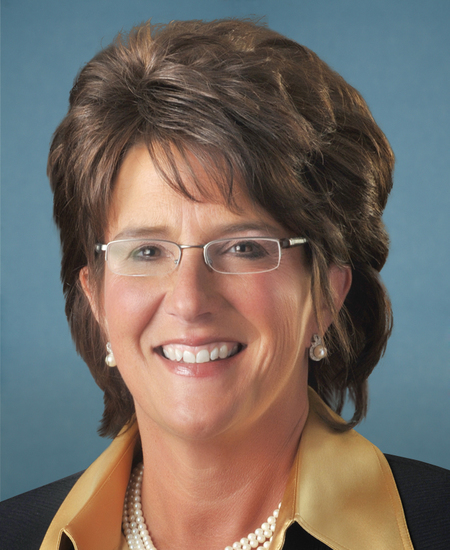
Photo of Jackie Walorski
R United States House · District 2 · Indiana

Rep. Jackie Walorski

Compare
Total votes
836
all sessions
Attendance
100%
1 missed
Higher than 91% of chamber peers
With party
97%
of cast votes
Near the chamber average
Bipartisan score
1%
crosses aisle rarely
Near the chamber average
Sponsored
303
bills & resolutions
Near the chamber average
Committees
0
assignments
303 bills and resolutions

Sponsored bills

Total
303
Primary
21
Co-sponsor
282
This page
303
matching current filters
Co-sponsor HR 6254
In committee · United States House · Co-sponsor
China Trade Cheating Restitution Act of 2021

China Trade Cheating Restitution Act of 2021 This bill requires the Department of Homeland Security to deposit into special accounts certain interest earned on antidumping and countervailing duties collected by U.S. Customs and Border Protection on or after October 1, 2000. Currently, the applicable date is October 1, 2014. Amounts in special accounts are distributed to affected domestic producers.

In committee Dec 13, 2021 1 co-sponsor
Co-sponsor HR 6251
In committee · United States House · Co-sponsor
Food Donation Improvement Act of 2021

Food Donation Improvement Act of 2021 This bill expands liability protections for the donation of food and grocery products. Specifically, the bill expands the liability protections to include donations of an apparently fit grocery product or apparently wholesome food for which the recipient is charged a good Samaritan reduced price that is no greater than the cost of handling, administering, and distributing the food or product; or that is donated directly to a needy individual by a retail grocer, wholesaler, agricultural producer, restaurant, caterer, school food authority, or institution of higher education. The Department of Agriculture must issue regulations that clarify the quality and labeling standards that food products donated under the Bill Emerson Good Samaritan Food Donation Act must meet to be eligible for liability protection.

In committee Dec 13, 2021 1 co-sponsor
Co-sponsor HR 6235
In committee Dec 10, 2021 1 co-sponsor
Co-sponsor HR 6202
In committee · United States House · Co-sponsor
Telehealth Extension Act of 2021

Telehealth Extension Act of 2021 This bill expands and otherwise modifies coverage of telehealth services under Medicare. Specifically, the bill permanently (1) removes geographic restrictions on originating sites (i.e., the location of the beneficiary), (2) allows the home of the beneficiary to serve as the originating site for all services, and (3) allows federally qualified health centers and rural health clinics to serve as the distant site (i.e., the location of the health care practitioner). The bill also extends any Medicare telehealth flexibilities that were granted during the COVID-19 public health emergency until two years after the emergency ends and generally allows such flexibilities to be granted during any public health emergency. In addition, the bill (1) allows for Medicare payment of outpatient critical access hospital services consisting of telehealth behavioral therapy until two years after the COVID-19 public health emergency ends; and (2) after the emergency ends, conditions payment for certain high-cost laboratory tests and durable medical equipment that are ordered via telehealth on at least one in-person visit during the preceding six-month period.

In committee Dec 10, 2021 1 co-sponsor
Co-sponsor HR 5608
Passed · United States House · Co-sponsor
Chronic Wasting Disease Research and Management Act

Chronic Wasting Disease Research and Management Act This bill directs the Department of Agriculture (USDA) to address chronic wasting disease afflicting deer, elk, and moose populations. Specifically, the bill directs USDA to establish a program to research and manage the disease. Under the program, USDA must offer to enter into agreements with state or tribal wildlife agencies and departments of agriculture, institutions of higher education, and research centers to support research on the transmission of, resistance to, and diagnosis of the disease. In addition, USDA must offer to enter into agreements with such agencies and departments to support state and tribal efforts to develop and implement management strategies that address the disease. USDA must also develop and maintain materials to inform the public on chronic wasting disease and techniques to help prevent the spread of the disease. In addition, USDA must solicit public feedback on potential updates and improvements to standards of the chronic wasting disease herd certification program.

Passed Dec 9, 2021 1 co-sponsor
Co-sponsor HR 4996
Passed · United States House · Co-sponsor
Ocean Shipping Reform Act of 2021

Ocean Shipping Reform Act of 2021 This bill revises provisions related to ocean shipping policies and is designed to support the growth and development of U.S. exports and promote reciprocal trade in the common carriage of goods by water in the foreign commerce of the United States. Among other provisions, the bill sets forth requirements for operating a shipping exchange involving ocean transportation in the foreign commerce of the United States; requires ocean common carriers to report to the Federal Maritime Commission (FMC) each calendar quarter on total import and export tonnage and the total loaded and empty 20-foot equivalent units per vessel that makes port in the United States; requires the FMC to publish and annually update all its findings of false certifications by ocean common carriers or marine terminal operators and all penalties assessed against such carriers or operators; revises annual reporting requirements for the FMC on foreign laws and practices to include practices by ocean common carriers; prohibits ocean common carriers and marine terminal operators from retaliating or discriminating against shippers because such shippers have patronized another carrier, or filed a complaint; directs the FMC to establish rules prohibiting ocean common carriers and marine terminal operators from adopting and applying unjust and unreasonable demurrage and detention fees; authorizes the FMC to initiate investigations of an ocean common carrier's fees or charges and apply enforcement measures, as appropriate; directs the Department of Transportation to seek to enter into an agreement with the National Academy of Sciences to study the U.S. supply chain industry, including data constraints that impede the flow of maritime cargo and add to supply chain inefficiencies; and provides authority for the FMC to issue an emergency order requiring ocean common carriers or marine terminal operators to share directly with relevant shippers, rail carriers, or motor carriers information relating to cargo throughput and availability.

Passed Dec 9, 2021 1 co-sponsor
Co-sponsor HR 6161
In committee · United States House · Co-sponsor
Employee Retention Tax Credit Reinstatement Act

Employee Retention Tax Credit Reinstatement Act This bill provides for a reinstatement of the employee retention tax credit through 2021. The credit was established to compensate employers whose businesses were negatively impacted by the COVID-19 pandemic for wages paid to their employees.

In committee Dec 7, 2021 1 co-sponsor
Primary HR 6171
In committee · United States House · Lead sponsor
CNL Update Act

CNL Update Act This bill makes changes to the procedures for competitive need limitations (CNL) and de minimis waivers under the Generalized System of Preferences (GSP) program. CNLs are quantitative ceilings on GSP benefits for each product and beneficiary developing country; a beneficiary developing country loses its GSP eligibility with respect to a product if the CNLs are exceeded and no waiver is granted. Currently, the President must terminate the duty-free treatment for a product from a beneficiary developing country if (1) imports of a product from a single country reach a specified threshold value, which increases by $5 million each calendar year; or (2) 50% or more of total U.S. imports of a product entering under the GSP come from a single country. This bill revises the annual adjustment amount from $5 million to an amount equal to 6.5%. Further, the bill sets the annual increase in the de minimis level to 6.5%. Currently, the de minimis level is adjusted each year in increments of $500,000.

In committee Dec 7, 2021 0 co-sponsors
Co-sponsor HR 6114
In committee · United States House · Co-sponsor
U.S. Trade Leadership in the Indo-Pacific and China Act

U.S. Trade Leadership in the Indo-Pacific and China Act This bill requires the U.S. Trade Representative to annually report on the economic and trade relationship between the United States and China, including a comprehensive review of the current tariffs in place against China.

In committee Dec 1, 2021 1 co-sponsor
Co-sponsor HR 6060
In committee · United States House · Co-sponsor
Conscience Protection Act of 2021

Conscience Protection Act of 2021 This bill provides statutory authority for certain protections for health care providers that refuse to participate in abortions based on religious beliefs or other convictions. Health care providers include individual professionals, medical facilities, health insurance organizations, and social services providers that refer clients to health care services. The federal government and entities that receive federal funding for health-related activities, including state and local governments, may not discriminate against a health care provider that refuses to be involved in, or provide coverage for, abortions. Currently, similar requirements apply to various related activities, including certain employment or personnel decisions (the Church Amendments), abortion services training (the Coats-Snowe Amendment), qualified health plans offered through health insurance exchanges, and annual appropriations bills for the Department of Health and Human Services (HHS) and other federal agencies (the Weldon Amendment). The HHS Office for Civil Rights must investigate complaints of this kind of discrimination. Furthermore, HHS may terminate or reduce HHS funding for health-related activities if a person or entity fails to comply with nondiscrimination requirements. Additionally, the Department of Justice or any entity adversely affected by such discrimination may bring a civil action to obtain appropriate relief. A plaintiff does not need to seek or exhaust administrative remedies before bringing the action. A plaintiff may also bring an action, including one for money damages, against a governmental entity. In many cases, principles of sovereign immunity shield states and some localities from these kinds of actions.


In committee Nov 22, 2021 1 co-sponsor
Showing 91 to 100 of 303 bills
Previous 1 … 9 10 11 … 31 Next