

Public Service Freedom to Negotiate Act of 20 21 This bill provides minimum collective bargaining rights and procedures for public employees and prohibits strikes by certain public safety workers. The Federal Labor Relations Authority (FLRA) shall determine for each state whether the laws of such state substantially provide for each of the minimum standard collective bargaining rights and procedures specified by this bill, including the right of public employees and supervisory employees to self-organize, form or join a labor organization, or collectively bargain. The FLRA must issue rules and take actions to establish and administer bargaining rights and procedures for those states that do not substantially provide for them. No employers, emergency services employees, or law enforcement officers may engage in a lockout, strike, or any other organized job action that is likely to result in a measurable disruption of the delivery of emergency or public safety services. Furthermore, no labor organization may be the cause of a violation of such prohibition.
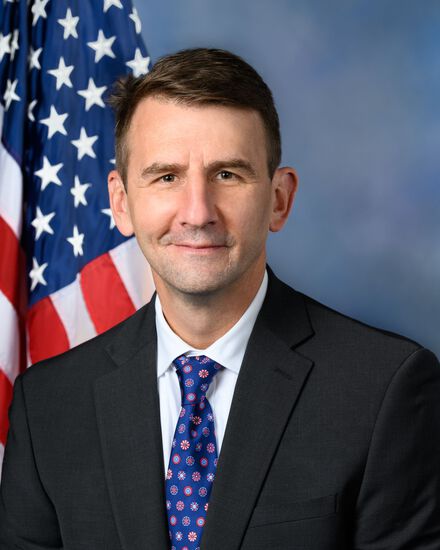
Rep. Frank J. Mrvan
Sponsored bills
State, Local, Tribal, and Territorial Fiscal Recovery, Infrastructure, and Disaster Relief Flexibility Act This bill allows states, tribes, territories, and localities to use certain COVID-19 relief funds for new categories of spending, including for natural disasters and infrastructure projects. It also makes changes to expenditure deadlines and other aspects of this funding. Specifically, recipients may use funds for emergency relief from natural disasters and associated negative economic impacts of natural disasters. In addition, recipients may use a portion of their COVID-19 relief funds for designated infrastructure projects, such as nationally significant freight and highway projects. Furthermore, the bill allows recipients to expend COVID-19 relief funds on these types of infrastructure projects until September 30, 2026. Under current law, recipients must expend the funds by December 31, 2024. Other changes in the bill include (1) modifying eligibility and allocation requirements for funding set aside for counties and Indian tribes that are near public lands, (2) allowing Indian tribes an additional year to expend their COVID-19 relief funds, and (3) establishing a process for government entities to decline COVID-19 relief funds and requiring any declined funds to be used to reduce the federal deficit.
This resolution supports the designation of Macedonian American Heritage Month. Expresses warm congratulations and best wishes to all Macedonian people around the world as they mark Macedonian Independence Day. Praises the integral role of Macedonian Americans in the economy, culture, and identity of the United States.
Keep Americans Safe Act This bill establishes a new criminal offense for the import, sale, manufacture, transfer, or possession of a large capacity ammunition feeding device (LCAFD). The bill does not prohibit certain conduct with respect to an LCAFD, including the following: importation, sale, manufacture, transfer, or possession related to certain law enforcement efforts, or authorized tests or experiments; importation, sale, transfer, or possession related to securing nuclear materials; and possession by a retired law enforcement officer. The bill permits continued possession of, but prohibits sale or transfer of, a grandfathered LCAFD. Newly manufactured LCAFDs must display serial number identification and the date of manufacture. Additionally, the bill allows a state or local government to use Edward Byrne Memorial Justice Assistance Grant Program funds to compensate individuals who surrender an LCAFD under a buy-back program.
Law Enforcement Protection Act of 2021 This bill includes armor-piercing, concealable weapons in the definition of firearm under the National Firearms Act.
Khalid Jabara and Heather Heyer National Opposition to Hate, Assault, and Threats to Equality Act of 2021 or the Jabara-Heyer NO HATE Act of 2021 This bill creates grants for state and local governments to combat hate crimes. It also authorizes additional penalties for hate crime offenses. Specifically, it establishes grants for states to create state-run hate crimes reporting hotlines. It also authorizes grants for states and local governments to implement the National Incident-Based Reporting System and to conduct law enforcement activities or crime reduction programs to prevent, address, or respond to hate crimes. Finally, in the case of an individual convicted of a hate crime offense and placed on supervised release, the bill allows a court to order that the individual participate in educational classes or community service as a condition of supervised release.
Camp Lejeune Justice Act of 2021 This bill allows certain individuals to sue and recover damages for harm from exposure to contaminated water at Camp Lejeune in North Carolina between August 1, 1953, and December 31, 1987. This action is available only to individuals who were exposed to contaminated water for at least 30 days. The bill prohibits the U.S. government from asserting specified immunity from litigation in response to such a lawsuit. The bill also prohibits an individual who brings such an action from bringing a separate tort action against the United States based on the same harm.
Guaranteed Refugee Admission Ceiling Enhancement Act or the GRACE Act This bill establishes that the maximum number of refugees admitted each fiscal year shall be no less than 125,000 and that the maximum number shall be treated as the numerical goal for refugee admissions for the applicable fiscal year. The President may set a higher number if it is justified by humanitarian concerns or is otherwise in the national interest. Currently, the number admitted each fiscal year may not exceed 50,000 unless the President determines that a higher number is justified by humanitarian concerns or is otherwise in the national interest. The bill directs the President to take into consideration information from the United Nations High Commissioner for Refugees when establishing the maximum admission number and making certain other related decisions. The President shall report to Congress quarterly on (1) the number of refugees admitted during the preceding quarter, (2) the number of aliens who were security-cleared during the preceding quarter, (3) a plan to reach the numerical goal for admitted refugees for that fiscal year, and (4) other related information.
Revising and Expediting Actions for the Crisis Hotline for Veterans Act or the REACH for Veterans Act This bill requires the Department of Veterans Affairs (VA) to update training and procedures for call responders of the Veterans Crisis Line. Specifically, the VA must enter into an agreement with an outside organization to review the training for crisis line call responders. The VA must update the training if any deficiencies are identified after the review. Among other requirements, the VA must develop guidelines on retraining and quality management for when a call responder has an adverse event or needs improvement, annually perform a common cause analysis for identified callers to the crisis line who died by suicide in situations where the crisis line was the last point of contact, develop enhanced guidance and procedures to respond to calls to the crisis line related to substance use and overdose risk, review the current emergency dispatch standard operating procedure of the crisis line, and solicit feedback from veterans service organizations on how to conduct outreach regarding the move to 988 as the new suicide and mental health crisis hotline. Each call responder must be subject to at least two calls per month that are silently monitored by a supervisor to check for quality of conduct. The Veterans Crisis Line, Office of Mental Health and Suicide Prevention of the VA, and National Center for Patient Safety of the VA must establish quality management processes and expectations for staff of the crisis line.
Making Advances in Mammography and Medical Options for Veterans Act This bill addresses the Department of Veterans Affairs (VA) provision of mammograms and breast cancer treatment. Among other requirements, the VA must submit a strategic plan for improving breast imaging services for veterans, implement a three-year pilot program to provide telemammography services for veterans who live in locations where access to breast imaging services at a VA facility is difficult or unfeasible, upgrade all mammography services at its facilities to use three-dimensional breast imaging, update guidelines to increase the use of testing for the breast cancer gene and genetic counseling for veterans diagnosed with breast cancer, and update its policies and directives to ensure that it confirms the accessibility of a breast imaging site when referring a veteran with a spinal cord injury or disorder to a non-VA provider. In addition, the VA must enter into a partnership with at least one cancer center of the National Cancer Institute of the National Institutes of Health in each Veterans Integrated Service Network to expand access to high-quality cancer care for women veterans. In implementing such partnerships, the VA must ensure that veterans with breast cancer who reside in rural areas or states without a partner cancer center are able to receive care through telehealth. Finally, the VA must collaborate with the Department of Defense and report on all current research and health care collaborations between the departments on treating veterans and members of the Armed Forces with breast cancer.