

Maddy summaryHR 5295, the Expanding the VOTE Act, modifies Section 203 of the Voting Rights Act to expand language access for voters. It requires states and localities to provide voting materials (including ballots and instructions) in the language of covered language minority groups, with new provisions for American Indian and Alaska Native languages requiring tribal government consultation for unwritten languages. The bill creates $15 million in grants to help jurisdictions provide voting materials in languages that don’t currently trigger Section 203 coverage, while mandating continued provision for those groups in future elections. It also directs a study to evaluate lowering population thresholds for language protections and expanding the definition of covered languages.
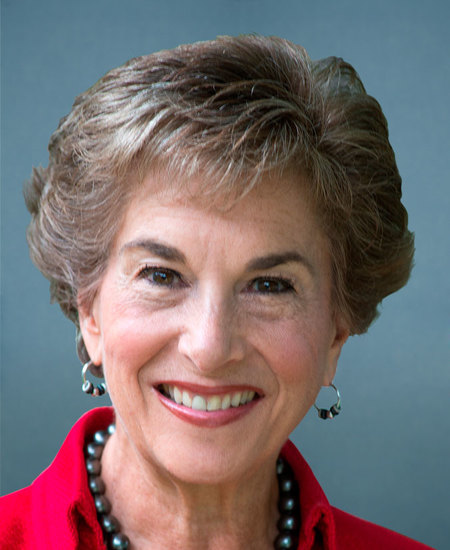
Rep. Janice D. Schakowsky
Sponsored bills
Maddy summaryThis bill prohibits landlords from charging renters application fees, tenant screening fees (including credit checks), and most late fees. It also bans the use of credit scores for tenant screening and requires landlords to disclose total monthly costs, past tenant litigation, ongoing maintenance issues, and 10 years of rent increases before a lease is signed. The law applies specifically to rental properties with federal housing assistance or federally backed mortgages (like FHA or VA loans). Key regulators - HUD, VA, USDA, or FHFA - will enforce these rules for covered properties.
Maddy summaryThe Unhoused Persons Bill of Rights (HRES 634) is a non-binding congressional resolution that outlines 19 specific civil and human rights for unhoused individuals, including the right to housing, healthcare, access to public facilities, and freedom from discrimination based on housing status. It calls for the federal government to commit to ending homelessness by 2027 through specific policy changes, including $20 billion from the defense budget for housing programs, expanded rental assistance, and improved access to healthcare services. The resolution requires federal agencies to implement measures such as 24-hour shelter access, removal of hostile architecture in public spaces, and improved data collection methods to better address homelessness. It also calls for the Department of Health and Human Services to declare the unhoused crisis a public health emergency and establishes legal protections for unhoused people against discrimination and harassment.
Maddy summaryHR 4277, the Saving America’s Pollinators Act of 2023, would immediately cancel all registrations for neonicotinoid pesticides (including imidacloprid and clothianidin) and ban their sale, use, and future registration. This directly affects farmers and crop producers who currently use these pesticides on over 150 million acres of crops like corn and soybeans, where seed coatings are widely applied. The bill also ends exemptions for seed-treated pesticides and requires the Environmental Protection Agency to revoke tolerances for pesticide residues in food within six months. Additionally, it mandates the U.S. Fish and Wildlife Service’s newly established Center for Pollinator Conservation to monitor native bee populations and coordinate federal actions to reverse pollinator declines.
This resolution condemns racism and invidious discrimination as evil and antithetical to the U.S. Constitution and declares unconditional war on racism and invidious discrimination in America. (Invidious discrimination generally refers to discrimination based on a classification that is arbitrary or irrational and not related to a legitimate purpose.) The resolution also expresses the intention of the House of Representatives to pass legislation establishing a Cabinet-level Department of Reconciliation. The department shall be charged with developing and coordinating the implementation of a comprehensive national strategy to eliminate racism and invidious discrimination.
Maddy summaryHRES 645 is a non-binding House resolution recognizing August as "Chicano Heritage Month" to celebrate the contributions of Mexican Americans to U.S. history. It highlights historical figures like labor leaders Cesar Chavez and Dolores Huerta, landmark court cases (e.g., *Mendez v. Westminster* ending school segregation), and cultural impacts such as Selena's influence on music. The resolution does not create new laws or policies but serves as a symbolic acknowledgment by the House to honor this heritage. It encourages the public and institutions to observe the month with events celebrating Mexican American contributions.
Maddy summaryThis bill amends the Exceptional Family Member Program (EFMP) to protect transgender dependents of military members. It prohibits assigning service members to locations where local laws restrict medically necessary treatment for transgender dependents, including gender dysphoria, and allows members to request reassignment within 30 days of such a law taking effect. The bill explicitly adds "gender dysphoria" to the list of conditions qualifying as a "medical special need" under the EFMP. This directly affects transgender dependents (spouses or children) and their military-affiliated service members, ensuring access to required care without forced relocation to restrictive jurisdictions.
Maddy summaryThe CHARGE Act of 2023 modernizes U.S. electricity transmission planning and cost allocation to better support renewable energy integration and grid reliability. It requires transmission providers to conduct interregional planning every five years, allocate costs based on multiple benefits (including reduced consumer costs, renewable energy access, and grid resilience), and make hourly operational data publicly available. The bill establishes an Office of Transmission within the Federal Energy Regulatory Commission (FERC) and creates an Independent Transmission Monitor to oversee planning processes. These changes aim to reduce costs for consumers, improve grid reliability, and support the transition to cleaner energy sources through concrete regulatory reforms.
Protecting Sensitive Locations Act This bill prohibits immigration enforcement actions within 1,000 feet of a sensitive location except in exigent circumstances. Sensitive locations include health care facilities; schools and school bus stops; places that provide assistance for people such as children, pregnant women, and abuse victims; places that provide disaster or emergency services; places of worship; courthouses and lawyers’ offices; facilities used as polling places; certain labor union facilities; and public assistance offices. The prohibition shall apply to Department of Homeland Security officers and agents, as well as state employees pursuing immigration enforcement actions. If an enforcement action is carried out in violation of this prohibition, (1) no information resulting from the action may be entered into the record in a resulting removal proceeding, and (2) the affected individual may move to immediately terminate such a proceeding. U.S. Immigration and Customs Enforcement and U.S. Customs and Border Protection shall annually report to Congress about enforcement actions taken at sensitive locations in the preceding year.
Assault Weapons Excise Act This bill imposes an additional 1000% excise tax on large capacity ammunition feeding devices and semiautomatic assault weapons. It exempts from such additional tax devices and weapons acquired by the United States or by a state or local government.