

Maddy summaryThis bill prohibits the interstate trade and possession of captive mink raised for fur production, directly affecting fur farmers and businesses involved in the mink fur supply chain. It includes an exception for entities covered under existing Lacey Act provisions and authorizes the Secretary to buy out mink farms at a price based on the farmer's recent mink population and farm infrastructure value. The law aims to end commercial mink farming for fur by banning related commerce while offering a voluntary transition option for affected farms. It does not apply to wild mink or non-fur-related mink uses.
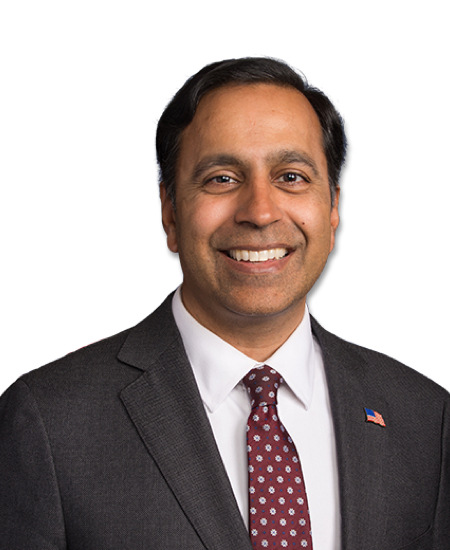
Rep. Raja Krishnamoorthi
Sponsored bills
Maddy summaryHR 6088, the *Restoring Food Security for American Families and Farmers Act of 2025*, repeals specific sections (10101-10108) from a prior reconciliation law. This action revives previous provisions related to food security programs that were modified by those repealed sections. The bill directly affects federal food assistance and agricultural support programs by restoring their prior legal framework. It does not create new policies but reverses recent changes to existing food security measures.
Maddy summaryHR 5020, the Supporting Our Shelters Act, creates a new federal grant program to provide funding to eligible animal shelters. The bill directs the Secretary of Agriculture to award 3-year grants (renewable) to shelters for essential care costs like food, veterinary services, sheltering, and staff support. Grantees must submit annual reports detailing the number and outcomes of animals cared for, as well as how grant funds were used. The Secretary also must report annually to Congress on program spending and outcomes, with regulations required within 180 days of enactment.
Maddy summaryHR 4782, the Local Farmers Feeding our Communities Act, establishes a USDA program to connect local farmers with food distribution networks. It requires eligible entities (like state agriculture agencies) to use funds to purchase unprocessed or minimally processed local foods from covered producers - including at least 25% from small-size, mid-size, beginning, or veteran farmers - while providing technical assistance for food safety and supply chains. The bill allocates $200 million annually (2026-2030) from the Commodity Credit Corporation, mandating 10% for Tribal governments and 1% per state before distributing remaining funds. This directly supports regional food security by boosting economic opportunities for local farmers and improving access to fresh, nutritious food through established distribution channels.
Maddy summaryHR 2683, the Remote Access Security Act, amends the Export Control Reform Act of 2018 to regulate how foreign entities remotely access U.S.-controlled technology. It defines "remote access" as foreign persons accessing U.S. items (like sensitive technology) via internet or cloud services from outside the item's physical location. The bill updates existing export control rules to include remote access as a regulated activity, requiring oversight similar to physical exports or in-country transfers. This primarily affects foreign companies, cloud providers, and technology firms handling U.S.-jurisdiction items.
Maddy summaryHR 909, the Crime Victims Fund Stabilization Act of 2025, modifies how funds from the False Claims Act are deposited into the Crime Victims Fund. It specifies that from 2025 through 2029, certain False Claims Act proceeds (specifically those for qui tam plaintiff payments and government damage reimbursements) cannot be deposited into the fund. This change directly affects the composition of the Crime Victims Fund by excluding these specific revenue streams during the specified period. The bill does not create new benefits or alter victim services; it only adjusts fund allocation rules for existing False Claims Act revenues.
Maddy summaryHR 7017, the Kids Before Cuts Act, prohibits the federal government from freezing funds for child care and social services programs without new congressional approval. It specifically prevents the withholding of funds from three key programs: the Temporary Assistance for Needy Families (TANF) block grant, the Child Care and Development Block Grant, and the Social Services Block Grant. The bill directly affects state programs that serve vulnerable families and children, including Illinois' Child Care Assistance Program (serving over 152,000 children) and social services organizations. It requires Congress to explicitly authorize any future funding freeze through new legislation, rather than allowing unilateral executive action. This addresses a specific incident where $1 billion in Illinois child care funds was frozen without congressional consent.
Maddy summaryHR 7016, the "No Funds for NATO Invasion Act," blocks federal funding for any U.S. military invasion of a North Atlantic Treaty Organization (NATO) member country or territory covered by NATO's Article 5 mutual defense clause. The bill prohibits using any federal funds for such invasions and bans U.S. officials from executing these actions. It directly affects U.S. military operations and funding decisions involving NATO members. The law applies to all federal spending, preventing the use of existing budgets for this specific purpose.
Maddy summaryThe Customer Non-Discrimination Act (HR 7005) amends the Civil Rights Act of 1964 to prohibit discrimination based on sex - including sexual orientation and gender identity - in public accommodations. It expands the definition of "public accommodations" to cover stores, online retailers, banks, healthcare providers, transportation services, and other establishments offering goods or services. The bill clarifies that "sex" includes sexual orientation, gender identity, pregnancy, and sex stereotypes, and specifies that individuals cannot be denied access to facilities like restrooms based on their gender identity. These changes apply directly to businesses and service providers covered under the Civil Rights Act, ensuring broader protection against discrimination for LGBTQ+ individuals.
Maddy summaryHR 7004 prohibits federal elected officials, congressional staff, political appointees, and executive branch employees from trading prediction market contracts using material nonpublic information about government policy, actions, or political outcomes. It bans any purchase, sale, or exchange of these contracts when the individual possesses or could reasonably obtain such nonpublic information - defined as important investment details not available to the public. The bill directly affects government insiders who might otherwise trade on inside knowledge of upcoming decisions or election results through prediction markets. Key provisions clarify that covered transactions include any financial instrument tied to future government events, listed on platforms operating across state lines. This creates a specific insider trading rule for prediction markets, distinct from general securities laws.