

Maddy summaryThe Rebuild America's Schools Act of 2023 creates a $20 billion annual federal grant program to fund long-term improvements to public school facilities across the United States. It requires states to prioritize school districts serving high-poverty students (with high percentages of students eligible for free/reduced lunch) and those with deteriorating infrastructure, while mandating that recipient schools develop 10-year facilities master plans. The bill specifies that funds must be used for construction, renovation, and modernization projects that improve energy efficiency, address environmental health hazards (including lead, asbestos, and poor air quality), and ensure school safety, while requiring the use of American-made materials for construction projects.
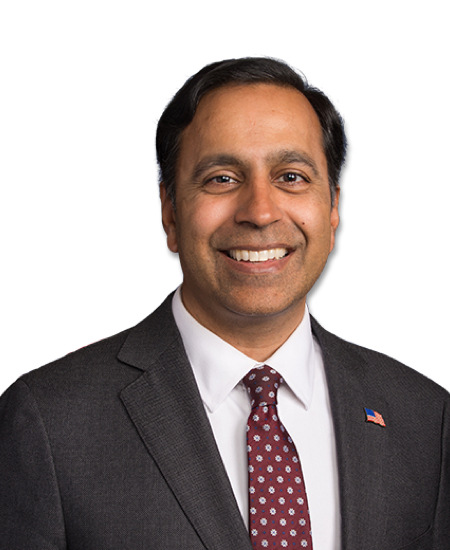
Rep. Raja Krishnamoorthi
Sponsored bills
Maddy summaryHR 4965, the Kimberly Vaughan Firearm Safe Storage Act, requires the Attorney General to create voluntary best practices for safe firearm storage in homes, businesses, vehicles, and other locations within 180 days of enactment, with public input. Starting January 1, 2025, firearm manufacturers must include a "SAFE STORAGE SAVES LIVES" notice with each new handgun, rifle, or shotgun, directing buyers to the public website with these guidelines. The bill also establishes a $10 million annual grant program for states and tribes to fund public programs distributing safe firearm storage devices (like locked containers) and requires grantees to use at least 75% of funds for these programs. It does not mandate storage for individuals but provides resources and information to promote safer practices.
Maddy summaryHR 4942 extends and modifies the Conrad State 30 program, which allows states to sponsor foreign medical graduates to work in medically underserved areas in exchange for a commitment to practice for three years. The bill directly affects foreign medical graduates seeking to work in the U.S., states that sponsor them, and health facilities in underserved communities. Key provisions include creating mechanisms for physicians to change employers or states if they face issues with their current employment, adding requirements for employment agreements (including prohibitions on non-compete clauses), and establishing exceptions to the three-year work requirement under certain circumstances. The bill also creates a process for states to recapture waiver slots when physicians leave their employment and requires annual reporting on the program's usage. These changes aim to improve physician retention in underserved areas by providing more flexibility and protections for foreign medical graduates.
Maddy summaryHR 1776, the End Tuberculosis Now Act of 2023, would amend U.S. foreign assistance law to strengthen global tuberculosis (TB) programs. The bill requires U.S. assistance to align with the World Health Organization's End TB Strategy, aiming to reduce TB deaths by 95% and incidence by 90% by 2035. It mandates annual reporting on TB diagnosis and treatment progress, prioritizes research for new diagnostics and treatments, and emphasizes integrating TB services into primary health care. The legislation affects U.S. government agencies, global health partners, and countries with high TB burdens, particularly focusing on low- and middle-income nations.
Maddy summaryThis bill amends the Child Nutrition Act to require school food service training programs to be scheduled during regular paid work hours whenever possible. If training must occur outside work hours, schools must compensate staff for attending, explain the necessity, and not penalize staff for missing it. Training must also be offered in-person with hands-on components when appropriate. The law directly affects school food service workers and their employers, mandating specific scheduling and compensation practices for required training.
Maddy summaryHR 4893, the Scientific Integrity Act, requires federal agencies that fund, conduct, or oversee scientific research to adopt policies preventing political interference in science. The bill mandates these agencies to prohibit suppression or distortion of research findings, establish Scientific Integrity Officers to enforce policies, and implement training and reporting systems. It directly affects scientists and engineers employed by or contracted with covered agencies (like the EPA or NIH), ensuring their work remains free from political pressure. Key mechanisms include annual public reporting on misconduct complaints, whistleblower protections, and requiring scientific conclusions to be based on evidence, not ideology.
Maddy summaryHR 4889, the Raise the Wage Act of 2023, would gradually increase the federal minimum wage for most workers to $15.50 per hour by 2027, with specific annual targets: $9.50 starting in 2023, rising to $11.00 after one year, $12.50 after two years, and $15.50 after four years. It would also phase out the separate lower minimum wage for tipped employees (starting at $6.00/hour) by aligning their pay with the regular minimum wage by 2028, while requiring employers to let workers keep all tips. The bill includes similar phased increases for workers under 20 and transitions toward fairer wages for workers with disabilities under special certificates, which would sunset after 2028. Future annual increases after 2028 would tie the minimum wage to the median hourly wage of all workers.
Maddy summaryHR 4157, the "Not Just a Number Act," requires the Department of Veterans Affairs (VA) to produce annual reports on veteran suicide rates and their connection to VA healthcare and benefits. The reports must break down suicide rates by age, gender, and race, and examine how engagement with VA services (like Vet Centers, healthcare enrollment, benefits claims, and housing loans) correlates with suicide trends. The bill also mandates a VA toolkit for state/local coroners to improve veteran suicide death reporting, and a study on creating a dedicated VA suicide prevention office. These measures aim to standardize data collection and identify effective prevention strategies, directly affecting VA operations, congressional oversight, and veteran care systems.
Uyghur Forced Labor Disclosure Act This bill requires an issuer of securities to publicly disclose whether its supply or production chain involves China's Xinjiang Uyghur Autonomous Region or specified forced labor sources. Issuers must provide documentation of supply and product chain entities and independent verification of such documentation. The Securities and Exchange Commission (SEC) must annually assess and report on compliance with this bill. The Government Accountability Office must periodically report on the effectiveness of the SEC’s oversight of the certification requirements under the bill.
Maddy summaryThe CHIPP Act (HR 4771) permanently extends federal funding for the Children's Health Insurance Program (CHIP), which provides health coverage to low-income children in families that earn too much to qualify for Medicaid but cannot afford private insurance. It removes previous expiration dates (like 2029) from CHIP funding provisions, ensuring continuous support for states administering the program. The bill also permanently extends related programs, including pediatric quality measures funding with automatic inflation adjustments, and modifies eligibility rules to allow states to expand coverage for children in higher-income households. This affects all 50 states that run CHIP programs and the millions of children and families who rely on this coverage.