

Maddy summaryThis bill establishes a new Office within the Department of Justice to address racial disparities in missing and murdered Black women and girls cases. The Office will collect data on case resolution times, coordinate with law enforcement, and create a public dashboard tracking these cases. It also creates grants for community organizations to provide culturally appropriate services, prevention programs, and training for law enforcement targeting violence against Black women and girls. The bill directly affects Black women and girls who are victims of violence and their communities, focusing on improving data collection and support systems rather than changing criminal laws.
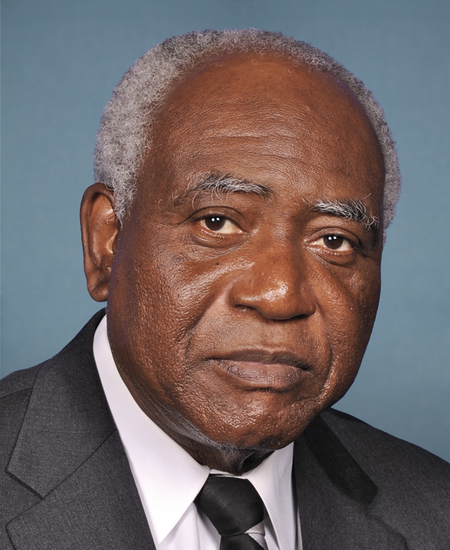
Rep. Danny K. Davis
Sponsored bills
Maddy summaryThe Schedules That Work Act (HR 5563) requires employers in retail, food service, cleaning, hospitality, and warehouse sectors to provide workers with at least 14 days' advance notice of their work schedules and to pay predictability pay for last-minute schedule changes. It allows employees to request schedule modifications for caregiving, health conditions, education, or second jobs, with employers required to grant such requests unless they have a bona fide business reason for denial. The bill also prohibits scheduling shifts less than 11 hours apart without employee consent and mandates employers to provide estimates of monthly work hours for the following year. These provisions aim to address the widespread problem of unpredictable schedules that disproportionately impact low-wage workers, particularly women and workers of color, who often lack control over their work hours.
Maddy summaryThe Better CARE for Animals Act of 2023 amends the Animal Welfare Act to strengthen enforcement of animal welfare standards. It gives the Attorney General authority to bring civil cases for violations, including seeking penalties up to $10,000 per day per violation and injunctions to remove or relocate animals. The bill also requires the Secretary of Agriculture and Attorney General to coordinate through a new Memorandum of Understanding, focusing on repeat violators. These changes directly affect dealers, exhibitors, and enforcement agencies by expanding civil enforcement tools and clarifying jurisdiction over rule violations.
Maddy summaryThis bill amends the Food and Nutrition Act to expand SNAP eligibility and simplify medical expense deductions. It raises the age limit for income exclusions from 17 to 21, directly helping young adults aged 18-21 who previously lost benefits at 17. The bill replaces "excess" medical deductions with a standardized amount based on Social Security Act premium rates, removing the previous requirement to prove elderly or disabled status for medical deductions. States may set higher standard deductions if they meet cost neutrality rules, but the baseline deduction is now fixed annually. These changes streamline eligibility and reduce administrative barriers for SNAP recipients.
Maddy summaryThe John R. Lewis Voting Rights Advancement Act of 2023 would strengthen the Voting Rights Act of 1965 by updating the criteria for which states and localities must obtain federal preclearance before changing voting practices. It would establish new standards for proving vote dilution and vote denial by requiring courts to consider historical discrimination, racial polarization in voting, and whether voting practices disproportionately burden minority voters. The bill would also require states and localities to provide public notice of voting changes and share demographic data about polling locations. These changes would primarily affect jurisdictions with a history of voting rights violations, aiming to prevent discriminatory voting practices before they take effect.
This resolution expresses support for the designation of National Kinship Care Month and encourages Congress to work to improve outcomes for kinship caregivers and their families.
Maddy summaryHR 5545 requires the U.S. Agency for International Development (USAID) to create and implement a Global WASH in Healthcare Facilities Action Plan. The bill targets healthcare facilities in low- and middle-income countries - where 1 in 5 lack basic water access and 79% lack sanitation - to improve water, sanitation, and hygiene services. Key provisions mandate handwashing stations at all care points, safe waste disposal, menstrual health support, and integration with pandemic preparedness. USAID must report annually on progress, spending, and outcomes like reduced infections, using World Health Organization metrics. The law directly affects patients, healthcare workers, and facilities in high-priority countries identified by USAID.
This resolution expresses support for the goals and ideals of PCOS Awareness Month. Polycystic ovary syndrome (PCOS) is caused by a hormone imbalance. Symptoms can include infertility, weight gain, excess hair growth, and acne.
Maddy summaryHR 5467, the Gun Suicide Prevention Act, requires firearm manufacturers and retailers to attach a specific label to all firearms and their packaging. The label must be in both English and Spanish, display the National Suicide Prevention Lifeline phone number, and include a yellow triangle with an exclamation mark before the hotline message. This mandate applies to all firearms sold in the U.S. and takes effect two years after enactment. Violations would be enforced under the Consumer Product Safety Act, subjecting offenders to existing penalties for safety violations. The bill directly affects firearm sellers by requiring this standardized suicide prevention information on all products.
Maddy summaryThe Humane Cosmetics Act of 2023 bans cosmetic animal testing in the United States, prohibiting companies from conducting or contracting such testing after its enactment (effective 1 year later). It also bans selling or transporting cosmetics developed using animal testing conducted after that date within U.S. interstate commerce. The law directly affects cosmetic manufacturers, retailers, and suppliers operating in the U.S. market, requiring them to use non-animal testing methods for safety evaluations. Exceptions exist for foreign regulatory requirements or when no alternative testing methods are available for specific ingredients.