

Maddy summaryThis bill requires a 3-business-day waiting period before someone can receive a handgun from another person who isn't a licensed gun seller. It applies to most private handgun transfers but includes exceptions for law enforcement, family loans (like between spouses or parents and children), temporary transfers to prevent imminent harm, and transfers for shooting or hunting under specific conditions. The waiting period begins when the recipient first offers to take possession of the gun. The law would take effect 90 days after enactment.
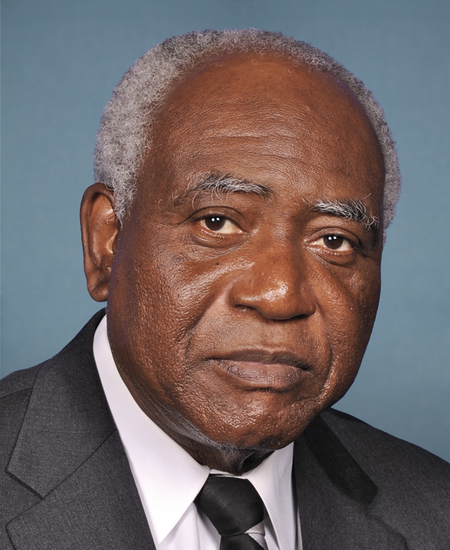
Rep. Danny K. Davis
Sponsored bills
Maddy summaryH.J. Res. 108 proposes a constitutional amendment to remove legal immunity for federal officials, including the President, from criminal prosecution for actions taken while performing official duties. It would prohibit the President from granting pardons to themselves and eliminate the defense that "official authority" excuses violations of federal or state law (with limited exceptions for certain congressional actions). If ratified, this amendment would require Congress to pass implementing laws to enforce these changes. The proposal is currently in the House Judiciary Committee and requires approval by three-fourths of state legislatures to become part of the Constitution.
Maddy summaryThis bill requires federal student loans under part D of the Higher Education Act to use a standardized "student loan contract" (replacing the current "master promissory note") for loans disbursed on or after its effective date. It specifically restricts each contract to apply only to the same academic award year as the initial loans it covers, preventing its use across multiple enrollment periods. The law directly affects undergraduate and graduate students receiving federal loans under part D, as it changes how their loan agreements are structured and applied. Key provisions include renaming loan documents and clarifying their limited scope to a single award year.
Maddy summaryHR 4482, the Stop NOAA Closures Act, imposes a temporary moratorium on closing, suspending, or limiting access to National Oceanic and Atmospheric Administration (NOAA) facilities, effective until a report is submitted to Congress by January 21, 2029. The bill requires NOAA and the General Services Administration to submit detailed reports to specific congressional committees before any future facility closure, suspension, lease termination, or consolidation - outlining cost-benefit analyses, service impacts, and justification. Exceptions apply only for emergencies posing immediate threats to personnel safety. This bill directly affects NOAA's facility management decisions and mandates congressional oversight for future closures.
Maddy summaryThis resolution (HRES 592) expresses the U.S. House of Representatives' support for Nelson Mandela International Day, designated by the United Nations on July 18. It honors Nelson Mandela's legacy as an anti-apartheid leader, global symbol of reconciliation, and advocate for peace, human rights, and democracy. The resolution urges all U.S. citizens to reflect on his values of tolerance and democracy but has no legal effect or direct impact on policies or individuals. As a ceremonial resolution, it does not create new laws or obligations.
Maddy summaryThis bill requires all federal agencies to set specific equity goals in their strategic and performance plans, mandating at least one goal or 20% of total goals focused on improving services for underserved communities and individuals. It establishes an "Agency Equity Advisory Team" with 10+ agency roles (including civil rights, data, and human capital leaders) and creates an "Equity Subcommittee" to coordinate across agencies on equitable practices. The bill also updates data officer responsibilities to prioritize equitable data collection, use, and sharing, including collaboration with community groups and state/local governments. It directly affects all federal agencies and aims to reshape how government services are delivered to populations systematically excluded from economic, social, and civic opportunities.
Maddy summaryThe Gun Safety Incentive Act establishes voluntary best practices for safe firearm storage (e.g., in homes, vehicles, businesses) through the Attorney General, requiring public education and annual updates. It mandates that firearm manufacturers include a "SAFE STORAGE SAVES LIVES" notice with every handgun, rifle, or shotgun starting in 2027, directing consumers to a public website with storage guidance. The bill also creates a $10 million annual grant program for states and tribes to fund local safe storage device distribution programs and offers a tax credit (up to $400 per device) to manufacturers selling safe storage devices. These provisions directly affect firearm manufacturers, state/local governments, and safe storage device sellers, focusing on accessible storage education and financial incentives without restricting firearm ownership.
Maddy summaryThis resolution (HRES 585) is a symbolic congressional statement recognizing that extreme weather events - like heatwaves, wildfires, and poor air quality - pose unique health risks to children, including respiratory issues, heat illness, mental health impacts, and disruptions to education. It calls on Congress to prioritize rapid, equitable solutions tailored to children’s needs, such as improved school air filtration, accessible emergency alerts, and child-focused disaster planning. The resolution specifically highlights vulnerable groups like young farmworkers, pregnant people, and children in urban heat islands. As a non-binding resolution, it does not create new laws but urges future legislation and funding to address these climate-related health threats for children.
Maddy summaryThis bill prohibits U.S. Immigration and Customs Enforcement (ICE) from using federal funds to detain or transport U.S. citizens during civil immigration enforcement actions. It directly affects ICE operations by blocking funding for any activity that would hold or move citizens outside the U.S. under immigration laws. The key mechanism is a specific funding restriction in the bill text, stating no funds may be used for detaining or transporting citizens. This applies to all civil immigration enforcement activities defined under the Immigration and Nationality Act. The bill does not create new enforcement powers but limits how existing funds can be spent.
Maddy summaryThis bill creates a pathway for Medicare to cover innovative medical devices earlier. It allows "breakthrough devices" (new technologies designated for expedited FDA review) to qualify for Medicare's "new technology add-on payment" if approved, cleared, or authorized by the FDA before July 1 of a fiscal year. This means Medicare beneficiaries gain faster access to these new devices, and hospitals receive additional payment for using them, effective in the first quarter after FDA approval. The provision applies to devices approved on or after July 1, 2023, and is designed to be budget-neutral.