

Maddy summaryThe Pathways to Health Careers Act creates federal grants to help low-income individuals (with family income up to 200% of the Federal poverty level) enter health profession careers. It funds training programs that include adult basic education, career coaching, child care, transportation, and legal assistance for people with arrest or conviction records. The bill specifically supports two demonstration projects: one helping individuals with criminal records enter health careers, and another focused on training doulas and midwives for pregnancy, birth, and postpartum care. Programs must provide structured career pathways to recognized health profession credentials and include support services like case management. The bill requires evaluations to assess effectiveness in addressing workforce shortages and improving participant outcomes.
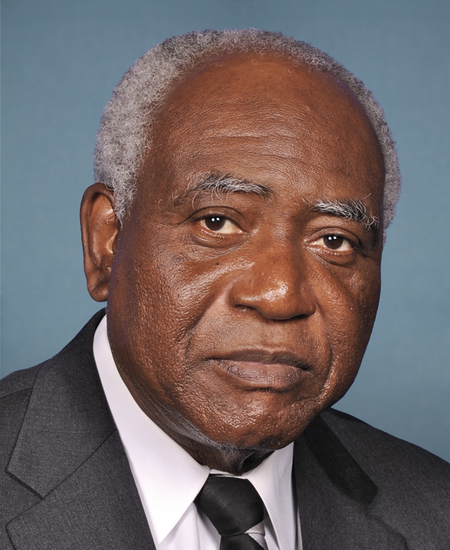
Rep. Danny K. Davis
Sponsored bills
Maddy summaryThe FAMILY Act would establish a national paid family and medical leave insurance program that provides wage replacement benefits for workers needing time off for caregiving or medical reasons. It defines "qualified caregiving" to include caring for a family member with a serious health condition, personal medical needs, or recovery from violence (including domestic violence, sexual assault, or stalking). Benefits would be calculated based on earnings, with a minimum monthly benefit of $580 and maximum of $4,000, administered by a new Office of Paid Family and Medical Leave within the Social Security Administration. Eligible individuals would need to have worked for at least 8 quarters in the previous year and file an application with required documentation, while existing state paid leave programs would continue to operate alongside this federal program.
Maddy summaryThis bill creates a program to assign traveling physicians to provide healthcare services to veterans residing in U.S. territories, including Puerto Rico, Guam, American Samoa, and the U.S. Virgin Islands. It allows the Department of Veterans Affairs (VA) to assign physicians for up to one year at VA facilities in these territories, requiring coordination with local medical providers to ensure quality care. Physicians assigned under this program would receive a relocation or retention bonus similar to existing federal employee incentives. The bill directly affects veterans in U.S. territories and VA healthcare operations there.
Equal COLA Act This bill applies a cost-of-living adjustment (COLA) for annuities paid under the Federal Employees Retirement System that is equal to the increase in inflation, regardless of the amount of the increase. Specifically, for any year in which the Consumer Price Index (CPI) has increased over the previous year, the COLA amount shall be increased by the change in the CPI from the previous year. Current law applies an adjustment equal to the change in CPI only if the change is 2% or less. If the change is between 2% and 3%, the adjustment is limited to 2%. If the change is more than 3%, the adjustment is limited to 1% less than the change.
Maddy summaryHRES 714 is a resolution expressing the House of Representatives' support for designating the week of September 14-20, 2025, as "National Adult Education and Family Literacy Week." It aims to raise public awareness about the importance of adult education, workforce skills, and family literacy programs. The resolution highlights statistics showing millions of U.S. adults lack basic literacy, numeracy, or English-language skills, which impact employment, health, and educational outcomes for families. It encourages public support for these programs but does not create new policies or direct funding.
Maddy summaryThe George Floyd Justice in Policing Act of 2025 would establish a National Police Misconduct Registry to track officer complaints, disciplinary actions, and misconduct records across all law enforcement agencies. It would require law enforcement agencies to implement body-worn camera programs with specific recording and retention policies, ban chokeholds and no-knock warrants in drug cases, and reform qualified immunity to make it easier to hold officers accountable for misconduct. The bill mandates comprehensive data collection on use of force incidents, requiring agencies to report detailed information about stops, searches, and force used, disaggregated by race, ethnicity, gender, and other demographics. These provisions would directly affect all Federal, State, and local law enforcement agencies that receive federal grant funding, with requirements for policy changes, training, and data reporting.
Maddy summaryThe National Infrastructure Bank Act of 2025 would establish a government-owned bank to finance infrastructure projects across the United States, aiming to address a $3.69 trillion financing gap identified by the American Society of Civil Engineers. The bank would provide loans up to $5 trillion for transportation, energy, environmental, and community development projects, with specific criteria focused on economic growth, environmental benefits, and serving disadvantaged communities. It would be governed by a 25-member Board of Directors with diverse regional and expertise qualifications, and would operate with tax exemptions and capital requirements to ensure financial stability. The bill also establishes regional economic accelerator planning groups to coordinate infrastructure development and create a pipeline of projects for the bank to finance.
Maddy summaryHR 5354, the Equal Employment for All Act of 2025, prohibits most employers from using credit reports or credit history in hiring decisions or employment-related actions like job denials. It directly affects employers nationwide by banning the use of consumer reports (including credit checks) for employment purposes, except for positions requiring national security clearance or when required by law. The bill amends the Fair Credit Reporting Act to create this broad prohibition, stating employers cannot use credit information to deny jobs or make other employment decisions, even if an applicant consents. Exceptions are limited to national security roles or legal mandates, and the bill maintains existing disclosure requirements for credit checks used in permitted circumstances.
Maddy summaryHRES 701 is a House resolution requesting the President to provide documents about the Department of Government Efficiency's (DOGE) access to Social Security Administration data. It specifically seeks records related to a cloud system hosting the Social Security Numerical Identification System (NUMIDENT), including security plans, the purpose of the cloud copy (e.g., audits, benefits decisions, AI training), and access by named individuals. The resolution requires the President to submit these materials within 14 days of adoption. This is an inquiry, not a policy change, focused solely on transparency about government data access.
Maddy summaryHR 5309, the Congressional Tribute to Constance Baker Motley Act of 2025, authorizes a posthumous Congressional gold medal for Constance Baker Motley, a pioneering civil rights attorney and judge. The bill directs the Treasury Secretary to strike the medal with her image and name, to be presented to her son, Joel W. Motley III, and her niece, Constance Royster. It also permits the sale of bronze duplicates at cost to cover expenses, with proceeds going to the U.S. Mint fund. This is a commemorative measure with no substantive policy changes, honoring Motley’s legacy as the first African-American woman appointed to a federal judgeship.