

Maddy summaryHR 1088, the Shirley Chisholm Congressional Gold Medal Act, authorizes a posthumous Congressional Gold Medal to honor Congresswoman Shirley Chisholm, the first African-American woman elected to Congress (1968) and the first Black candidate for a major party's presidential nomination (1972). The bill directs the Treasury Secretary to design and strike a gold medal featuring Chisholm's image, which will be presented by Congress and then permanently displayed at the Smithsonian Institution. Duplicate bronze medals may be sold to the public to cover production costs, with proceeds deposited into the U.S. Mint fund. This bill commemorates Chisholm's legacy and achievements without creating new laws or affecting any current policies.
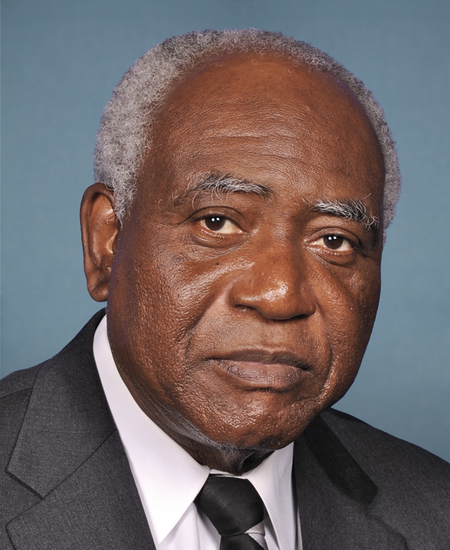
Rep. Danny K. Davis
Sponsored bills
Maddy summaryThis bill authorizes a posthumous Congressional gold medal for Constance Baker Motley, a pioneering civil rights attorney and federal judge. It directs the Treasury to strike a gold medal featuring her image and name, to be presented to her son, Joel Motley III, and niece, Constance Royster. The medal is a commemorative tribute recognizing her historic contributions to civil rights and her service as the first African-American woman appointed to a federal judgeship. No new policies or programs are created; the bill solely honors her legacy through a commemorative medal.
Stop Hate Crimes Act of 2023 This bill lowers the statutory burden of proof for showing intent with respect to a federal hate crime offense. Current law makes it unlawful to willfully cause bodily injury, or attempt to do so using a dangerous weapon, because of the actual or perceived protected characteristic (e.g., race) of a person. In 2014, the U.S. Court of Appeals for the Sixth Circuit held that the because of standard requires proof that a person's actual or perceived protected characteristic was the sole motivating factor in the offense. This bill replaces the because of standard with a new standard. Specifically, willfully causing bodily injury, or attempting to do so using a dangerous weapon, is a hate crime offense if a person's actual or perceived protected characteristic was a contributory motivating factor in the offense.
Maddy summaryHR 907, the Protecting Community Television Act, is a procedural bill that modifies the legal definition of "franchise fee" in the Communications Act of 1934. It changes the wording from "includes" to "means" and adds "other monetary" before "assessment" in the fee definition. This amendment does not alter actual fee amounts, payment requirements, or protections for community television providers. It solely adjusts the technical language used in federal law to describe these fees. The bill has no direct impact on community TV operations or funding, as it only refines the statutory definition.
Maddy summaryHR 1050, the Data Science and Literacy Act of 2023, creates a federal grant program to improve data literacy education across U.S. schools from pre-kindergarten through college. The bill authorizes $10 million annually to fund grants for eligible schools and organizations to develop data science curricula, provide teacher training, expand access to learning materials, and reduce educational gaps for underrepresented students. Grantees must track student demographics and report on program effectiveness, with a focus on increasing diversity in STEM fields. Title II of the bill also requires the collection of detailed data on secondary school STEM teachers to better understand workforce composition. This legislation aims to strengthen data literacy skills among students to prepare them for 21st-century careers and informed citizenship.
Maddy summaryThe American Opportunity Accounts Act establishes savings accounts for children born after December 31, 2005, to help them build financial assets. The government will make an initial $1,000 contribution to each eligible child's account (for those born after 2023) and provide annual contributions based on family income, ranging from $2,000 for low-income families to $0 for higher-income families. Account holders can access funds for education, home ownership, or other qualified expenses after age 18, with certain exceptions for higher education costs. The accounts are excluded from federal benefit eligibility calculations, and the government will manage the accounts through an American Opportunity Fund Board.
Maddy summaryThis bill authorizes a single Congressional Gold Medal to honor all U.S. Army Dustoff crews who served during the Vietnam War (1962-1973). It recognizes their critical role in evacuating nearly 900,000 wounded personnel, including U.S., South Vietnamese, and allied forces, under extreme combat conditions. The medal, designed with input from the Secretary of Defense, will be presented to the U.S. Army Medical Department Museum for permanent display. Duplicate bronze medals may be sold to cover costs, but the primary action is the commemorative recognition of these crews' service.
Maddy summaryHR 1002, the "Saving the Civil Service Act," restricts how federal government positions can be moved between competitive hiring (where most federal jobs are filled through merit-based exams) and non-competitive "excepted service" positions. The bill prevents agencies from moving positions out of the competitive service unless they fit specific schedules in place as of September 2020, requires Office of Personnel Management (OPM) approval for certain transfers, and mandates employee consent for any position transfer between service types. It also limits the number of employees that can be moved from competitive to excepted service during a presidential term - capping it at 1% of an agency's workforce or five employees, whichever is greater. The bill directly affects federal employees and agencies by making it harder to shift positions out of the competitive hiring system without strict oversight.
Maddy summaryHR 987 authorizes the U.S. Mint to produce commemorative coins honoring Golda Meir, Israel's first female Prime Minister, and the 75th anniversary of U.S.-Israel relations. It specifies three coin types: $5 gold coins (max 50,000), $1 silver coins (max 400,000), and half-dollar clad coins (max 750,000), with detailed weight and composition requirements. All coins will include Golda Meir's image, her name, and commemorative inscriptions, and will be sold during 2026. A surcharge ($35 for $5 coins, $10 for $1 coins, $5 for half-dollars) will be paid to the American Friends of Kiryat Sanz Laniado Hospital Inc. to support its hospital operations.
Maddy summaryHR 782 prohibits state officials from interfering with abortion services provided across state lines. It specifically blocks states from restricting: (1) out-of-state patients traveling for legal abortions, (2) providers offering such services, (3) assistance for travel or care, or (4) the interstate shipment of FDA-approved abortion drugs. The bill allows the federal Attorney General or affected individuals to sue violators for injunctions, damages, and attorney fees. It directly affects patients seeking care in other states, healthcare providers, transportation services, and pharmacies handling FDA-approved abortion medications. The law focuses on preventing state laws from blocking access to legally permitted abortion services.