

Voters on the Move Registration Act of 2023 This bill requires the Consumer Financial Protection Bureau to develop, and specified agencies to distribute, a statement providing individuals with information on how to register to vote and their voting rights. This information must be provided to individuals upon their participation in certain rental assistance programs or application for certain residential mortgages.
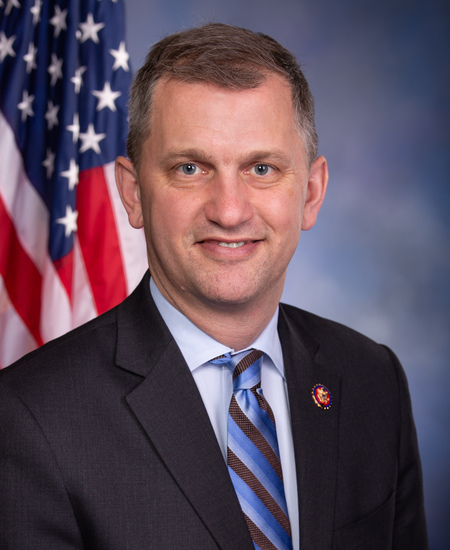
Rep. Sean Casten
Sponsored bills
Maddy summaryThe Sustaining Our Democracy Act creates a federal program to provide states with annual funding to improve election administration and increase voting access. It allocates $2 billion each year from 2024-2033 through the State Election Assistance and Innovation Trust Fund to support activities like upgrading voting equipment, training election workers, and expanding voting access for underserved communities, people with disabilities, and voters on Indian lands. States must submit detailed plans for using funds, which cannot be used for activities that restrict voting access or target election officials. The Act establishes an Office of Democracy Advancement and Innovation to administer the program, monitor fund usage, and oversee compliance with its requirements.
Maddy summaryThe Unhoused Voter Opportunity Through Elections Act (HR 5294) protects voting rights for people experiencing homelessness by prohibiting states from denying voting access based on living in a "nontraditional abode" like shelters, public spaces, or locations where someone is considered homeless under federal law. Key provisions require election officials to make ballot drop boxes accessible to unhoused individuals, accept written attestations of residence instead of traditional proof, allow homeless shelters to be used as voting addresses, and mandate outreach to shelters about registration deadlines and election dates. The bill also creates a grant program to fund mobile voting centers and direct outreach services specifically for unhoused individuals. These changes would directly affect homeless individuals and election officials across all states, implementing concrete policy changes to improve voting access for a population often excluded from the electoral process.
Maddy summaryHR 5295, the Expanding the VOTE Act, modifies Section 203 of the Voting Rights Act to expand language access for voters. It requires states and localities to provide voting materials (including ballots and instructions) in the language of covered language minority groups, with new provisions for American Indian and Alaska Native languages requiring tribal government consultation for unwritten languages. The bill creates $15 million in grants to help jurisdictions provide voting materials in languages that don’t currently trigger Section 203 coverage, while mandating continued provision for those groups in future elections. It also directs a study to evaluate lowering population thresholds for language protections and expanding the definition of covered languages.
Maddy summaryHR 4277, the Saving America’s Pollinators Act of 2023, would immediately cancel all registrations for neonicotinoid pesticides (including imidacloprid and clothianidin) and ban their sale, use, and future registration. This directly affects farmers and crop producers who currently use these pesticides on over 150 million acres of crops like corn and soybeans, where seed coatings are widely applied. The bill also ends exemptions for seed-treated pesticides and requires the Environmental Protection Agency to revoke tolerances for pesticide residues in food within six months. Additionally, it mandates the U.S. Fish and Wildlife Service’s newly established Center for Pollinator Conservation to monitor native bee populations and coordinate federal actions to reverse pollinator declines.
Maddy summaryHR 4185, the EAT Healthy Foods from Local Farmers Act, allows states to use federal funds to purchase fresh produce, dairy, and other priority foods directly from local small farms and food businesses - particularly those owned by women, veterans, or beginning farmers - to distribute through emergency food programs. It allocates $50 million annually (2024-2028) for states to create projects that partner with eligible local growers and emergency feeding organizations, focusing on culturally relevant foods for communities facing food insecurity. States must submit plans detailing partnerships, food types, and timelines, with annual reporting to Congress on project effectiveness. The bill aims to strengthen local food supply chains, improve access to nutritious food, and support underserved agricultural businesses.
Maddy summaryHR 5217, the Refuge From Cruel Trapping Act, prohibits the possession or use of body-gripping traps (devices that kill or severely injure wildlife) within National Wildlife Refuges. It directly affects individuals and entities using such traps in refuges, with key exceptions allowing federal agencies to use them for controlling invasive species or protecting endangered species, Alaska refuge operations, and tribal subsistence hunting. Violations carry penalties including civil fines up to $500 per trap, up to 180 days in jail, and forfeiture of the trap and captured wildlife. The bill requires the Secretary of the Interior to issue implementing regulations within 120 days, though enforcement begins 120 days after enactment regardless of regulations.
Assault Weapons Excise Act This bill imposes an additional 1000% excise tax on large capacity ammunition feeding devices and semiautomatic assault weapons. It exempts from such additional tax devices and weapons acquired by the United States or by a state or local government.
Maddy summaryThe Ethics in Energy Act of 2023 prohibits large energy companies (including major electric utilities and natural gas providers) from charging customers for political influence spending. It requires these "covered utilities" to stop recovering expenses like lobbying, campaign contributions, or PR campaigns aimed at shaping regulations or elections from customer rates. Utilities must submit detailed annual reports on such spending to the Federal Energy Regulatory Commission (FERC), and FERC can impose penalties (up to triple the amount recovered) that must be refunded to customers. Penalties are split: half goes to ratepayers as rebates, half funds FERC’s enforcement.
This resolution expresses that the International Atomic Energy Agency plays an indispensable role in strengthening nuclear security and safety around the globe. The resolution also reaffirms that the United States has a vital interest in preventing the spread of nuclear weapons and securing nuclear materials.