

Maddy summaryThis non-binding House resolution (HRES 577) demands that the current administration immediately release all unclassified federal documents related to Jeffrey Epstein, including flight logs, correspondence, and evidence. It specifically requires the release of materials involving Epstein, Ghislaine Maxwell, and known associates, with redactions only to protect minor victims' identities and ongoing prosecutions. The resolution also calls for the Department of Justice and FBI to submit a report on any delays or evidence suppression related to the case. As a resolution, it does not create new law but serves as a formal congressional demand for transparency regarding Epstein-related investigations.
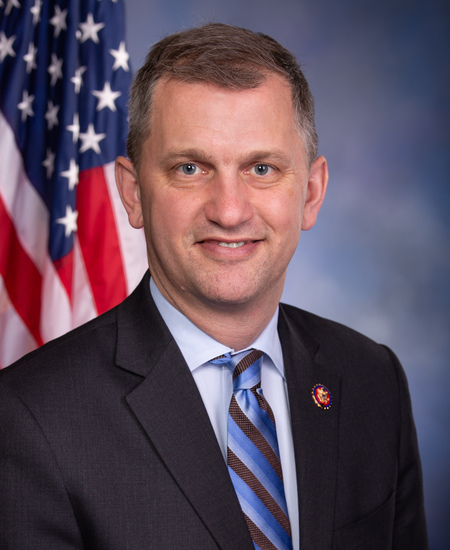
Rep. Sean Casten
Sponsored bills
Maddy summaryHR 4338, the Weather-Safe Energy Act of 2025, directs the Department of Energy to create and maintain a free online tool called the Weather-Safe Energy Platform. This platform will provide electricity utilities, grid operators, and regulators with high-resolution weather and hydrological data - showing how patterns change over time and location - to improve planning for extreme events like hurricanes or wildfires. The bill requires the tool to include historical data, projections, stakeholder input, and research findings on extreme weather impacts, with technical assistance training provided to users. The platform must be launched within two years of the bill's enactment, and the Department will report on its use and effectiveness to Congress every three years.
Maddy summaryThe Clean Shipping Act of 2025 sets new federal standards to reduce greenhouse gas emissions from commercial shipping in U.S. waters. It requires vessels over 400 gross tons operating on covered voyages (between U.S. ports or U.S. ports and foreign ports) to gradually lower the carbon intensity of their fuel, aiming for 100% reduction by 2050 through phased targets (e.g., 30% reduction by 2030, 58% by 2034). Ship owners must report annual fuel carbon intensity and emissions data, while the EPA must develop consistent reporting methods aligned with international standards. The law applies directly to commercial shipping companies operating eligible vessels and includes flexibility for feasibility adjustments if technological or economic challenges arise.
Maddy summaryThe Expanding Access to Mental Health Services in Schools Act of 2025 creates a federal grant program to help high-need schools hire and retain mental health professionals like counselors, psychologists, and social workers. It targets schools in the top 15% of need (based on student poverty or counts) that lack required staff ratios, such as one counselor per 250 students. Grants fund recruitment incentives (e.g., student loan repayment), retention programs, and evidence-based mental health services, with recipients required to contribute 25% of costs from non-federal funds. Schools must report annually on staff numbers, student-to-staff ratios, and retention rates to track progress toward improved mental health access.
Maddy summaryHR 4261, the "Stopping the Fraudulent Sales of Firearms Act," amends federal law to specifically prohibit importing, manufacturing, or selling firearms or ammunition using false or fraudulent pretenses. It directly affects individuals or entities engaging in deceptive firearm transactions. The bill adds a new provision (Section 922(a)(10)) banning both the fraudulent sale itself and the transmission of related communications via interstate wire, radio, or TV. This creates a clear legal prohibition against deceptive sales tactics and associated communications in firearm commerce.
Maddy summaryHR 4265, the Reproductive Health Travel Fund Act of 2025, would provide $350 million annually (2026-2030) in federal grants to cover travel and logistical costs for people seeking abortion care in states with bans or severe restrictions. The bill directly affects individuals who must travel across state lines for abortion services, particularly those facing systemic barriers like Black, Indigenous, and low-income people. Grants can cover round-trip travel, lodging, childcare, meals, translation, and lost wages, but cannot fund the abortion procedure itself. Eligible recipients are community-based abortion funds meeting specific criteria, with priority given to organizations serving those impacted by state abortion bans.
Maddy summaryHRES 558 is a symbolic House resolution commemorating the July 4, 2022, Highland Park, Illinois, Independence Day Parade shooting. It honors the seven victims - Katie Goldstein, Irina McCarthy, Kevin McCarthy, Stephen Strauss, Jacquelyn Sundheim, Nicolas Toledo-Zaragoza, and Eduardo Uvaldo - who were killed, and supports the over 40 survivors and the Highland Park community. The resolution expresses the House's remembrance of the tragedy, acknowledges the community's healing efforts, and reaffirms commitment to reducing gun violence. As a commemorative resolution, it contains no new policies or funding provisions.
Maddy summaryHR 4244 prohibits Medicaid from covering conversion therapy, defined as any paid practice attempting to change a person's sexual orientation or gender identity. This applies to all Medicaid enrollees and providers starting in the first quarter after the law takes effect. The bill explicitly excludes supportive services like gender transition assistance or counseling focused on acceptance and coping. It directly affects Medicaid-funded healthcare providers who offer conversion therapy and enrollees who might otherwise access such services through Medicaid.
Maddy summaryThe GLOBE Act of 2025 aims to advance global LGBTQI human rights by requiring the U.S. State Department to document and report on violence and discrimination against LGBTQI people worldwide. It establishes a permanent Special Envoy for LGBTQI rights at the State Department and creates an interagency group to coordinate U.S. government responses to threats against LGBTQI populations. The bill authorizes sanctions against foreign individuals responsible for human rights violations against LGBTQI people, including banning them from entering the United States. It also includes provisions to improve U.S. foreign assistance programs to better protect LGBTQI rights and makes changes to immigration policy to better protect LGBTQI asylum seekers.
Maddy summaryThis bill amends two sections of the National Security Act to improve transparency around security clearance decisions. It broadens due process protections to cover all individuals (not just executive branch employees) seeking or holding security clearances. The key provision requires agencies to publish annual reports detailing every clearance denial or revocation, including the specific reasons, the employing agency or company, and outcomes of appeals. These reports directly affect anyone with or seeking a security clearance, whether working for the government or in the private sector. The bill focuses on requiring more detailed public reporting, not changing clearance standards or eligibility.