

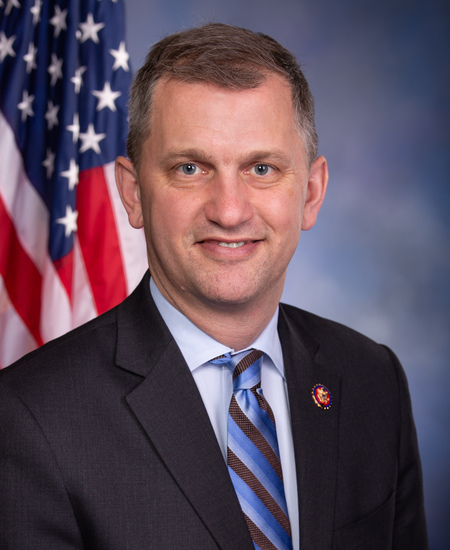
Photo of Sean Casten
D United States House · District 6 · Illinois On the 2026 ballot

Rep. Sean Casten

Compare
Total votes
2,837
all sessions
Attendance
98%
44 missed
Higher than 82% of chamber peers
With party
96%
of cast votes
Higher than 79% of chamber peers
Bipartisan score
2%
crosses aisle rarely
Lower than 79% of chamber peers
Sponsored
1,498
bills & resolutions
Near the chamber average
Committees
5
assignments
1,498 bills and resolutions

Sponsored bills

Total
1,498
Primary
110
Co-sponsor
1,388
This page
1,498
matching current filters
Co-sponsor HR 3382
Passed · United States House · Co-sponsor
Small Entity Update Act

Maddy summaryThis bill requires the Securities and Exchange Commission (SEC) to regularly review and update its definition of "small entities" (such as small businesses and organizations subject to SEC regulations). Every five years, the SEC must study whether the current definition aligns with regulatory goals, reflects market growth, and covers a meaningful number of entities, then submit detailed recommendations to Congress. The SEC must revise its rules based on these studies and adjust dollar thresholds in the definition annually to account for inflation using the Consumer Price Index. This directly affects small entities regulated by the SEC, ensuring their definition stays relevant to current market conditions.

Passed Jul 22, 2025 1 co-sponsor
Co-sponsor HR 3095
Passed · United States House · Co-sponsor
To direct the United States Postal Service to designate single, unique ZIP Codes for certain communities, and for other purposes.

Maddy summaryHR 3095 requires the U.S. Postal Service to assign a single, unique ZIP Code to 74 specific communities across 16 states (including Canyon Lake, CA; Castle Pines, CO; and Estero, FL) within 270 days of the bill's enactment. This addresses current issues where these communities share ZIP Codes with neighboring areas, causing mail delivery confusion. The bill directly affects residents and businesses in these designated locations by simplifying mail routing. It creates a concrete administrative change without altering broader postal policies or funding.

Passed Jul 22, 2025 1 co-sponsor
Co-sponsor HR 1522
In committee · United States House · Co-sponsor
Federal Retirement Fairness Act

Maddy summaryHR 1522, the Federal Retirement Fairness Act, changes federal retirement rules to include temporary employees' service after January 1, 1988, in retirement benefit calculations. It directly affects temporary federal employees (including U.S. Postal Service workers) and Members of Congress who served after that date. The bill removes a previous cutoff date in retirement law, allowing their temporary service to count toward retirement eligibility. This means eligible temporary workers can now have their full service period considered when calculating retirement benefits.

In committee Jul 22, 2025 1 co-sponsor
Co-sponsor HR 4497
In committee · United States House · Co-sponsor
Extreme Heat Emergency Act of 2025

Maddy summaryHR 4497, the Extreme Heat Emergency Act of 2025, amends the Stafford Act to explicitly include "extreme heat" in the definition of a "major disaster" alongside events like floods and droughts. This change would allow communities experiencing severe, life-threatening heatwaves to qualify for federal disaster assistance under existing Stafford Act programs. The bill directly affects local governments and residents in areas hit by extreme heat events that meet the new definition, enabling them to access federal aid previously unavailable for heat emergencies. It does not create new programs or funding but adjusts eligibility criteria for current disaster relief mechanisms.

In committee Jul 18, 2025 1 co-sponsor
Co-sponsor HR 4510
In committee · United States House · Co-sponsor
Healing Partnerships for Survivors Act

Maddy summaryThis bill authorizes $30 million annually (2026-2030) to fund grants for partnerships between sexual assault programs and health/wellness providers, behavioral health programs, and disability services. It directly supports survivors of sexual assault - especially adult survivors of childhood abuse - by requiring grantees to develop trauma-informed, culturally relevant services like therapy, housing assistance, and care coordination. Eligible recipients include state/tribal coalitions, nonprofit rape crisis centers, and tribal organizations, which must use funds for specific activities including prevention, screening, and staff training while protecting survivor privacy. Grantees must report on program effectiveness, and the bill also updates existing law to explicitly include sexual assault in related provisions.

In committee Jul 17, 2025 1 co-sponsor
Co-sponsor HR 4515
In committee · United States House · Co-sponsor
Climate Change Health Protection and Promotion Act of 2025

Maddy summaryThis bill establishes the Office of Climate Change and Health Equity within the Department of Health and Human Services to coordinate federal efforts addressing climate change's health impacts. It requires the creation of a National Strategic Action Plan to identify communities most affected by climate-related health threats - including environmental justice communities, medically underserved communities, and Tribal communities - and develop strategies for preparedness and response. The plan must address specific health impacts like extreme heat, air pollution, infectious diseases, and mental health effects, while prioritizing health equity and environmental justice. The bill also creates a Science Advisory Board to provide expert guidance and authorizes funding for these initiatives over several years. These provisions are designed to strengthen the health sector's ability to respond to climate change impacts across the United States.

In committee Jul 17, 2025 1 co-sponsor
Co-sponsor HR 4443
In committee · United States House · Co-sponsor
Asunción Valdivia Heat Illness, Injury, and Fatality Prevention Act of 2025

Maddy summaryThis bill establishes federal worker heat protection standards to prevent heat-related illness and injury. It requires employers to provide a workplace free from heat stress hazards, including access to cool water, scheduled rest breaks, shaded cooling areas, and training on heat illness symptoms. The Secretary of Labor must create these standards within one year, incorporating evidence-based practices like engineering controls (e.g., ventilation), administrative measures (e.g., adjusted schedules), and employer-paid personal protective equipment. The law directly affects all employers in high-heat work environments - such as construction, agriculture, and manufacturing - and strengthens whistleblower protections for workers reporting safety violations.

In committee Jul 16, 2025 1 co-sponsor
Co-sponsor HR 4418
In committee · United States House · Co-sponsor
Child Care for Working Families Act

Maddy summaryThe Child Care for Working Families Act creates a federal program to provide affordable, high-quality child care for working families with children under age 6. It would provide direct child care assistance through certificates or grants to parents, with no copayment required for families at or below 85% of state median income. The program requires states to implement quality standards for child care providers, including a tiered quality system and minimum wage requirements for staff (at least a living wage equivalent to elementary educators). The bill appropriates $20 billion for the program over five years, with additional funding for quality improvement initiatives and universal preschool services.

In committee Jul 15, 2025 1 co-sponsor
Co-sponsor HR 4395
In committee · United States House · Co-sponsor
Stephanie Tubbs Jones Uterine Fibroid Research and Education Act of 2025

Maddy summaryThis bill directs the Department of Health and Human Services to significantly increase federal research funding for uterine fibroids ($30 million annually from 2026-2030), expand coordination of NIH research, and establish a Medicaid data system to track treatment access and costs. It mandates public education on fibroid symptoms, prevalence (especially among Black women, who face higher risk and severity), and non-hysterectomy treatment options. The bill also requires disseminating evidence-based provider resources on managing fibroids while preserving fertility. These provisions directly affect the estimated 26 million U.S. women with fibroids - particularly women of color - and aim to address the current lack of research and treatment data.

In committee Jul 15, 2025 1 co-sponsor
Primary HR 4394
In committee · United States House · Lead sponsor
the CODE Act of 2025

Maddy summaryHR 4394, the CODE Act of 2025, establishes a 18-month public-private partnership program to help decentralized finance (DeFi) services comply with existing anti-money laundering and cybersecurity requirements under the Bank Secrecy Act. The program, to be created within six months of enactment, requires DeFi platforms (like crypto trading or lending services) to integrate anti-money laundering checks, identity verification, and security controls into their smart contract code before deployment. It also mandates FinCEN to publish a compliance advisory within 18 months and requires the Treasury to issue rules defining DeFi services and requiring risk-based compliance programs within 30 months. The bill directly affects digital asset platforms operating on public blockchains, aiming to standardize security practices without creating new regulatory standards.

In committee Jul 15, 2025 0 co-sponsors
Showing 191 to 200 of 1,498 bills
Previous 1 … 19 20 21 … 150 Next