

Maddy summaryHR 8407, "Domenic and Ed's Law," amends the Higher Education Act to allow parents who took out federal student loans for their children to have those loans forgiven if their child becomes permanently disabled or dies. The bill expands existing loan forgiveness provisions to include these two specific circumstances, directly affecting parents with outstanding federal education loans. Key provisions require the child's disability to be determined as permanent and total by the Secretary or the child's death, with no requirement that the disability or death occurred after the loan was taken out. This change applies to all parent loans, regardless of when the loan was received or when the disability or death occurred.
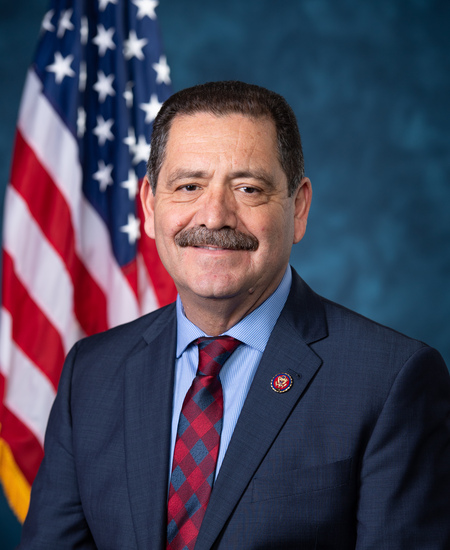
Rep. Jesús G. "Chuy" García
Sponsored bills
Maddy summaryThe Rights for the TSA Workforce Act of 2024 would transition Transportation Security Administration (TSA) employees, particularly screening agents, from TSA-specific personnel rules to the standard federal government personnel system under Title 5 of the U.S. Code by December 31, 2024. The bill prohibits changes to current personnel policies for covered employees until the transition date and ensures no reduction in pay or benefits during the conversion process. It preserves certain benefits like law enforcement availability pay for Federal air marshals and maintains collective bargaining rights for screening agents. The bill also requires various reports to Congress on recruitment, implementation, diversity, and workplace safety to be submitted within specified timeframes.
Maddy summaryHRES 1206 is a symbolic House resolution supporting the designation of May 2024 as "Mental Health Awareness Month." It does not create new laws or funding but aims to raise public awareness about mental health challenges, emphasizing the need to reduce stigma and treat mental well-being as equally important as physical health. The resolution cites statistics on rising mental health crises - including increased anxiety, depression, and suicide rates among youth, LGBTQ+ individuals, veterans, and communities of color - to underscore the urgency of the issue. It encourages nationwide efforts to promote mental health awareness and access to care during this designated month.
Maddy summaryThe BUILD GREEN Infrastructure and Jobs Act establishes a $50 billion annual grant program (2025-2034) to fund electrified transportation infrastructure projects that reduce greenhouse gas emissions and improve transportation access. It prioritizes projects in frontline, vulnerable, or disadvantaged communities (requiring 40% of funds), with 30-40% allocated to rural areas and 60-70% to urban areas. The bill mandates recipients use 5% of grant funds for workforce training, pay a minimum wage of $17 per hour (increasing annually), and use renewable energy sources for project operations. Eligible projects include electric buses, rail systems, port infrastructure with EV charging, and micromobility initiatives that reduce emissions and improve transportation services.
Maddy summaryThe Stop Corporate Inversions Act of 2024 targets tax avoidance strategies where U.S. companies merge with foreign entities to relocate their tax residence. It defines an "inverted domestic corporation" as a foreign entity that acquired a U.S. business after May 8, 2014, and either has over 50% of its stock held by former U.S. shareholders or maintains management control primarily in the U.S. with at least 25% of its business activities (employees, compensation, assets, or income) based in the U.S. Such corporations would then be treated as U.S. domestic entities for tax purposes, subjecting them to standard U.S. corporate tax rates. The bill includes an exception if the corporation has substantial foreign business activities, per existing 2017 regulations.
Maddy summaryThis bill designates the U.S. Postal Service facility at 616 East Main Street in St. Charles, Illinois, as the "Veterans of the Vietnam War Memorial Post Office." It updates all federal references in laws, maps, and records to use this new name, honoring veterans of the Vietnam War. The bill does not change the post office's operations, services, or funding - it is a purely commemorative naming action with no substantive policy impact.
Maddy summaryThis bill amends veterans' education benefit rules to expand when institutions must repay funds. It adds two new scenarios triggering repayment: (1) course/program suspension due to risk-based surveys under Section 3673A, and (2) Secretary of Education findings that an institution harmed borrowers through actionable misconduct. Educational institutions receiving VA benefits must repay all assistance funds if they close or terminate a program due to these fraud determinations. The policy directly affects veterans whose benefits could be restored if institutions repay funds, and institutions that must now repay if found liable for fraud harming students.
Maddy summaryHRES 1186 is a non-binding House resolution recognizing the critical role of Guatemala's Indigenous communities - including Maya, Garifuna, and Xinka peoples - in defending democratic elections after the 2023 vote, despite systemic discrimination and marginalization. It highlights historical inequities (e.g., 75% Indigenous poverty vs. 36% non-Indigenous) and urges the Guatemalan government to honor commitments to represent all citizens equitably. The resolution specifically directs U.S. officials to encourage transparency in Guatemala, monitor corruption ties, and support Indigenous-led democracy efforts. It does not create new laws but formally expresses U.S. support for Indigenous rights and democratic processes in Guatemala. (HRES 1186, April 30, 2024)
Maddy summaryThe CROWN Act of 2024 prohibits discrimination based on hair texture or style commonly associated with race or national origin, such as braids, locs, cornrows, twists, or afros. It directly affects individuals - particularly people of African descent - who face workplace, school, housing, or public accommodation discrimination due to natural or protective hairstyles. The bill expands existing federal civil rights laws (like Title VI, the Fair Housing Act, and Title VII) to explicitly include hair-based discrimination, requiring compliance in federally funded programs, housing, employment, and public spaces. It clarifies that grooming policies targeting these hairstyles violate anti-discrimination protections without creating new legal standards.
Maddy summaryThe Lead-Safe Housing for Kids Act of 2024 requires landlords of federally assisted housing to conduct lead hazard risk assessments before families with children under 6 move in or renew leases. If lead hazards are found, landlords must fix them within 30 days (with no extensions allowed) and notify residents in accessible formats. Families with children under 6 can immediately relocate to safer housing - such as units built after 1978 or lead-free housing - without penalties if hazards aren’t controlled on time. This applies to housing receiving tenant-based rental assistance (like Section 8), public housing, or project-based assistance over $5,000, with funding authorized for 2025-2029.