

Federal Firearm Licensee Act This bill establishes new security requirements and expands recordkeeping and reporting requirements for federally licensed dealers, importers, and manufacturers of firearms (i.e., federal firearms licensees, or FFLs). The bill also broadens the authority of the Bureau of Alcohol, Tobacco, Firearms and Explosives (ATF) to administer federal firearms laws and enforce violations. Specifically, bill requires FFLs to implement and comply with a plan to secure their business premises, conduct quarterly physical checks of their business inventories, maintain video surveillance of the area where firearms are sold or transferred, and initiate firearms-related background checks for employees. Additionally, the bill requires FFLs to report to the ATF any inventory firearm that is lost, stolen, or unaccounted for and to notify the ATF about default-proceed transactions (i.e., allowable firearm transfers to an unlicensed person prior to the completion of a background check when the submitted background check remains incomplete after three business days). Finally, the bill removes limits on the ATF's authority to conduct activities related to the administration of federal firearms laws. It enhances the ATF's inspection authority, including by removing the limit on the number of annual compliance inspections (currently, one), requiring inspections of high-risk FFLs, and authorizing an additional 650 investigators. Finally, the bill directs the ATF to deny an application for a federal firearms license if it would endanger public safety or if the applicant is unlikely to comply with the law.
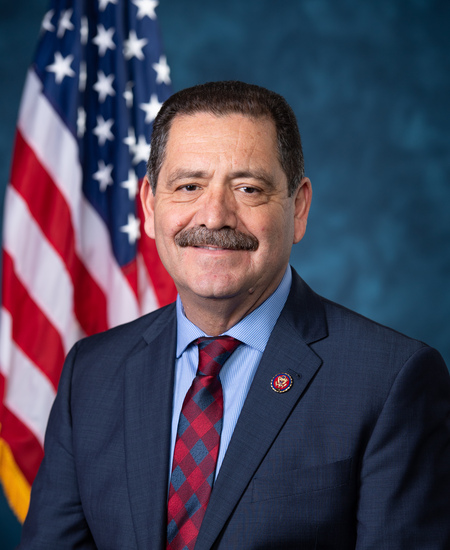
Rep. Jesús G. "Chuy" García
Sponsored bills
Maddy summaryThe IDEA Full Funding Act (HR 2598) mandates specific annual federal funding levels for the Individuals with Disabilities Education Act (IDEA), directly affecting schools and students with disabilities nationwide. It requires the federal government to appropriate either a fixed dollar amount or a specified percentage (increasing annually from 4.5% to 40%) of a calculated total - based on the number of eligible students and average per-pupil costs - starting in fiscal year 2026 through 2035. The bill sets clear, escalating funding targets, with the higher of two calculated amounts (dollar figure or percentage) becoming available for obligation each fiscal year. This establishes a binding financial commitment to address long-standing underfunding of special education services under IDEA.
Maddy summaryHR 2585, the Armenian Genocide Education Act, establishes a federal program through the Library of Congress to develop educational resources about the 1915-1923 Armenian Genocide for K-12 schools. It requires the Librarian to create and distribute accurate teaching materials, provide teacher training workshops, and maintain an online resource hub focused on the genocide's history, lessons, and prevention of hate. The program directly supports local educational agencies, independent schools, and educators by offering professional development and curriculum resources. It defines key terms like "denial" and "distortion" to guide the educational content, aiming to improve understanding of this historical event and its relevance to preventing modern-day hate crimes.
Maddy summaryHR 2587, the Youth Mental Health Research Act, establishes a new NIH research initiative to coordinate studies on youth mental health across federal health institutes. It focuses on two key areas: researching community resilience and early intervention strategies for at-risk youth, and improving how mental health services are delivered in schools, communities, and other settings where young people spend time. The bill authorizes $100 million annually for fiscal years 2025 through 2030 to fund this research. This initiative directly supports future evidence-based approaches to youth mental health, without altering current services or directly affecting individuals.
Maddy summaryHJRES 86 blocks a specific cost increase for an existing U.S. defense sale to Israel. It prohibits a $624 million upgrade to Major Defense Equipment and $269 million in other defense services, as reported in a March 3, 2025 congressional notice. The bill uses Congress’s authority under the Arms Export Control Act to disapprove this adjustment to a pre-approved sale. This directly affects the Government of Israel’s defense procurement by halting the implementation of the increased costs. The resolution targets a specific transaction (Transmittal No. 25-0C) rather than creating new policy.
Maddy summaryHJRES 84 is a congressional resolution that would block a specific proposed military sale to Israel. It targets defense articles including D9R and D9T Caterpillar bulldozers, spare parts, technical support services, and related logistics support described in a March 3, 2025, congressional notice. If passed, the resolution would prohibit the sale of these items by preventing the foreign military sale from moving forward under the Arms Export Control Act.
Maddy summaryHJRES 85 is a resolution that would block a specific proposed U.S. military sale to Israel. It targets the sale of 201 MK 83 bombs, 4,799 BLU-110 bombs, and 5,000 guidance kits for these weapons, as detailed in a government transmittal. If approved, the resolution would prevent the U.S. government from moving forward with this transaction. The measure directly affects the transfer of these defense articles to Israel. It is a disapproval resolution for one specific sale, not a new law.
Maddy summaryHJRES 83 is a joint resolution seeking congressional disapproval of a specific proposed U.S. military sale to Israel. It directly targets the sale of 35,529 MK 84 or BLU-117 general-purpose bomb bodies and 4,000 I-2000 Penetrator warheads, as detailed in a March 2025 government transmittal. If passed, the resolution would prohibit the U.S. government from proceeding with this particular foreign military sale under the Arms Export Control Act. The bill affects the executive branch's ability to authorize the sale and Israel as the intended recipient of these defense articles.
Maddy summaryThis resolution (HRES 271) is a symbolic House of Representatives measure honoring César Estrada Chávez, a civil rights leader who co-founded the United Farm Workers and advocated for farmworkers' rights through nonviolent action. It recognizes his life, legacy, and the "¡Sí se puede!" (Yes, we can!) slogan, referencing his work on fair wages, safe conditions, and the 1975 California Agricultural Labor Relations Act. The resolution encourages the public to commemorate his legacy through service and education, consistent with existing state observances of his birthday (March 31) in multiple states. It has no legal effect or policy changes, as it is purely commemorative.
Maddy summaryThis bill directs the U.S. Department of Health and Human Services to launch a national public education campaign about abortion access. The campaign must provide medically accurate information on where to obtain abortion services (including medication abortion), legal rights for out-of-state care, identifying misleading anti-abortion centers, spotting disinformation, and protecting personal health data. It specifically targets underserved communities like people of color, immigrants, LGBTQ+ individuals, rural residents, and those with low incomes, while prohibiting the promotion of misinformation or abstinence-only programs.