

Keeping Our Promise Act This bill authorizes issuing visas to certain individuals who were previously refused a diversity immigrant visa or admission into the United States because of certain executive orders or the COVID-19 public health emergency. (Diversity immigrant visas are available to eligible immigrants from countries with relatively low rates of immigration to the United States.) Specifically, this bill applies to individuals who were refused such a visa solely due to certain executive orders from 2017 to 2020, including orders which suspended the entry of individuals from certain countries. The bill also applies to diversity visa applicants who, because of the COVID-19 emergency, were (1) unable to receive a visa interview despite requesting one, or (2) unable to be admitted into the United States despite being approved for a visa. The Department of State must notify each individual covered under this bill of the individual's visa eligibility. To retain eligibility, an individual must respond to the State Department's notice within one year of the notice. An individual may also lose eligibility if the State Department determines that the applicant fails to meet certain requirements. The bill also relaxes certain annual numerical limits for individuals obtaining a visa under this bill. An individual who was a child when initially selected for a visa shall be treated as a child for the purposes of a visa application under this bill.
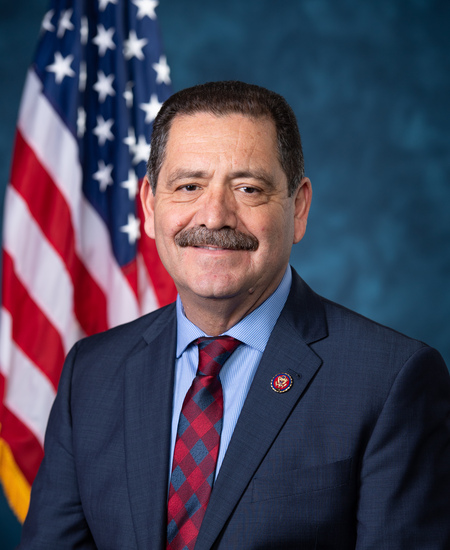
Rep. Jesús G. "Chuy" García
Sponsored bills
Extreme Risk Protection Order Act of 2021 This bill establishes grants to support the implementation of extreme risk protection order laws at the state and local levels, extends federal firearms restrictions to individuals who are subject to extreme risk protection orders, and expands related data collection. Extreme risk protection order laws, or red flag laws, generally allow certain individuals (e.g., law enforcement officers or family members) to petition a court for a temporary order that prohibits an at-risk individual from purchasing and possessing firearms. Among its provisions, the bill directs the Office of Community Oriented Policing Services within the Department of Justice to establish a grant program to help states, local governments, Indian tribes, and other entities implement extreme risk protection order laws; extends federal restrictions on the receipt, possession, shipment, and transportation of firearms and ammunition to individuals who are subject to extreme risk protection orders; and requires the Federal Bureau of Investigation to compile (and later destroy) records from federal, tribal, and state courts and other agencies that identify individuals who are subject to extreme risk protection orders.
Original National Domestic Violence Awareness Month Resolution of 2022 This resolution supports the goals and ideals of National Domestic Violence Awareness Month. Further, it expresses the sense of the House of Representatives that Congress should continue to raise awareness of and support programs to end domestic violence.
Major Richard Star Act This bill provides that combat-disabled uniformed services retirees with fewer than 20 years of creditable service may concurrently receive, without reduction, veterans' disability compensation and retired pay or combat-related special compensation.
Public Service Expenditure Cap Modification Act This bill waives for FY2023 a cap on the amount that recipients of Community Development Block Grant funds may spend on public service activities (e.g., those concerned with employment, crime prevention, childcare, and health). Current law prohibits recipients from expending more than 15% of funds on such activities. The bill also directs the Department of Housing and Urban Development to allow recipients to provide emergency grant payments on behalf of eligible families for up to six months. Currently, these payments, which provide assistance with housing, utilities, or other subsistence support, are limited to three months.
Maddy summaryHRES 1438 is a non-binding House resolution expressing support for Lights On Afterschool, an annual event held on October 20, 2022. It recognizes the value of afterschool programs in providing safe, engaging learning opportunities for children, especially during the pandemic. The resolution highlights how such programs support working families, enhance academic and social development, and strengthen community partnerships. It does not create new policies or affect any specific groups, as it solely serves to publicly endorse this national celebration of afterschool initiatives.
Ralph David Abernathy, Sr. National Historic Site Act This bill establishes the Ralph David Abernathy, Sr. National Historic Site in Georgia as a unit of the National Park System. The site shall preserve, protect, and interpret the area where the Reverend Dr. Abernathy served as pastor during the height of the modern civil rights movement and his role as an internationally recognized civil rights leader.
This concurrent resolution commemorates the 50th anniversary of the enactment of the Federal Water Pollution Control Act Amendments of 1972, commonly known as the Clean Water Act.
Global Aircraft Maintenance Safety Improvement Act This bill addresses safety standards related to foreign aircraft repair stations. Among other things, the bill requires that all foreign aircraft repair stations be subject to at least one unannounced safety inspection each year; requires air carriers to submit annual reports to the Federal Aviation Administration (FAA) with respect to heavy maintenance work on aircraft (including on-wing aircraft engines) performed outside the United States; sets forth minimum qualifications for mechanics and others working on U.S. registered aircraft at foreign repair stations; directs the FAA to convene a foreign repair station working group with other civil aviation authorities to conduct a review of the certification and oversight of the stations and to identify any future enhancements to strengthen oversight of such stations; and prohibits FAA officials from traveling internationally if previously mandated final rules on drug and alcohol testing and a threat assessment of employees at foreign repair stations are not implemented, with specified exceptions.
Merger Filing Fee Modernization Act of 202 2 This bill modifies and expands the schedule for graduated merger filing fees and requires that such fees be adjusted each year based on the Consumer Price Index. It also (1) requires parties to disclose in their premerger notification filings any subsidy received from a foreign entity of concern, (2) modifies the venue rules for multi-district antitrust litigation, and (3) establishes various reporting requirements.