

Supporting Older Workers Act This bill allows states to use allocated Workforce Innovation and Opportunity Act (WIOA) funds for statewide training activities to support older workers. Specifically, the bill authorizes training activities that coordinate with existing programs for older workers, support the development of activities that enhance the skills of older individuals, or enhance economic choices available to older individuals. The bill also requires the Department of Labor to award grants to states and local areas to hire WIOA coordinators for older worker and establishes the Older Workers Bureau. The Government Accountability Office must study how well existing state and local performance accountability measures under WIOA measure the success of older individuals.
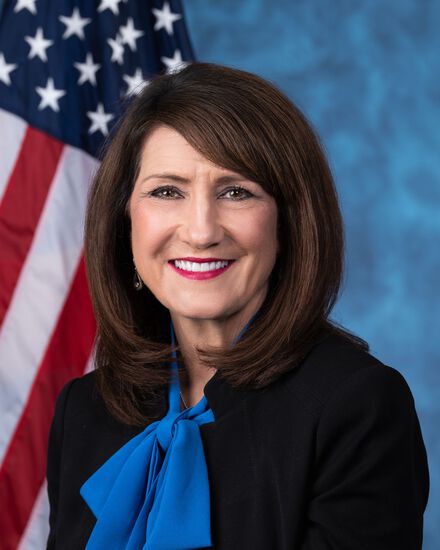
Rep. Marie Newman
Sponsored bills
Dr. Joanne Smith Memorial Rehabilitation Innovation Centers Act This bill directs the Centers for Medicare & Medicaid Services to publish and biennially update a list of all rehabilitation innovation centers. The bill defines rehabilitation innovation centers as rehabilitation facilities that (1) hold specified federal research and training designations for traumatic brain injury or spinal cord injury research, and (2) serve at least a certain number of Medicare patients.
Animal Freedom from Testing, Experiments, and Research Act of 2021 or the AFTER Act of 2021 This bill requires federal research facilities to facilitate the adoption or nonlaboratory placement of certain warm-blooded animals (e.g., dogs, cats, monkeys, guinea pigs, hamsters, and rabbits) with animal rescue organizations, animal sanctuaries, animal shelters, or individuals. In order to be adopted or placed, the animals must (1) no longer be needed for research; (2) be suitable for release; (3) not be birds, rats, or mice.
Kids Internet Design and Safety Act or the KIDS Act This bill prohibits operators of commercial online platforms that are directed to children from engaging in certain practices, including implementing features that encourage additional engagement with the platform, promoting certain types of content, and using certain advertising methods.
This bill requires the Department of Defense (DOD) to conduct outreach to build awareness among former members of the Armed Forces of the process established for the review of discharge characterizations related to sexual orientation (i.e., on the basis of Don't Ask, Don't Tell or a similar policy). DOD must also provide for specified relief for former members of the Armed Forces who were impacted by the discharge characterizations and ensure that DOD oral historians review related facts and receive testimony from affected individuals.
This resolution expresses support for the designation of National Workforce Development Month.
Chai Suthammanont Remembrance Act of 2021 This bill requires federal agencies to develop and disclose safety plans that contain certain information for on-site employees and contractors during the public health emergency relating to COVID-19 (i.e., coronavirus disease 2019). Specifically, the bill requires each agency to post a safety plan on its website that includes descriptions of (1) the personal protective equipment that the agency will provide to its on-site employees and contractors; (2) protections for employees whose work requires them to travel off-site; (3) testing, contact-tracing, and vaccination protocols; and (4) protocols that ensure the continuity of operations in the event it is necessary to reverse on-site requirements. Each agency's Office of the Inspector General must report on whether the agency has published and implemented its safety plan.
Primary Health Services Enhancement Act This bill expands Medicare coverage to include physical therapy services provided by rural health clinics and federally qualified health centers.
Medically Tailored Home-Delivered Meals Demonstration Pilot Act of 2021 This bill requires the Centers for Medicare & Medicaid Services to establish a demonstration program to allow hospitals to provide medically tailored, home-delivered meals to Medicare beneficiaries who have a diet-impacted disease (e.g., kidney disease) and have daily living limitations. Participating hospitals must (1) retain a physician, registered dietitian or nutrition professional, or clinical social worker to screen, monitor, and coordinate services for individuals who receive meals through the program; and (2) contract with experienced organizations for meal delivery. Hospitals may choose to also provide meals to an individual's primary caregiver or to a dependent under the age of 18 who resides in the same household.
ESP Family Leave Act This bill allows education support professionals to meet the hours of service requirements for family and medical leave if they have worked a number of hours equal to not less than 60% of the total monthly hours expected for their job descriptions and duties, as assigned for the previous school year. Education support professionals are employees within a public school or public institution of higher education which may include specified staff, such as paraeducators, administrative support staff, custodians, skilled trade workers, and nursing support staff. The Department of Labor may provide a method for calculating such leave for these professionals.