

Maddy summaryThis bill would impose a tax on hedge funds and large real estate investors who own more single-family homes than a gradually decreasing threshold (starting at 90% of their previous year's holdings and phasing down to 0% after 9 years). The tax would be $50,000 per excess property for each year they exceed their limit. Revenue from the tax would fund a down payment assistance program that prioritizes families buying homes from these investors. The bill aims to limit large-scale investment in single-family homes by these entities while providing financial assistance to homebuyers.
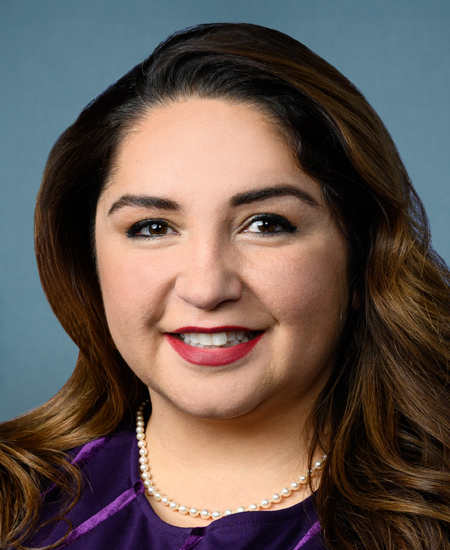
Rep. Delia C. Ramirez
Sponsored bills
Maddy summaryHR 6592, the Fight Book Bans Act, provides federal grants to reimburse public school districts for legal costs when they choose to keep instructional or library materials after parental objections. It directly affects school districts (covered local educational agencies) that select materials for students and handle challenges to their removal. The bill authorizes up to $100,000 per case in grants to cover attorney fees and court costs, provided the district didn’t remove the materials and wasn’t reimbursed by the state. Funding of $15 million is authorized for fiscal years 2024-2028. The grants are strictly for legal challenges to decisions not to remove materials, not for the content of the materials themselves.
Maddy summaryHR 6381, the Veterans Visa and Protection Act of 2023, helps noncitizen veterans and service members who face deportation by creating a pathway to legal permanent residency in the U.S. It requires the government to reopen removal cases for eligible veterans, adjust their status to lawful permanent residents if they served honorably without certain serious criminal convictions (like crimes of violence), and prohibit deportation except for such crimes. The bill also ensures these individuals can access military and veterans benefits they lost due to removal proceedings and allows them to apply for naturalization through military service. It mandates that immigration officials identify service members/veterans early in proceedings and track their cases to prevent unjust removal.
Maddy summaryHR 6318, the Public Housing for the 21st Century Act of 2023, requires the Department of Housing and Urban Development (HUD) to identify and share best practices for developing mixed-income public housing. It directs HUD to create training and technical assistance for state and local governments, public housing agencies, and housing finance agencies on using local tools - like tax incentives, public land, and cross-subsidizing market-rate units - to increase affordable housing for extremely low-, very low-, low-, and moderate-income households. The bill focuses on maximizing the use of existing Federal subsidies to target the most vulnerable residents while ensuring developments maintain affordability and avoid displacing neighboring communities. This law does not create new funding but aims to improve how current resources are applied to expand affordable housing supply.
Maddy summaryHRES 874 is a symbolic resolution expressing the House's support for designating November as "Prematurity Awareness Month." It does not create new laws or alter funding but urges the public, organizations, and communities to observe the month through events, promote awareness, and support preterm birth prevention programs. The resolution highlights statistics on preterm births (383,000 babies born preterm in 2021) and health disparities, but its sole action is endorsing the awareness designation. As a non-binding resolution, it has no direct impact on policy or affected individuals beyond raising public visibility.
Maddy summaryHRES 893 designates November 2023 as "National Homeless Children and Youth Awareness Month" to highlight the issue of homelessness among children and youth in the U.S. The resolution does not create new programs or funding but encourages businesses, governments, schools, and organizations to raise awareness about the causes and solutions to child and youth homelessness. It cites statistics showing high rates of homelessness among students (e.g., 68% high school graduation rate for homeless youth vs. 85.5% overall) and links homelessness to health, education, and mental health challenges. The bill formally supports existing efforts to address homelessness through awareness and prevention, urging continued collaboration to support affected youth. This is a symbolic resolution with no direct policy changes or affected individuals beyond raising public attention.
Maddy summaryHRES 793 is a resolution passed by the U.S. House of Representatives calling on Hamas to immediately release all 199 hostages taken during Hamas' October 7, 2023 attack on Israel. The resolution condemns Hamas for the attack, the taking of hostages, and threats against hostages, while stating that holding hostages violates international humanitarian law under the Geneva Conventions. It demands the immediate release of all hostages and expresses sympathy for victims and their families. As a symbolic resolution, it does not create legal obligations but formally expresses the House's position.
Maddy summaryHRES 114 is a resolution proposing to expel Representative George Santos from the U.S. House of Representatives, citing constitutional authority under Article I, Section 5, Clause 2. It directly targets Santos, who was a sitting member of the House at the time of introduction. The resolution follows the House's constitutional power to expel members for misconduct, though it does not specify the alleged violations. This procedural resolution was referred to the Committee on Ethics for review.
Maddy summaryHR 6486, the Supporting Community Lenders Act, creates a new Coordinator position within the Small Business Administration's Office of Capital Access. This Coordinator will focus on supporting community financial institutions (CFIs) - small banks and credit unions serving underserved communities - to improve their ability to provide capital to small businesses. Key duties include developing programs for CFIs, building partnerships with federal agencies like the FDIC and Treasury, running outreach and training, and submitting annual reports to Congress. The bill directly affects CFIs and small businesses in communities with limited banking access by establishing a dedicated federal role to strengthen their support.
Maddy summaryThis bill creates a pathway to conditional permanent residency for certain undocumented immigrants working in critical sectors. It directly affects individuals present in the U.S. without lawful status as of January 1, 2023 - including DACA recipients - who have worked at least 100 days in one of the designated "covered professions" (like healthcare, education, agriculture, food service, construction, or essential infrastructure work). To qualify, applicants must maintain continuous U.S. presence, work 100 days annually for two years, and meet specific criminal inadmissibility standards. If eligible, their conditional status automatically converts to full permanent residency after two years, without being subject to annual visa quotas.