

Maddy summaryThe Social Security Expansion Act increases Social Security benefits for retirees and disabled workers by raising the first bend point percentage from 90% to 95% and adding an 18% increase for individuals eligible after 2025. It extends benefit eligibility for children who are full-time students until age 22 (from age 19 for most children) and establishes a new minimum benefit based on years worked, with higher percentages for longer work histories (ranging from 11.25% for 11 years to 125% for 30+ years). The bill also changes the cost-of-living adjustment to use the Consumer Price Index for Elderly Consumers and adds new taxes on income above $250,000 and investment gains, increasing the tax rate on investment gains from 3.8% to 16.2%. These changes will primarily affect retirees, disabled workers, children of beneficiaries, and high-income earners.
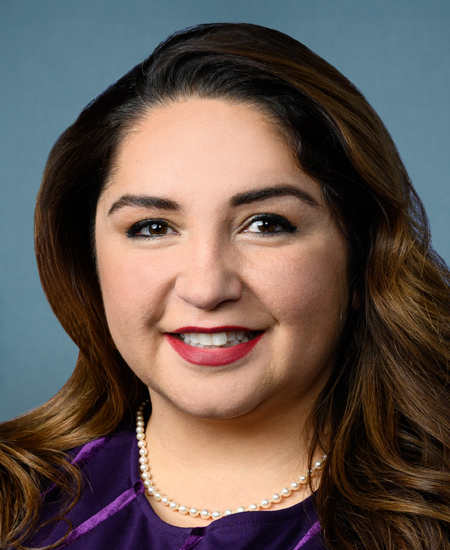
Rep. Delia C. Ramirez
Sponsored bills
Maddy summaryHR 1759, the Affordable PLUS Repayment Options for Parents Act of 2025, allows parents who borrowed Federal Direct PLUS loans to pay for their dependent child's education to enroll in income-driven repayment plans. The bill removes a previous exclusion that barred these PLUS loans from income-contingent and income-based repayment plans under the Higher Education Act. Key provisions amend Sections 455 and 493C to make PLUS loans for dependent students and related consolidation loans eligible for these plans. This change applies to borrowers with outstanding balances on such loans who are repaying or will repay under these specific plans, effective upon the bill's enactment.
Maddy summaryThe Keep Americans Safe Act (HR 1674) restricts the sale, transfer, and possession of large capacity ammunition feeding devices (LCFDs) - defined as magazines or similar devices holding more than 15 rounds of ammunition - for most individuals. Exceptions allow law enforcement officers (including campus law enforcement), retired officers, and nuclear security personnel to possess LCFDs under specific conditions. The bill requires new LCFDs to have serial numbers and manufacturing dates, permits federal seizure of violative devices, and authorizes federal grant programs to fund buy-back initiatives for LCFDs. It directly affects gun owners and manufacturers while preserving access for covered law enforcement and security personnel.
Maddy summaryHR 1657, the Humane Cosmetics Act of 2025, prohibits cosmetic companies from conducting or contracting animal testing for products sold in the U.S. beginning one year after the law takes effect. It also bans the sale or transport of cosmetics developed using such testing after that date, with limited exemptions (e.g., for foreign regulatory requirements or when no non-animal safety alternatives exist). The bill directly affects cosmetic manufacturers, retailers, and distributors by requiring them to shift to non-animal testing methods. The Food and Drug Administration (FDA) will enforce the law, including reviewing records and imposing civil penalties for violations.
Maddy summaryThe PAST Act of 2025 amends the Horse Protection Act to ban harmful practices known as "soring," which deliberately cause pain to horses to exaggerate their gait for shows. It specifically prohibits devices like action devices (e.g., boots causing friction) and weighted shoes on Tennessee Walking Horses, Racking Horses, and Spotted Saddle Horses at events. The bill increases penalties, including escalating disqualifications for repeat offenses (180 days → 1 year → 3 years) and raises fines for violations to $5,000 per offense. It also requires stricter licensing for inspectors and mandates public posting of violation records to help event organizers enforce rules.
Maddy summaryThe American Dream and Promise Act of 2025 would create pathways to permanent residency for certain immigrant youth who entered the U.S. as children (Dream Act component) and for individuals from countries with Temporary Protected Status or Deferred Enforced Departure (American Promise Act component). To qualify, applicants must meet continuous physical presence requirements (since January 1, 2021 for Dream Act applicants, and for 3+ years for American Promise applicants), pass background checks, and satisfy educational or employment criteria. Conditional permanent resident status would be granted initially, with the option to convert to full permanent residency after meeting additional requirements like earning a degree, serving in the military for two years, or demonstrating three years of earned income. The bill includes fee exemptions for low-income applicants, establishes a grant program to assist applicants with legal help, and creates specific procedures for background checks and appeals.
Maddy summaryHR 1637, the Protect Veteran Jobs Act, allows veterans who were involuntarily dismissed without cause from federal civil service positions between January 20, 2025, and the bill’s enactment date to seek reinstatement to their former role or a qualified position. It directly affects eligible veterans dismissed during this period and requires federal agencies to report quarterly on veteran removals, including the number and reasons for each dismissal. Agencies must submit these reports to specified congressional committees until January 20, 2029, when the reporting requirement ends. The bill aims to restore employment opportunities for affected veterans while increasing transparency around federal hiring and dismissal practices.
Maddy summaryThis bill (HR 1597) allows certain fired federal employees to continue or enroll in the Federal Employees Health Benefits Program (FEHBP). It directly affects civil service workers involuntarily removed between January 20, 2025, and January 1, 2026, who were removed without cause, had a "fully successful" performance rating, were pregnant at termination, or were diagnosed with cancer within five years prior. The bill requires health coverage contributions to be funded using savings from the newly created "United States DOGE Service" (established by a January 20, 2025, executive order). This provides a specific pathway for eligible former employees to maintain health insurance during a transition period, using redirected federal savings.
Maddy summaryThe RAISE Act of 2025 creates a new tax credit for teachers and early childhood educators, with a base of $1,000 plus additional amounts based on school poverty rates. Teachers working in schools where more than 39% of students live in poverty can receive up to $14,000 more in tax credits, calculated based on how much a school's poverty rate exceeds 39%. The bill also increases the deduction for teachers' classroom expenses from $250 to $500 and requires schools to maintain teacher pay levels to receive certain federal funds. This directly affects public school teachers, early childhood educators, and schools serving communities with high poverty rates.
Maddy summaryHR 1638, the CROWN Act of 2025, prohibits discrimination based on hair texture or hairstyle that is commonly associated with race or national origin, particularly affecting Black individuals who wear natural or protective styles like braids, locs, cornrows, twists, or Afros. The bill explicitly expands protections under existing federal civil rights laws (including the Civil Rights Act of 1964 and the Fair Housing Act) to cover hair-based discrimination in federally funded programs, housing, public accommodations, employment, and equal rights. It requires schools, employers, and other entities receiving federal funds to eliminate grooming policies that disproportionately target these hairstyles. The law clarifies that such discrimination violates federal law and provides enforcement through existing civil rights mechanisms.