

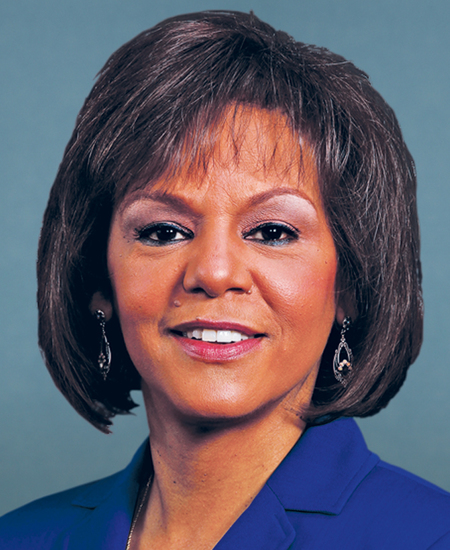
Photo of Robin L. Kelly
D United States House · District 2 · Illinois

Rep. Robin L. Kelly

Compare
Total votes
2,837
all sessions
Attendance
98%
67 missed
Near the chamber average
With party
98%
of cast votes
Higher than 86% of chamber peers
Bipartisan score
1%
crosses aisle rarely
Lower than 86% of chamber peers
Sponsored
1,332
bills & resolutions
Higher than 79% of chamber peers
Committees
4
assignments
1,332 bills and resolutions

Sponsored bills

Total
1,332
Primary
72
Co-sponsor
1,260
This page
1,332
matching current filters
Co-sponsor HR 7272
In committee · United States House · Co-sponsor
Shining a Spotlight on Safer Communities Act

Maddy summaryHR 7272, the Shining a Spotlight on Safer Communities Act, requires the Attorney General to submit annual reports to Congress starting in 2024, detailing how the Bipartisan Safer Communities Act's provisions (specifically sections 932 and 933 of title 18) are being implemented. These reports must include data on investigations, prosecutions, demographic information of defendants, and seized firearms or assets related to gun trafficking and straw purchasing. The bill mandates these reports for fiscal years 2024 through 2027, with a funding limit of $2 million annually for this reporting. It is a procedural bill focused solely on transparency and accountability for existing gun safety measures, not creating new policies.

In committee Feb 7, 2024 1 co-sponsor
Co-sponsor HRES 998
In committee · United States House · Co-sponsor
Expressing support for the designation of February 4, 2024, as "Transit Equity Day".

This resolution honors the life and legacy of Rosa Parks by nationally recognizing Transit Equity Day. The resolution also encourages the use of public transportation and the continued work to make public transit accessible for all.

In committee Feb 6, 2024 1 co-sponsor
Co-sponsor HR 7247
In committee · United States House · Co-sponsor
Ensuring Diverse Leadership Act of 2024

Ensuring Diverse Leadership Act of 2024 This bill requires that, when appointing a president, a Federal Reserve Bank must interview at least one individual reflective of gender diversity and one reflective of racial or ethnic diversity. The bill amends numerous banking-, finance-, and trade-related acts to make references to officials (including those to the Chairman of the Board of Governors of the Federal Reserve System) gender-neutral.

In committee Feb 6, 2024 1 co-sponsor
Co-sponsor HRES 992
In committee · United States House · Co-sponsor
Recognizing February 4, 2024, as "World Cancer Day", and its theme "Close the Care Gap", to raise awareness about and launch efforts to eliminate racial and ethnic inequities and disparities in cancer care both in the United States and globally.

This resolution supports World Cancer Day. The resolution also acknowledges the need to eliminate barriers to consistent and reliable access to cancer screening programs, early detection initiatives, and quality cancer care for all racial and ethnic groups.

In committee Feb 2, 2024 1 co-sponsor
Co-sponsor HR 7165
In committee · United States House · Co-sponsor
Credit for Caring Act of 2024

Maddy summaryThe Credit for Caring Act of 2024 creates a new federal tax credit for family caregivers. It allows eligible caregivers to claim a credit equal to 30% of qualified caregiving expenses (like home modifications, medical supplies, or respite care) exceeding $2,000 per year, capped at $5,000 annually. To qualify, caregivers must earn over $7,500 in income and provide care for a relative (like a spouse or parent) certified by a healthcare provider as needing long-term care for at least 180 days. The credit phases out for higher earners, with a $75,000 income threshold for single filers and $150,000 for joint returns.

In committee Jan 31, 2024 1 co-sponsor
Co-sponsor HR 7132
In committee · United States House · Co-sponsor
Housing Supply and Affordability Act

Maddy summaryHR 7132 creates a federal grant program to help state and local governments, tribes, and Native Hawaiian organizations develop and implement housing plans. Grants fund both planning (creating strategies) and implementation (putting strategies into action) to increase housing supply and affordability while avoiding displacement of current residents. At least 10% of funds must support rural communities, and recipients must report annually on progress and submit final evaluations after three years. The program requires comprehensive plans addressing housing needs, land use reforms, and community engagement to expand housing options.

In committee Jan 30, 2024 1 co-sponsor
Co-sponsor HR 7059
In committee · United States House · Co-sponsor
ACCESS Act of 2024

Maddy summaryThe ACCESS Act of 2024 creates a federal grant program to help clinics and health care providers expand abortion and reproductive health services in states where abortion is legal (outside of life or health exceptions). It authorizes $200 million annually for fiscal years 2024-2028 to fund specific capacity-building activities, including facility expansions, hiring clinical staff, telehealth services, and culturally appropriate patient resources. Priority is given to providers in states experiencing the highest increases in out-of-state patients seeking abortion care. The bill directly supports health care entities serving patients who travel across state lines for services, aiming to reduce wait times and improve access for vulnerable communities.

In committee Jan 26, 2024 1 co-sponsor
Co-sponsor HR 7056
In committee · United States House · Co-sponsor
Access to Family Building Act

Maddy summaryHR 7056, the Access to Family Building Act, establishes federal rights for individuals to access assisted reproductive technology (ART) like IVF without unreasonable restrictions, directly affecting patients seeking fertility treatments and health care providers offering ART services. The bill prohibits states from imposing limitations on ART that are more burdensome than those for comparable medical procedures, fail to advance safety, or unduly restrict access, while allowing health and safety regulations that are necessary and least restrictive. It creates federal enforcement mechanisms, including lawsuits by the Attorney General or affected individuals to challenge violating state laws, and preempts conflicting state regulations. The bill explicitly preserves state authority over health/safety regulations and does not alter existing state insurance coverage laws for ART.

In committee Jan 19, 2024 1 co-sponsor
Co-sponsor HR 7039
In committee · United States House · Co-sponsor
Stronger Communities through Better Transit Act

Maddy summaryThe Stronger Communities through Better Transit Act establishes a new federal grant program to improve public transportation service. It provides funding to urban areas, states, and Indian tribes to cover up to 50% of public transit operating costs (up to 80% in persistent poverty areas and 100% for Indian tribes), with requirements to report on service frequency, access to jobs, and conduct community surveys. The program mandates that a majority of funds must benefit underserved communities and areas of persistent poverty, defined as census tracts with high poverty rates or minority populations. Recipients must maintain their transit funding levels and report on improvements in access to essential services. The bill authorizes $20 billion annually for fiscal years 2024-2027.

In committee Jan 18, 2024 1 co-sponsor
Co-sponsor HR 7028
In committee · United States House · Co-sponsor
Keeping Our Promise Act

Maddy summaryThis bill restores visa eligibility for immigrants who had diversity visas allocated for fiscal years 2017-2022 but were denied entry due to specific travel restrictions (like Executive Orders 13769/13780 or related proclamations) or pandemic-related delays. The State Department must notify affected individuals within 90 days of the bill’s enactment, giving them one year to confirm they wish to proceed with their visa applications. Unused visas from those years can be reallocated without counting against current annual limits, and applicants who fail to respond or are denied for standard reasons (like education requirements) lose eligibility. The policy directly affects individuals impacted by these specific past barriers to immigration.

In committee Jan 17, 2024 1 co-sponsor
Showing 631 to 640 of 1,332 bills
Previous 1 … 63 64 65 … 134 Next