

Maddy summaryHRES 1581 is a symbolic resolution expressing congressional support for designating November 2024 as "Prematurity Awareness Month." It highlights the U.S. maternal and infant health crisis, including higher preterm birth rates and disparities affecting Black and Native American women and their infants. The resolution urges Americans, communities, and organizations to observe the month through events and education focused on preterm birth prevention. It does not create new laws or funding but aims to raise public awareness about this health issue, which contributes to infant mortality and costs an estimated $25.2 billion annually.
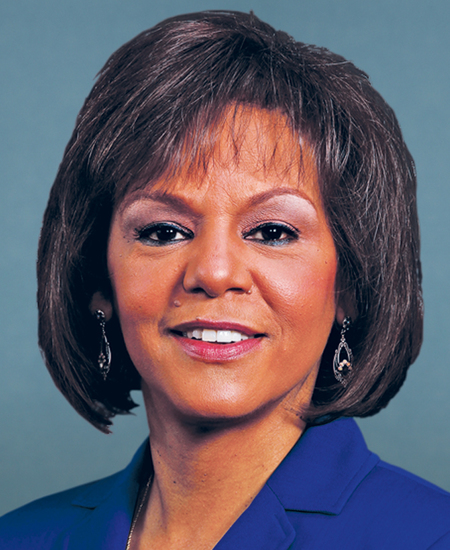
Rep. Robin L. Kelly
Sponsored bills
Maddy summaryThis bill extends the operating period for the African American Civil Rights Network program from 7 years to 10 years after the act's enactment. It directly affects the existing program, which supports organizations preserving civil rights history and promoting education, by allowing it to continue operating for a longer duration without needing new congressional approval. The change is a straightforward extension of an existing authorization period under federal law.
Maddy summaryThis resolution (HRES 1558) is a symbolic House of Representatives measure supporting October as "National Domestic Violence Awareness Month." It does not create new laws or allocate funding but formally expresses the House's support for raising awareness about domestic violence and its impacts, and urges continued backing for existing programs that address domestic violence. The resolution cites statistics on domestic violence prevalence (e.g., 24 people per minute affected by intimate partner violence) to underscore the importance of the observance. It directly affects public awareness efforts but does not change policies or directly impact individuals.
Maddy summaryHR 10090, the "Keeping Guns from High-Risk Individuals Act," expands existing federal firearm prohibitions. It bars individuals convicted of a crime of violence (as defined in Section 16 of Title 18) within the last five years, or convicted of stalking, from purchasing or possessing firearms. This directly affects people with these specific recent convictions, adding them to the list of those prohibited under Section 922(d) (sales) and Section 922(g) (possession) of the U.S. Code. The bill makes concrete policy changes by broadening the categories of individuals barred from gun access based on certain criminal histories.
Maddy summaryThe VA Employee Fairness Act of 2024 modifies collective bargaining rules for employees of the Veterans Health Administration (VHA). It removes existing subsections (b), (c), and (d) from the law governing VHA employee bargaining and renumbers the remaining provision. This change streamlines the collective bargaining framework but does not alter the Secretary of Veterans Affairs' existing authorities over incentive pay and expedited hiring. The bill directly affects VHA employees by changing how their collective bargaining rights are structured under federal law. The law remains neutral, focusing solely on procedural adjustments to the existing bargaining framework.
Maddy summaryHRES 1539 is a symbolic resolution recognizing certified nurse-midwives (CNMs) and certified midwives (CMs) for their role in providing maternal and women’s health care. It acknowledges their contributions during National Midwifery Week (October 6-12, 2024), highlighting their work in rural and underserved communities where they attend over 30% of rural births. The resolution does not create new laws or alter funding; it simply formally recognizes CNMs/CMs as essential providers of evidence-based care for women and childbearing families. It encourages broader awareness of their credential and profession through National Midwifery Week activities.
Maddy summaryThe National Food as Medicine Program Act of 2024 creates a federal grant program to help states implement or expand initiatives that provide medically prescribed, nutrient-rich food (like fresh produce or tailored meals) to address chronic health conditions and food insecurity. States must partner with healthcare providers and community organizations to offer these interventions, using locally-sourced, sustainably produced food grown through regenerative or organic methods. The program requires states to evaluate outcomes like reduced hospital visits and improved health metrics, with reports submitted to the federal government after three years. It directly affects state Medicaid programs and healthcare providers participating in these initiatives.
Maddy summaryThis bill amends the Clean Air Act to modify ethanol waiver processes and fuel volatility standards. It adds a new provision allowing fuel to enter commerce if it meets Reid Vapor Pressure requirements through similarity to certified vehicles or existing waivers, and adjusts vapor pressure limits from 10% to 10-15% in several sections. Small refineries that retired credits for 2016-2018 compliance years may now have those credits returned or applied to future years if their petitions remained pending as of December 1, 2022. The changes directly affect fuel retailers, ethanol producers, and small refineries by altering compliance pathways for fuel standards and credit management under the renewable fuel program.
Maddy summaryHR 9878, the No Shame at School Act of 2024, requires schools to automatically certify students from households with unpaid meal fees for free or reduced-price meals (instead of allowing discretion), and mandates retroactive reimbursement for past unpaid meals. It directly affects school districts and students in households owing meal fees by prohibiting stigmatizing practices like special tokens, public lists of names, or withholding grades due to unpaid fees. Key provisions ban schools from physically segregating students, using debt collectors, or taking food away from students who owe fees, while requiring clear communication to households about meal applications. The bill defines "covered child" as any student enrolled in a participating school meal program whose household owes fees or is eligible for free/reduced meals.
Maddy summaryHRES 1513 is a symbolic House resolution affirming that the term "woke" originates from Black history and liberation movements, not modern political discourse. It highlights historical roots, including Marcus Garvey’s "Wake up Ethiopia!" and 1940s labor activism, while condemning media and right-wing groups for misusing and distorting the term (e.g., the Stop W.O.K.E. Act). The resolution encourages accurate historical use of "woke" and opposes efforts to erase its connection to social justice. It does not create new laws but directly addresses Black educators and movements targeted by legislation seeking to limit inclusive history teaching.