

Maddy summaryHR 4338 formally designates the historic Route 66 as a National Historic Trail under the National Trails System Act, covering approximately 2,400 miles from Chicago, Illinois, to Santa Monica, California, along its original alignments between 1926 and 1985. The bill specifies that the National Park Service will administer the trail while prohibiting the federal government from acquiring land beyond one-quarter mile on either side of the trail or creating buffer zones, and explicitly states it will not interfere with energy development or use eminent domain. This designation primarily affects the public by recognizing Route 66's historical significance and landowners along the route by limiting federal land acquisition and management restrictions. It is a procedural act focused on formal recognition, not new regulatory requirements.
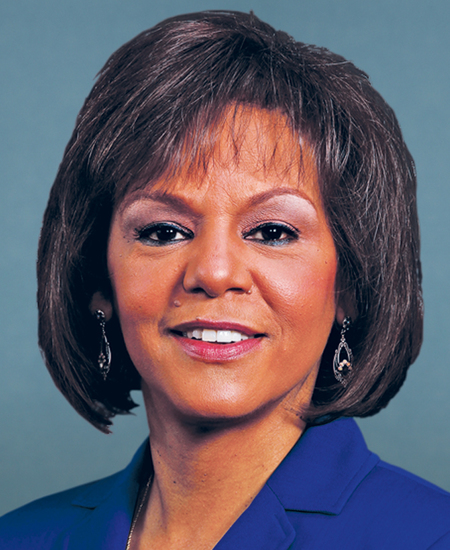
Rep. Robin L. Kelly
Sponsored bills
Maddy summaryHRES 1613 is a non-binding resolution recognizing the U.S. House of Representatives' support for continued U.S. leadership in ending pediatric HIV/AIDS globally. It highlights that 57% of children with HIV were on treatment in 2023 (compared to 77% of adults) and calls for scaling up prevention of mother-to-child transmission and expanding pediatric HIV treatment access. The resolution specifically encourages the PEPFAR program to develop a dedicated pediatric HIV strategy aligned with global goals. As a formal expression of congressional support, it does not create new law but reaffirms the U.S. commitment to reducing new pediatric HIV infections.
Maddy summaryHR 10337, the Expanding the Health Care Workforce Act, creates a federal grant program to develop health care career pathways for high school students. It provides grants to hospitals partnering with secondary schools to establish structured work-based learning programs, requiring students to complete 20-100 hours of hands-on training in hospitals over five years, with specific hour requirements per grade. Priority is given to projects serving medically underserved communities, and grants must expand existing programs in 25% of cases. The program mandates annual reporting on student outcomes, including graduation rates, health care workforce entry, and post-secondary enrollment, with a final evaluation report to Congress after five years. This initiative directly affects secondary school students in underserved areas and participating hospitals through new educational partnerships.
Maddy summaryHR 6751 authorizes the U.S. Mint to produce commemorative coins honoring Roberto Clemente, a Hall of Fame baseball player and humanitarian, including 50,000 $5 gold coins, 400,000 $1 silver coins, and 750,000 half-dollar coins. The coins must feature Clemente's image and inscriptions like "Roberto Clemente" and "2027," with all sales including a surcharge ($5-$35 per coin) paid to the Roberto Clemente Foundation. The foundation, which supports youth sports, education, and disaster relief programs, will use these funds for its mission, while the U.S. Treasury must recover all production costs. The coins will be sold exclusively in 2027, with no net cost to the government.
Maddy summaryThis House resolution supports the goals of World AIDS Day by encouraging efforts to end the HIV epidemic by 2030, aiming for zero new infections, zero discrimination, and zero AIDS-related deaths. It specifically urges sharing of U=U (Undetectable=Untransmittable) information and PrEP (pre-exposure prophylaxis) to prevent transmission, and calls for increased funding for HIV prevention, treatment, and research - particularly for communities disproportionately affected by HIV, such as racial minorities, men who have sex with men, and transgender individuals. The resolution commends existing programs like PEPFAR and the Ryan White CARE Act while advocating for expanded testing, antiretroviral treatment, and comprehensive prevention services, including a National PrEP Program.
Maddy summaryThis bill renames a specific U.S. Postal Service facility in Rockford, Illinois, to honor Jay P. Larson. The building at 5225 Harrison Avenue will officially be called the "Jay P. Larson Post Office Building." All government documents, maps, and records referencing the location will automatically update to use the new name. This is a purely administrative designation with no policy changes or direct impact on citizens or services.
Maddy summaryHR 10124 establishes a 5-year pilot program (2025-2029) authorizing $20 million to fund community-based "Food is Medicine" programs through competitive grants. These programs directly support individuals with diet-related diseases like diabetes, obesity, or heart conditions by providing medically tailored meals, grocery delivery, nutrition education, and transportation. The grants prioritize projects using local foods, involving dietitians, and serving urban, rural, tribal, and territorial communities equitably. The program requires annual reports to Congress analyzing participant outcomes, program efficiency, and impacts on health costs and patient health.
Maddy summaryHRES 1594 is a symbolic House resolution supporting the designation of "National Rural Health Day," observed annually on the third Thursday of November. It recognizes rural health care providers and the communities they serve, highlighting challenges like hospital closures, workforce shortages, and access barriers in rural areas. The resolution expresses the House's commitment to improving rural health care accessibility and affordability but does not create new laws or allocate funding. It is a non-binding gesture aligning with an existing observance since 2011, organized by the National Rural Health Association.
Maddy summaryThe Minority Diabetes Initiative Act (HR 10193) creates a federal grant program to improve diabetes care in minority communities. It authorizes the Secretary of Health and Human Services to fund public and nonprofit health providers - including community health centers, tribal health departments, and community organizations - to deliver specific diabetes services. These grants must cover routine care, prevention education, eye/foot care, and treatment for complications like kidney disease, while requiring services to be culturally appropriate and offered in accessible languages. The program is funded through annual appropriations for fiscal years 2025-2030. This bill directly affects minority communities with high diabetes rates by expanding access to comprehensive, culturally responsive care through eligible health providers.
Maddy summaryThis bill creates a federal commission to address racial and gender biases in school discipline and improve mental health support for students of color. The commission will develop guidelines for tracking restorative practices, define key terms like "restorative justice," create training materials for school staff on culturally competent approaches, and recommend student-to-counselor ratios for schools receiving federal funds. The commission, composed of 13 members including federal agency representatives, advocates, and students of color, will report annually for five years on progress, including how training reduced disproportionate discipline. The bill directly affects elementary and secondary schools, school personnel, and students of color by establishing a structured process for implementing equitable practices.