Lymphedema Treatment Act This bill provides for Medicare coverage of lymphedema compression treatment items. Specifically, the bill provides for coverage of standard and custom fitted gradient compression garments and other approved items that are prescribed by a physician or other specified health care professional to treat lymphedema.
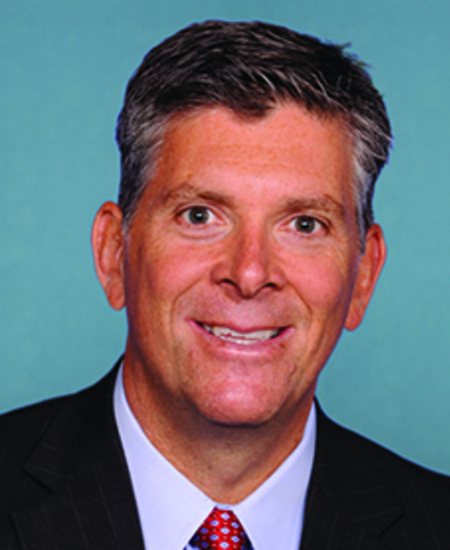
Rep. Darin LaHood
Sponsored bills
This bill designates the facility of the United States Postal Service located at 75 Commerce Drive in Grayslake, Illinois, as the Army Specialist Joseph "Joey" W. Dimock II Post Office Building.
Dr. Joanne Smith Memorial Rehabilitation Innovation Centers Act of 2022 This bill directs the Centers for Medicare & Medicaid Services (CMS) to publish and biennially update a list of all rehabilitation innovation centers. The bill defines rehabilitation innovation centers as rehabilitation facilities that (1) hold specified federal research and training designations for traumatic brain injury or spinal cord injury research, and (2) serve at least a certain number of Medicare patients. The CMS may waive such criteria as it deems appropriate.
Protecting Pain-Capable Unborn Children from Late-Term Abortions Act This bill establishes a new criminal offense for performing or attempting to perform an abortion if the probable gestational age of the fetus is 15 weeks or more. A violator is subject to criminal penalties—a fine, a prison term of up to five years, or both. The bill provides exceptions for an abortion (1) that is necessary to save the life of the pregnant woman, or (2) when the pregnancy is the result of rape or incest. A physician who performs or attempts to perform an abortion under an exception must comply with specified requirements. A woman who undergoes a prohibited abortion may not be prosecuted for violating or conspiring to violate the provisions of this bill.
Never Yielding Europe's Territory (NYET) Act of 2022 This bill addresses Russia's actions against Ukraine and other countries in the region. The bill authorizes and expedites the provision of security assistance, including by (1) prioritizing delivering excess defense articles to Ukraine, (2) authorizing the Department of State to waive certain costs for defense articles leased to Ukraine, and (3) authorizing additional Foreign Military Financing for programs in Europe. The bill also provides funding for (1) Foreign Military Financing assistance to Ukraine, (2) the Global Engagement Center to counter foreign-sponsored propaganda and disinformation, (3) the Countering Russian Influence Fund to support Ukraine and other countries in response to Russia's aggression, and (4) International Military Education and Training assistance for Ukraine. Furthermore, the bill imposes sanctions, including on (1) senior Russian military officials responsible for planning or executing military operations that violated Ukraine's sovereignty or territorial integrity, and (2) foreign individuals or entities that acted on behalf of Russia's government to destabilize Ukraine or disrupt Ukraine's critical infrastructure. The bill also addresses additional matters, including (1) prohibiting the National Aeronautics and Space Administration from sponsoring visas for Russian nationals affiliated with ROSCOSMOS, the entity that implements Russia's space program; (2) authorizing Radio Free Europe/Radio Liberty to explore opening new bureaus to reach audiences on Russia's periphery; and (3) providing for expedited approval of natural gas exports to qualifying nations, including NATO members, whereas currently expedited approval is only available for exports to countries that are in a free trade agreement relating to natural gas with the United States.

Removing Waste and Protecting Medicare Act This bill makes several budgetary changes, including (1) prohibiting sequestration orders in 2022, (2) rescinding certain COVID-19 state and local relief funds, and (3) extending certain adjustments under Medicare with respect to sequestration and payments under the physician fee schedule. It also modifies requirements relating to federal programs and benefits, such as permanently requiring taxpayers to include Social Security numbers on their tax returns in order to qualify for the child tax credit.
Illegal Immigrant Payoff Prohibition Act This bill prohibits the payment of a settlement to an alien for a civil action brought against the United States in connection with the alien's inadmissibility to, or unlawful presence in, the United States.
Service Worker Economic Stabilization Act This bill suspends the disallowance of the tax deduction for business-related entertainment expenses in taxable years beginning in 2023 through 2024 and extends through 2024 the 100% deduction for business meals.
Major Richard Star Act This bill provides that combat-disabled uniformed services retirees with fewer than 20 years of creditable service may concurrently receive, without reduction, veterans' disability compensation and retired pay or combat-related special compensation.
Global Malnutrition Prevention and Treatment Act of 2021 This act sets out programs and otherwise directs the U.S. Agency for International Development (USAID) to carry out activities to prevent and treat malnutrition globally. Specifically, USAID may leverage resources to address malnutrition through the Global Nutrition Coordination Plan (an interagency effort to strengthen the impact of U.S. investments in nutrition) and its role on the board of directors of the U.S. International Development Finance Corporation. USAID must also select countries based on specified malnutrition-related indicators for purposes of targeting malnutrition prevention and treatment programs and update the selection within five years. Additionally, USAID may establish the Nutrition Leadership Council to coordinate federal government activities to prevent and treat malnutrition; and target resources and nutrition interventions to the populations most susceptible to severe malnutrition and otherwise support efforts to prevent and treat malnutrition globally. The act also requires USAID to provide to Congress an implementation plan and annual reports concerning its programs for treating and preventing malnutrition. The act's provisions terminate seven years after its enactment.