

Cardiovascular Advances in Research and Opportunities Legacy Act This act addresses research, education, and awareness concerning valvular heart disease and its treatment. This disease is caused by damage to or disease affecting any valve that controls blood flow in the heart. The National Institutes of Health may conduct or support research on the disease in consultation with the National Heart, Lung, and Blood Institute (NHLBI). The NHLBI must also conduct a workshop on mitral valve prolapse, which occurs when the valve between the chambers of the left side of the heart seals improperly. The Department of Health and Human Services (HHS) must develop best practices to treat valvular heart disease. HHS may also carry out other projects to increase education and awareness of the disease.
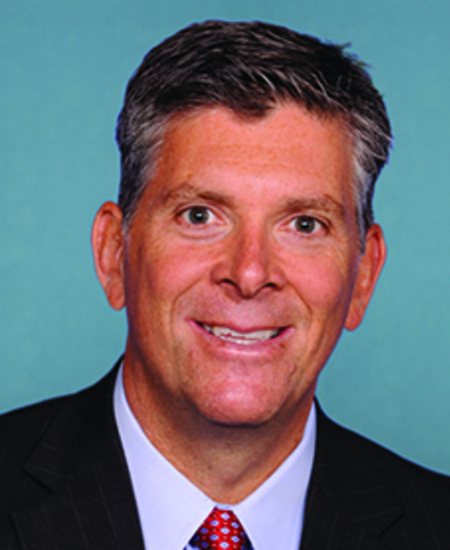
Rep. Darin LaHood
Sponsored bills
Big Cat Public Safety Act This act revises requirements governing the trade of big cats (i.e., species of lion, tiger, leopard, cheetah, jaguar, or cougar or any hybrid of such species) under the Lacey Act to limit the possession, breeding, and exhibition of big cats. The Lacey Act prohibits any person from importing, exporting, buying, selling, transporting, receiving, or acquiring big cats across state lines or the U.S. border. However, some exemptions are provided for certain entities, such as universities and wildlife sanctuaries. (Sec. 3) The act expands the Lacey Act prohibitions to include a prohibition on possessing or breeding big cats. Breeding means facilitating propagation or reproduction (whether intentionally or negligently), or failing to prevent propagation or reproduction. Owners of big cats that were born before this act's enactment may keep their big cats, but the owners must register them with the U.S. Fish and Wildlife Service. The act modifies the list of entities that are exempt from prohibitions to export, buy, sell, transport, receive, acquire, possess, or breed big cats. The modified list includes exemptions for entities or facilities exhibiting animals to the public if they (1) hold a Class C license in good standing under the Animal Welfare Act, and (2) do not allow individuals to come into direct physical contact with big cats. However, direct contact is allowed if the individual is a trained professional, a veterinarian, or directly supporting conservation programs that do not involve commercial activities and meet other specified restrictions. (Sec. 4) A person who knowingly violates the act must be fined not more than $20,000, or imprisoned for no more than five years, or both. The act considers each violation to be a separate offense. The offense must be deemed to have been committed not only in the district where the violation first occurred, but also in any district in which the defendant may have taken or been in possession of the prohibited wildlife species. (Sec. 5) The act extends forfeiture provisions to fish, wildlife, or plants that are bred or possessed; thus, big cats bred or possessed in violation of the act are subject to forfeiture. (Sec. 6) The Department of the Interior must issue regulations to implement this act.
This act designates the facility of the United States Postal Service located at 303 East Mississippi Avenue in Elwood, Illinois, as the Lawrence M. "Larry" Walsh Sr. Post Office.
Maddy summaryHRES 1525 is a non-binding House resolution condemning antisemitism spread by public figures, celebrities, and officials on social media. It cites the Anti-Defamation League’s report of 2,717 antisemitic incidents in 2021 (a 34% increase from 2020) and urges influential people to use their platforms to speak out against antisemitism. The resolution calls for unity with Jewish communities and emphasizes the need for Holocaust education to combat rising hate. As a symbolic measure, it does not create new laws or penalties but formally expresses the House’s stance against antisemitic rhetoric.
This resolution expresses the sense of the House of Representatives that the Office of the U.S. Trade Representative should prepare a report related to U.S. exports of environmental goods, the United States should work with trading partners to facilitate trade in environmental goods to meet each country's environmental and climate goals, and the United States should launch negotiations to implement a new environmental goods agreement with updated product coverage.
Innovative Technologies Impacted by COVID-19 Act This bill extends for one year certain Medicare pass-through payment adjustments for new drugs or biologics that would otherwise expire on December 31, 2022.
Truck Parking Safety Improvement Act This bill authorizes appropriations through FY2026 to the Department of Transportation (DOT) to provide parking for commercial motor vehicles on the federal-aid highway system. DOT must provide competitive grants to states, metropolitan planning organizations, local governments, and tribal governments for projects that improve the safety of commercial motor vehicle operators and provide parking for commercial motor vehicles on federal-aid highways or on a facility with reasonable access to such a highway or a freight facility. The federal share for a project carried out in accordance with the bill shall be up to 100%.
Consumer and Fuel Retailer Choice Act This bill amends the Clean Air Act to address the limitations on Reid Vapor Pressure (a measure of gasoline's volatility) that are placed on gasoline during the summer ozone season, including by applying the Reid Vapor Pressure requirements that are applicable to gasoline blended with 10% ethanol (E10) to gasoline blended with more than 10% ethanol.
Route 66 National Historic Trail Designation Act This bill amends the National Trails System Act to designate a trail of approximately 2,400 miles extending from Chicago, Illinois, to Santa Monica, California, as the Route 66 National Historic Trail. The trail shall be administered by the National Park Service in a manner that respects and maintains its idiosyncratic nature. The Department of the Interior may not use eminent domain or condemnation in carrying out this bill.
The Jackie Walorski Maternal and Child Home Visiting Reauthorization Act of 2022 This bill reauthorizes through FY2027, increases funding for, and modifies the Maternal, Infant, and Early Childhood Home Visiting Program. This program supports home visits for expectant and new parents who live in communities that are at-risk for poor maternal and child health outcomes. Changes to the program include setting out requirements for allocating program funds; increasing the percentage of funds reserved for tribal entities; establishing a publicly available dashboard that reports program outcomes; requiring activities to reduce unnecessary data collection, reporting, and other administrative requirements of the program; and allowing for virtual home visits (provided certain conditions are met). The bill also reduces funding for the Medicare Improvement Fund.