Supply Chain Security and Resilience Act This bill establishes a Supply Chain Resiliency and Crisis Response Office within the Department of Commerce. The office must monitor the supply chains for critical goods or services and collaborate with various stakeholders to respond to disruptions in those supply chains. Additionally, the office must support the development of voluntary standards for manufacturers of critical goods or services to address the resilience, diversity, security, and strength of their supply chains.
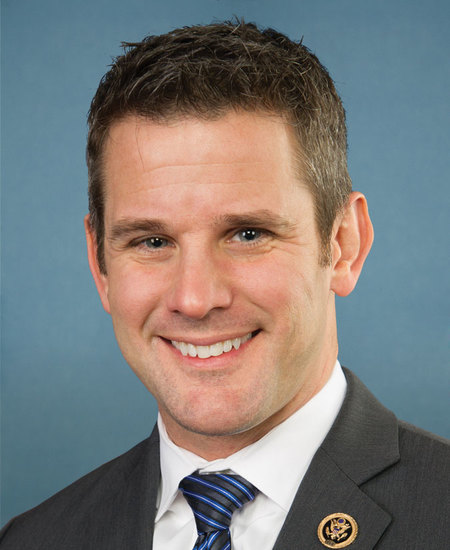
Rep. Adam Kinzinger
Sponsored bills
Manufacturing Economy And National Security Act or the MEANS Act This bill establishes the Office of Manufacturing Security and Resilience within the Department of Commerce to make grants and loans to support domestic manufacturing of critical goods and services, industrial equipment, and manufacturing technology. The grants and loans also may be used to support the security and expansion of supply chains.
This resolution requests the President and directs the Department of State to transmit to the House of Representatives, not later than 14 days after the adoption of this resolution, copies of both classified and unclassified documents that refer or relate to certain information on the withdrawal of the United States from Afghanistan, including reactions, concerns, or objections expressed by certain allies and partners; any agreement reached with the Taliban related to the evacuation of specified individuals; and numbers of specified individuals in contact with the State Department to request evacuation assistance from Afghanistan, from July 30, 2021, to the present.
Israel Relations Normalization Act of 2021 This bill requires the Department of State to take certain actions promoting the normalization of relations between Israel, Arab states, and other relevant countries and regions. Specifically, the State Department must develop a strategy on expanding and strengthening the Abraham Accords (the term used to refer collectively to agreements between Israel and the United Arab Emirates and between Israel and Bahrain marking the public normalization of relations between the two Arab countries and Israel). The strategy must include a description of how the U.S. government will encourage further normalization of relations with Israel. In addition, the State Department must report on options for U.S. international efforts to promote the strengthening of ties between Israel, Arab states, and other relevant countries and regions. The State Department must also report on the status of the normalization of relations with Israel, including information on (1) laws that punish individuals for people-to-people relations with Israelis (i.e., anti-normalization laws), and (2) evidence of steps taken by Arab governments toward permitting or encouraging normalized relations between their citizens or residents and Israeli citizens.
Libya Stabilization Act This bill provides for sanctions and aid related to the conflict in Libya. The bill provides statutory authority for an April 19, 2016, executive order imposing property- and visa-blocking sanctions on persons contributing to the violence in Libya. The President must impose property- and visa-blocking sanctions on any foreign person that (1) knowingly supports or engages in a significant transaction with a foreign person knowingly operating in Libya on behalf of Russia in a military capacity, (2) engages in significant actions threatening peace or stability in Libya, (3) misappropriates Libyan state assets or natural resources, or (4) is knowingly responsible for or complicit in serious human rights abuses in Libya. These sanctions shall expire on December 31, 2026. Further, the President is authorized to expand educational and cultural exchange programs with Libya. The bill urges the U.S. Agency for International Development to provide humanitarian assistance to individuals and communities in Libya, including health assistance, food, shelter, and support for an effective COVID-19 (i.e., coronavirus disease 2019) response. The Department of State must work to strengthen Libya's democratic governance, including by providing assistance to (1) unify Libya's financial and governing institutions, and (2) ensure free and credible future elections in Libya. The Department of the Treasury must vote and argue for international financial institutions to support an economic recovery in Libya that complements the establishment of democratic institutions and rule of law.

This resolution supports the designation of National Clean Energy Week.
Taliban Recognition Prevention Act This bill requires the Department of State to instruct U.S. representatives to international organizations to advocate that such organizations not recognize the Taliban-controlled government of Afghanistan.
Working Dog Commemorative Coin Act This bill directs the Department of the Treasury to mint and issue 50,000 $5 gold coins, 500,000 $1 silver coins, and 750,000 half-dollar clad coins in commemoration of the service that working dogs provide to society. The designs of the coins minted under this bill shall be emblematic of the contributions of working dogs to society, including in detection, military service, therapy and assistance. Treasury may issue coins only during the one-year period beginning on January 1, 2023. All sales of coins shall include a surcharge, which shall be paid to America's VetDogs for general expenses associated with the fulfillment of its mission.
Improving Veterans Access to Congressional Services Act of 2021 This bill requires the Department of Veterans Affairs (VA) to permit a Member of Congress (upon request) to use a VA facility to meet with constituents. The VA and the General Services Administration must jointly identify available spaces in VA facilities for such purposes. The VA must prescribe regulations regarding such use of a VA facility by a Member of Congress.
Next Generation Fuels Act of 2021 This bill supports the use of biofuels (e.g., gasoline blended with ethanol) in vehicles, including by establishing a minimum octane standard for gasoline as well as making related biofuel requirements for vehicles, their fuels, and fuel infrastructure.