Stop Foreign Funds in Elections Act This bill prohibits contributions or donations by foreign nationals in connection with state or local ballot initiatives or referenda.
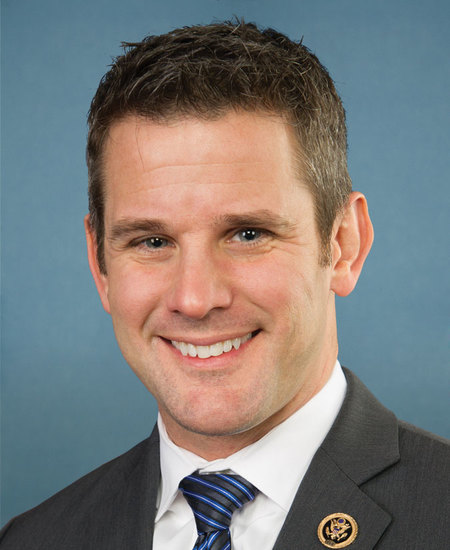
Rep. Adam Kinzinger
Sponsored bills
Pets Belong With Families Act This bill prohibits public housing agencies from imposing breed restrictions on pets owned by residents of public housing units. The bill continues to allow public housing agencies to prohibit ownership of dangerous animals in public housing, but prohibits classification as dangerous by breed and requires that any such classification be based on specific behaviors or actions of the animal.
Brycen Gray and Ben Price COVID-19 Neurological Impact Act This bill authorizes grants and requires other activities to address neurological and psychiatric illnesses associated with COVID-19 infection. Specifically, the National Science Foundation may award competitive grants for multidisciplinary research on such illnesses. In addition, the White House Office of Science and Technology Policy must establish a temporary interagency working group to coordinate relevant federal programs, data collection, and other activities focused on neurological and psychiatric illnesses associated with COVID-19 infection. The working group must also engage with researchers and nonfederal stakeholders to ensure the sharing and dissemination of relevant research, information, and best practices pertaining to those illnesses. The working group terminates after five years.
This resolution recognizes the dedication and courage of veterans, veterans' organizations, and private citizens who have worked and continue to work to evacuate U.S. persons and vulnerable Afghans from Afghanistan. The resolution also encourages the Department of State and Department of Defense to work with veterans' service organizations and their networks to evacuate those who remain in Afghanistan.
This resolution expresses solidarity with the Lebanese people following the explosions at the Port of Beirut on August 4, 2020, and supports their right to peacefully demonstrate to achieve political goals and anti-corruption reforms.
Lower Costs, More Cures Act of 2021 This bill establishes and modifies several programs and requirements to address prescription drug prices. The bill modifies provisions under Medicare and Medicaid relating to prescription drug coverage and price transparency. Among other changes, the bill requires the Centers for Medicare & Medicaid Services to publish certain information, as reported by pharmacy benefit managers (PBMs), relating to generic dispensing rates, drug discounts and rebates, and payments between PBMs, health plans, and pharmacies; caps annual out-of-pocket spending under the Medicare prescription drug benefit; allows prescription drug plan sponsors under the Medicare prescription drug benefit to offer additional plans in a region; requires pass-through pricing models, and prohibits spread-pricing, for payment arrangements with PBMs under Medicaid; and allows states to include in the Medicaid Drug Rebate Program covered outpatient drugs that are provided as part of physician or outpatient hospital services. The bill also generally modifies other provisions relating to the regulation and costs of generic and brand-name drugs. Among other changes, the bill prohibits the manufacturer of a brand-name, generic, or biosimilar drug from entering into certain agreements to resolve or settle a patent infringement claim in connection with the sale of a drug or biological product; permanently allows high deductible health plans to waive deductibles for insulin and associated products; and establishes the position of Chief Pharmaceutical Negotiator in the Office of the U.S. Trade Representative.

Temporary Reauthorization of the Emergency Scheduling of Fentanyl Analogues Act This bill extends until May 6, 2022, the temporary scheduling order issued by the Drug Enforcement Administration to place fentanyl-related substances in schedule I of the Controlled Substances Act. The temporary order expires on May 6, 2021.
Countering China Economic Coercion Act This bill establishes an interagency task force to respond to the Chinese government's acts of economic coercion. The task force must oversee the development and implementation of an integrated U.S. government strategy to respond to such acts of economic coercion. The strategy must include an evaluation of the costs such acts have on U.S. businesses and economic performance. The task force must also report to Congress on the strategy as well as a comprehensive review on the economic tools that the Chinese government uses (or can use) to coerce other governments, non-Chinese companies, and multilateral institutions and organizations.
Supply Chain Health And Integrity for the Nation Act or the Supply CHAIN Act This bill establishes the Supply Chain Resiliency and Crisis Response Office to monitor and respond to disruptions in critical industries and supply chains. Specifically, the office must (1) identify high-priority supply chain gaps and vulnerabilities in critical industries, (2) identify and evaluate the effect of supply chain disruptions on U.S. economic security, and (3) collaborate with other governmental bodies and key international partners to identify opportunities to reduce supply chain gaps and vulnerabilities. The office also must establish a unified coordination group to oversee the interagency response to supply chain shocks and the office must designate certain critical industries, supply chains, and critical goods and services. The bill includes various reporting requirements.
Building Resilient Supply Chains Act This bill establishes the Supply Chain Resiliency and Crisis Response Office within the Department of Commerce to make grants and loans to support domestic manufacturing of critical goods and services, industrial equipment, and manufacturing technology. The grants and loans also may be used to support the security and expansion of supply chains.