

Home Defense and Competitive Shooting Act of 2023 This bill removes short-barreled rifles (barrels of less than 16 inches in length) from the definition of firearms for purposes of the National Firearms Act. It also eliminates the prohibition on the transportation of such rifles in interstate commerce and treats persons who acquire or possess a short-barreled rifle as meeting the registration or licensing requirements for such rifle where such requirements are determined by reference to the National Firearms Act. The bill preempts state or local laws that impose a tax or recordkeeping requirements on short-barreled rifles. The Department of Justice must destroy records relating to the registration of certain rifles within one year after the enactment of this bill.
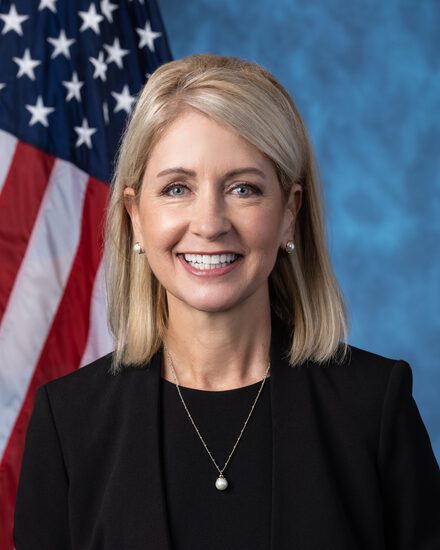
Rep. Mary E. Miller
Sponsored bills
No Pro-Abortion Task Force Act This bill prohibits federal funding of the Reproductive Healthcare Access Task Force. The Department of Health and Human Services launched the task force on January 21, 2022, to identify and coordinate departmental activities related to accessing sexual and reproductive health care.
Maddy summaryHR 24, the Federal Reserve Transparency Act of 2023, requires a comprehensive audit of the Federal Reserve System's Board of Governors and Federal Reserve banks within 12 months of the bill's enactment. The Congressional auditor (Comptroller General) must then submit a detailed report to Congress within 90 days, including findings, conclusions, and recommendations for improving transparency. This bill directly affects the Federal Reserve System by mandating greater oversight of its operations and financial activities. The key provision repeals a prior limitation that prevented audits of certain Fed programs, aiming to clarify which activities are subject to audit under existing law.
Maddy summaryHR 100, the No SmartPay for Anti-2A Companies Act, prohibits the federal government from awarding new contracts under the SmartPay Program for payment systems that use payment processors with a merchant category code designated for gun retailers. This means government agencies cannot contract with payment processors that categorize gun stores as a business type for processing transactions. The bill only applies to new contracts; existing agreements remain unaffected. It directly impacts payment processing companies that use such codes and federal agencies utilizing the SmartPay Program for future procurement.
WHO Withdrawal Act This bill requires the President to immediately withdraw the United States from the World Health Organization (WHO) and prohibits using any federal funds to provide for U.S. participation in the WHO. The bill also repeals the 1948 act authorizing the United States to join the WHO.
Maddy summaryHR 214, the Veterans’ True Choice Act of 2023, allows veterans with service-connected disabilities to choose TRICARE Select over VA health care. It creates a new category of "covered veteran beneficiaries" who can enroll in TRICARE Select during the annual open enrollment period, with cost-sharing based on their disability status - not their military service date. The bill requires the VA and Defense Departments to establish a reimbursement agreement for these enrollments and mandates quarterly reports to Congress on implementation. This change directly affects veterans who qualify for TRICARE only through this new provision, giving them a formal choice between VA care and TRICARE Select.
Maddy summaryHR 174 prohibits federal funding for labor organizations whose members are education professionals, such as teachers in public K-12 schools, colleges, or school districts. It directly affects teacher unions that represent these educators by blocking federal money they might otherwise receive. The bill defines "education professionals" using existing education law terms, ensuring it applies to unions representing school staff and higher education employees. This is a funding restriction, not a ban on unionization, and would only impact federal programs that currently provide money to such unions.
Maddy summaryHR 199, the "Secure America’s Borders First Act," prohibits using U.S. funds for Ukraine security programs until two conditions are met: a border wall system is completed along the U.S.-Mexico border and full border control is achieved (as defined in the 2006 Secure Fence Act). The bill specifically blocks Department of Defense funding and security assistance for Ukraine until these border requirements are satisfied. The border wall must include a 30-foot steel barrier, access roads, lighting, and surveillance technology. This restriction applies only to Ukraine-related security aid, not other defense spending.
Maddy summaryThis bill allows states to choose names for post offices located within their borders through state legislation, directly affecting state governments and local communities. It requires states to pass laws authorizing specific names, while ensuring federal naming decisions (like those for new post offices) take precedence and override any state selection. The bill also mandates that states notify Congress 30 days in advance before renaming a post office already named by the federal government. Federal authority to name post offices remains supreme, and the bill does not change existing USPS naming practices for offices not yet designated by the federal government.
Safeguards Ensuring Criminal and Unvetted Refugees don't Enter America Act or the SECURE America Act This bill imposes restrictions on the admission of aliens, including refugees, and addresses related issues. Specifically, no refugees may be admitted until Congress enacts a joint resolution setting the maximum number of refugees allowed to be admitted in a particular fiscal year. Currently, that number is set each fiscal year by the President. The Department of Homeland Security (DHS) must notify Congress at least 30 days before determining that an alien or class of aliens is eligible for refugee status. Congress may nullify the determination by enacting a joint resolution of disapproval. Further, an alien shall be inadmissible for holding certain beliefs, such as (1) believing that a system of religious law should be implemented in the United States, (2) believing that the alien does not need to learn English if the alien is not already fluent, or (3) any belief that the Department of State determines is incompatible with the principles of the United States. DHS may not parole into the United States an alien who does not have status under immigration law. Currently, DHS may provide parole in certain instances, including for urgent humanitarian reasons. Federal agencies must notify a state at least 30 days before resettling a refugee in that state. The refugee may not be resettled in that state if the state expresses disapproval. An alien who has committed a crime of violence (generally one involving the use or threat of physical violence against person or property) may not be eligible for refugee status and must be removed.