

Maddy summaryThe Family Vaccine Protection Act makes the Advisory Committee on Immunization Practices (ACIP) an official part of federal law, requiring it to provide vaccine recommendations based on strong scientific evidence. It mandates that the CDC Director must adopt ACIP's recommendations unless they don't meet the evidence standard, and if not adopted, the CDC must explain its decision and notify Congress within 48 hours. The bill establishes procedures for ACIP to review new vaccines within 90 days of licensure and to consider breakthrough therapies or public health emergencies. This act aims to strengthen transparency and evidence-based decision-making in vaccine recommendations for the public health system. It affects the CDC, ACIP, and Congress through formalized processes for vaccine policy development.
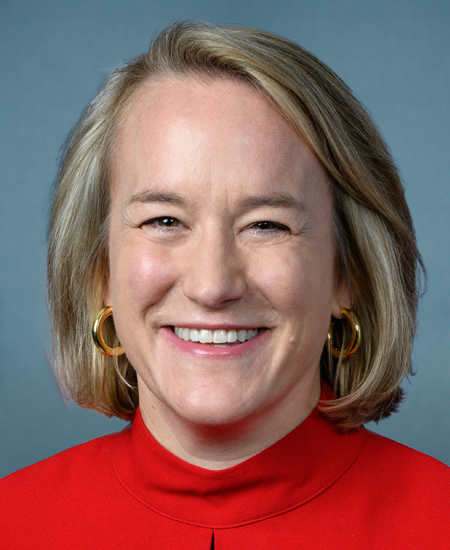
Rep. Nikki Budzinski
Sponsored bills
Maddy summaryThis bill aims to stabilize rural hospitals by modifying Medicare payment policies. It eliminates sequestration for rural hospitals, reverses bad debt reimbursement cuts for critical access hospitals, and permanently extends payment levels for low-volume and Medicare-dependent hospitals. The bill also makes permanent telehealth enhancements for rural health clinics, restores state authority to waive the 35-mile rule for hospital designations, and creates flexibility grants for rural hospitals to transform services. These changes directly affect rural hospitals, critical access hospitals, and Medicare beneficiaries who face significant barriers to accessing care in rural areas. The bill addresses the closure of 151 rural hospitals since 2010 and the vulnerability of 432 more hospitals, aiming to prevent further loss of critical health care access.
Maddy summaryThis bill requires the U.S. Attorney General, in collaboration with the Department of Health and Human Services, to collect annual data on law enforcement interactions with people experiencing mental illness starting in 2026. It mandates standardized guidelines for gathering this data and strictly limits its use to anonymized research or statistics - prohibiting any information that could identify individuals. The Attorney General must publish an annual summary of the findings for Congress and the public. The data collection is authorized for fiscal years 2026 through 2036, using the definition of "mental illness" established in existing law (34 U.S.C. §10651(a)(7)).
Maddy summaryThe Menstrual Equity For All Act of 2025 requires schools, colleges, correctional facilities, and federal buildings to provide free menstrual products to those who need them. It makes menstrual products covered by Medicaid, prohibits states from taxing these products, and creates grant programs to support low-income individuals. Key provisions include mandating free products in educational settings, requiring employers with 100+ employees to provide them, and expanding Medicaid coverage for these items. The bill directly affects students, incarcerated individuals, homeless people, Medicaid beneficiaries, and low-income families by addressing period poverty through concrete access requirements.
Maddy summaryThis bill reorganizes collective bargaining rules for Veterans Health Administration (VHA) employees by removing existing subsections (b), (c), and (d) from Section 7422 of Title 38 and redesignating the current subsection (e) as (b). It directly affects VA health care employees by altering the structure of their collective bargaining framework. The bill explicitly states it does not change the Secretary of Veterans Affairs' existing authorities over incentive pay or expedited hiring under Section 706 of Title 38. The change is purely procedural, focusing on the internal organization of bargaining rules without introducing new employee benefits or obligations.
Maddy summaryThis bill prohibits the U.S. military from discriminating against service members or applicants based on gender identity. It bans policies that would deny service, involuntarily separate members, deny medically necessary healthcare, or require service in a gender different from one's identity. The law defines "gender identity" broadly to include a person's internal sense of gender, appearance, and mannerisms, regardless of sex assigned at birth. It directly affects transgender and gender-diverse individuals currently serving or seeking to serve in the Armed Forces.
Maddy summaryHR 3564, the Nuclear First-Strike Security Act of 2025, requires the President to notify key congressional leaders at least seven days before authorizing a first-use nuclear strike (using nuclear weapons without prior attack on the U.S. or allies). This applies unless the strike occurs under a congressional declaration of war, in response to a nuclear attack on the U.S. or an ally (defined as NATO, Japan, South Korea, or Australia), or during a launch-on-warning scenario. The bill mandates the Secretary of Defense to certify the strike's legality and necessity to congressional leaders before execution. It directly affects the President and Defense Department, adding a formal congressional notification step to nuclear decision-making. The law aims to create a deliberate review period for the most extreme military action.
Maddy summaryHR 3555, the Protect our Parks Act of 2025, requires the Secretary of the Interior to ensure National Park Service units are fully staffed for visitor safety, resource protection, and maintenance within 30 days of enactment. It mandates rehiring all National Park Service employees involuntarily terminated between January 20, 2025, and the bill’s enactment date. The bill also directs the continuation of specific park projects funded under the Great American Outdoors Act, Infrastructure Investment and Jobs Act, and the Inflation Reduction Act. This legislation directly affects National Park Service staff and park operations, focusing on staffing stability and project continuity.
Maddy summaryHR 3532, the Striking and Locked Out Workers Healthcare Protection Act, prohibits employers from terminating or altering an employee’s employer-sponsored health coverage during a lawful strike or a lockout (when an employer withholds work to influence bargaining). It directly affects workers participating in strikes or facing lockouts, ensuring continued healthcare access during these labor disputes. The bill adds penalties: $75,000 per violation for lockout-related coverage termination (up to $150,000 for repeat offenses), and $50,000 per violation for strike-related termination (up to $100,000 for repeat offenses), with penalties applied alongside other remedies. These provisions amend the National Labor Relations Act to protect workers’ healthcare rights during collective bargaining actions.
Maddy summaryThis bill removes the statute of limitations for certain survivor benefit claims against the U.S. Government. It specifically applies to survivors of military members who died in the line of duty on or after September 11, 2001. The key change amends federal law to state that no time limit applies when filing for survivor benefits under this provision. The bill takes effect for claims filed after its enactment date.