

Maddy summaryHR 2586, the Reentry Act of 2025, amends Medicaid rules to allow incarcerated individuals to receive Medicaid coverage during the 30 days immediately before their release from prison or jail. This directly affects people leaving correctional facilities, ensuring they can access health care as they transition back into communities. The bill requires a report within 18 months analyzing current health care standards in prisons, the number of people who would gain coverage, and current discharge practices to improve Medicaid enrollment for newly released individuals. The report will also assess how to better connect people with community health services and addiction treatment after release.
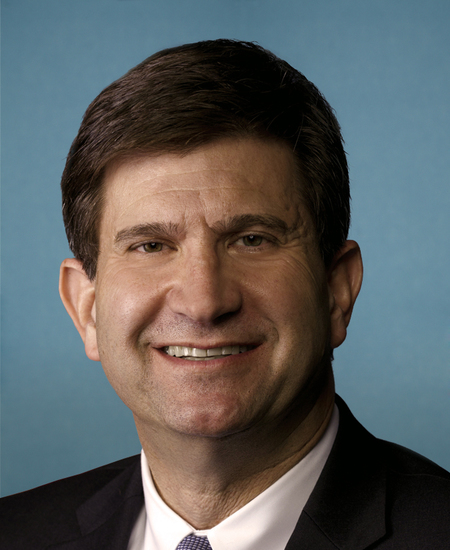
Rep. Bradley Scott Schneider
Sponsored bills
Maddy summaryThis bill, titled "Secure Family Futures Act of 2025" but actually focused on tax code changes, primarily affects a specific subset of insurance companies. It amends the Internal Revenue Code to exclude certain debts (like bonds or notes) held by these companies from being counted as capital assets (Section 2), and extends their capital loss carryover period to 10 years for losses from foreign expropriation or losses incurred by these companies (Section 3). The changes apply to debts acquired and losses arising after December 31, 2025. The bill's title is misleading, as it does not relate to family policy but is a technical tax amendment targeting defined insurance industry entities.
Sanctioning Russia Act of 2025 This bill imposes penalties on certain persons (individuals and entities) if the President determines that the Russian government or a person acting at Russia's direction is involved with (1) refusing to negotiate a peace agreement with Ukraine; (2) violating a negotiated peace agreement; (3) initiating another invasion of Ukraine; or (4) overthrowing, dismantling, or seeking to subvert the Ukrainian government. If the President makes such a determination, the bill requires certain actions including the President must impose visa- and property-blocking sanctions on specified persons such as the Russian president, certain Russian military commanders, and any foreign person that knowingly provides defense items to the Russian armed forces; the President must increase the rate of duty on all goods and services imported from Russia into the United States to at least 500% relative to the value of such goods and services; the President must increase the rate of duty on all goods and services imported into the United States from countries that knowingly engage in the exchange of Russian-origin uranium and petroleum products to at least 500% relative to the value of such goods and services; the Department of the Treasury must impose property-blocking sanctions on any financial institution organized under Russian law and owned wholly or partly by Russia, and any financial institution that engages in transactions with those entities; and the Department of Commerce must prohibit the export, reexport, or in-country transfer to or in Russia of any U.S.-produced energy or energy product.
Maddy summaryHR 1152, the Electronic Filing and Payment Fairness Act, changes how the IRS treats electronically submitted tax documents and payments. It extends the "mailbox rule" to electronic filings, meaning the date a taxpayer or business sends a document or payment electronically to the IRS counts as the deadline date - regardless of when the IRS actually receives or processes it. This directly affects taxpayers and businesses submitting forms, payments, or claims online. The bill requires the IRS to issue implementing regulations by December 31, 2025, and applies to electronic submissions sent after that date. The change simplifies compliance by aligning electronic submission timing with the actual sending date.
Maddy summaryHRES 281 is a non-binding resolution designating March 2025 as "Bulgarian-American Heritage Month" to recognize the cultural and historical contributions of Bulgarian-Americans. It urges the public to observe the month through events highlighting Bulgarian-American achievements in fields like science, arts, business, and education. The resolution emphasizes longstanding U.S.-Bulgaria ties, including diplomatic history and cultural exchanges, without creating new policies or affecting specific groups. It serves as a symbolic gesture to promote appreciation for Bulgarian heritage within American society. (This is a procedural resolution; no substantive policy changes are implemented.)
Maddy summaryThe SHOPP Act of 2025 amends the Gus Schumacher Nutrition Incentive Program to expand eligible food items for SNAP participants. It adds legumes (like beans and peas) to the list of qualifying foods and allows fresh frozen fruits and vegetables to count toward year-round incentives. This directly affects SNAP recipients shopping at participating farmers markets or retailers, making it easier to access more types of produce. The bill updates existing program language to replace "fruits and vegetables" with "fruits, vegetables, and legumes" and "fresh fruits and vegetables" with "fresh or fresh frozen fruits, vegetables, and legumes." These changes aim to increase access to a wider variety of nutritious foods through existing incentive programs.
Save America's Forgotten Equines Act of 2025 or the SAFE Act of 2025 This bill permanently prohibits the slaughter of equines (e.g., horses and mules) for human consumption. (Current law prohibits the slaughter of dogs and cats for human consumption. This bill extends the prohibition to equines.) Specifically, this bill prohibits a person from knowingly (1) slaughtering an equine for human consumption; or (2) shipping, transporting, possessing, purchasing, selling, or donating an equine to be slaughtered for human consumption or equine parts for human consumption. The bill subjects a violator to a fine. The bill applies to conduct in or affecting interstate or foreign commerce or within the special maritime and territorial jurisdiction of the United States. However, it does not apply to an activity carried out by an Indian for a religious ceremony. As background, in recent years, the appropriations acts have prohibited the Department of Agriculture (USDA) from using federal funds to inspect horses before they are slaughtered for human consumption. Therefore, there are currently no USDA-inspected horse slaughter facilities in the United States.
Maddy summaryThis bill repeals Section 338 of the Tariff Act of 1930 (19 U.S.C. 1338), which granted the President unilateral authority to impose tariffs without Congressional approval. It directly affects the President's ability to use this specific provision for tariff actions. The key mechanism is the removal of this legal authority from U.S. trade law. The bill makes no other changes to tariff policy or procedures.
Maddy summaryHR 2477, the Portable Ultrasound Reimbursement Equity Act of 2025, would amend Medicare rules to require equal reimbursement for portable ultrasound transportation and setup services as is currently provided for portable X-ray services. This change directly affects Medicare beneficiaries needing portable ultrasound exams and healthcare providers (like mobile clinics) who offer these services. The bill mandates that Medicare pay separately for portable ultrasound transportation and setup in the same way and to the same extent as portable X-ray services, using similar supplier requirements as existing regulations. The policy change would take effect for services provided on or after January 1, 2027.
Maddy summaryHR 2410 creates a 20% federal tax credit for developers converting older non-residential buildings (at least 20 years old) into affordable housing. The credit applies to qualified conversion costs, requiring that 20% of units be rent-restricted for residents earning 80% or less of the area median income for 30 years. It establishes a $12 billion national credit limit, with $3 billion reserved for conversions in economically distressed areas, and mandates state-level allocation plans prioritizing projects near transit and employment. The bill directly affects developers seeking tax incentives for downtown revitalization, not tenants or local governments.