

Maddy summaryHR 7599 creates a federal framework for extreme risk protection orders (ERPOs), allowing family members or law enforcement to petition courts to temporarily prohibit individuals from possessing firearms when they pose a risk of harm to themselves or others. The bill establishes a process for issuing ex parte orders (up to 14 days) followed by a hearing within 72 hours to determine if a longer-term order (up to 180 days) should be issued, requiring respondents to surrender firearms to U.S. Marshals or designated law enforcement. Courts must consider specific factors like recent threats, violence, substance abuse, or cruelty to animals before issuing orders, with no fees for petitioners. The law requires law enforcement training to address bias, includes annual reporting requirements, and ensures firearms are returned once the order expires and the individual is eligible to own firearms under federal law.
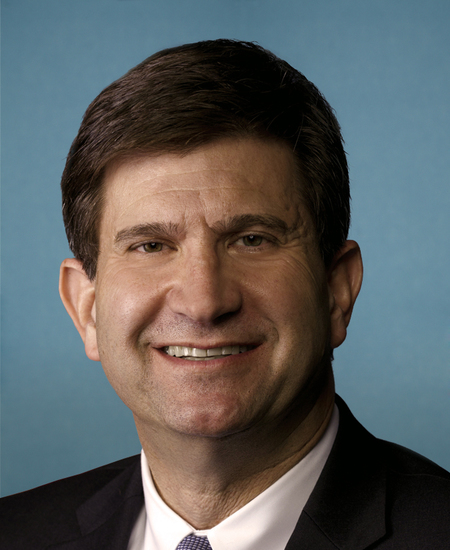
Rep. Bradley Scott Schneider
Sponsored bills
Maddy summaryHRES 1066 is a non-binding resolution expressing the House of Representatives' condolences to the families of five victims killed in a 2019 mass shooting at a warehouse in Aurora, Illinois. It honors the memory of Russell Beyer, Vicente Juarez, Clayton Parks, Josh Pinkard, and Trevor Wehner, while commending the Aurora Police Department officers and emergency responders who were wounded during the incident. The resolution does not create new laws but serves as a symbolic gesture of solidarity with the Aurora community and victims of gun violence nationwide.
Maddy summaryHR 7585, the Investing in Tomorrow’s Workforce Act of 2026, provides federal grants to eligible partnerships (like industry groups and workforce boards) to create training programs for workers likely displaced by automation. It directly affects dislocated workers in industries facing automation-driven job losses, particularly those from covered populations (e.g., women, people of color, low-wage workers). The bill authorizes competitive grants for demonstration projects focused on upskilling workers for in-demand tech jobs, including coding or IT security training, and requires partnerships to prioritize high-impact areas like automation-affected industries or covered populations. It amends the Workforce Innovation and Opportunity Act to expand funding for automation-related training and mandates reporting on outcomes like job transitions and earnings.
Maddy summaryThis bill expands funding and capabilities for the United States-Israel Binational Agricultural Research and Development Fund, which supports collaborative agricultural research between scientists in both countries. The legislation authorizes $8 million annually from 2026 to 2030 for existing BARD Fund activities and adds $12 million annually for a new accelerator program designed to fast-track mid-stage agricultural research projects. The expanded program includes new eligibility for countries that have normalized relations with Israel under the Abraham Accords and allows the fund to provide technical assistance and management guidance to participating scientists. These changes aim to increase the number and impact of cooperative agricultural research projects that address food production challenges shared by the United States and its partner nations.
Maddy summaryThis bill would remove longstanding U.S. trade restrictions on Cuba by repealing key laws including the Cuban Democracy Act of 1992 and the LIBERTAD Act of 1996. It would allow U.S. businesses to trade with Cuba without restrictions, enable telecommunications services between the U.S. and Cuba, and eliminate limits on U.S. citizens sending remittances to Cuba. The bill also extends normal trade relations to Cuban goods, meaning Cuban products would enter the U.S. market without special tariffs. This would directly affect U.S. businesses, travelers, and Cuban citizens who receive remittances. The changes would take effect 60 days after enactment, with some provisions applying to goods entering the U.S. market 15 days after enactment.
Maddy summaryThis bill establishes the United States-Israel Defense Technology Cooperation Initiative to accelerate joint development and integration of defense technologies between the two countries. It directs the U.S. Secretary of Defense, with Israel’s agreement, to identify Israeli-origin technologies for rapid adoption into U.S. military systems, focusing on areas like counter-drone systems, missile defense (including "Golden Dome for America"), AI, cyber defense, and directed energy. The initiative requires annual congressional reporting on progress, partnerships with industry, and technology transitions, while authorizing $150 million annually for fiscal years 2027-2029. It aims to strengthen bilateral defense innovation and streamline the use of Israeli technologies within U.S. military programs.
Maddy summaryHRES 1059 is a resolution requesting the President to provide the House of Representatives with documents about the Department of Government Efficiency's (DOGE) access to Social Security Administration data. It specifically asks for information on DOGE's efforts to share Social Security data with organizations related to voter rolls or election results, sharing data with the Department of Homeland Security, using third-party servers like Cloudflare, and any actions potentially violating court orders. The President must submit these documents within 14 days of the resolution's adoption. This resolution is a congressional oversight measure to examine compliance with data privacy laws and court orders, not a policy change.
Maddy summaryThis bill amends the process for the Financial Stability Oversight Council (FSOC) when considering actions against U.S. nonbank financial companies. It requires the FSOC to first determine that alternative solutions - such as new regulatory standards, agency actions, or a company's written plan - are not possible or insufficient to protect financial stability before voting on a formal determination. The change directly affects the FSOC and large nonbank financial companies that could face regulatory scrutiny. The key provision adds a new step to ensure the Council explores other options before taking significant action. (Procedural bill; summary limited to 3 sentences as specified.)
Maddy summaryThis bill requires the military to approve leave for abortion and fertility care without commanders needing to know the specific procedure. It mandates reimbursement for travel, lodging, meals, and transportation costs when care isn't available nearby, and prohibits punishment for using this leave. It directly affects active-duty service members and their dependents who face barriers to reproductive care due to military restrictions or location. The policy change removes command discretion in approving leave for time-sensitive reproductive health services.
Maddy summaryThis bill would impose a 100% tax on civil damages received by a former President or their family members (spouse or relatives covered under tax code rules) from lawsuits filed against the U.S. government during their presidency. It applies to all settlement, verdict, or judgment amounts received while the individual served as President, covering damages from cases filed by them against the government. The tax treats these damages as taxable income, with no exclusion from gross income calculations. The bill amends the Internal Revenue Code to add this specific tax provision for such civil action awards.