

Global Investment in American Jobs Act of 2021 This bill requires the Department of Commerce to conduct an interagency review of the global competitiveness of the United States in attracting foreign direct investment and addressing foreign trade barriers that firms in advanced technology sectors face in the global digital economy. Such review shall include an assessment of (1) the current economic impact of foreign direct investment in the United States, (2) trends in global cross-border investment and data flows, (3) federal government policies that are linked to the ability of the United States to attract and retain foreign direct investment, and (4) the adequacy of federal government efforts to increase the ease for foreign firms considering investment in the United States. Commerce must report the findings of such review and submit recommendations for increasing the global competitiveness of the United States in attracting foreign direct investment and developing new technologies and services.
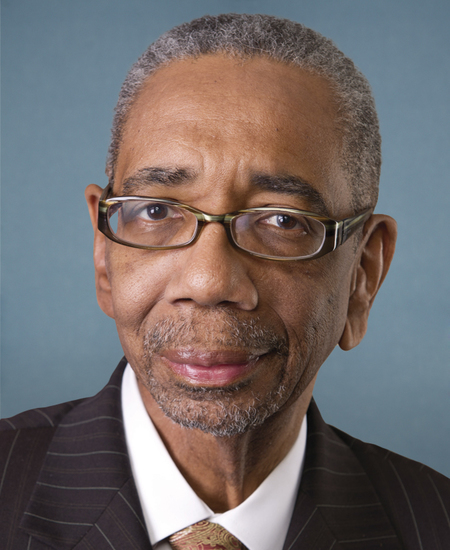
Rep. Bobby L. Rush
Sponsored bills
Creating Opportunities Now for Necessary and Effective Care Technologies (CONNECT) for Health Act of 2021 or the CONNECT for Health Act of 2021 This bill expands coverage of telehealth services under Medicare. Among other provisions, the bill allows the Centers for Medicare & Medicaid Services (CMS) to waive certain restrictions, such as restrictions on the types of technology that may be used; permanently removes geographic restrictions on originating sites (i.e., the location of the beneficiary) and allows the home of the beneficiary to serve as the originating site for all services; permanently allows federally qualified health centers and rural health clinics to serve as the distant site (i.e., the location of the health care practitioner); and allows the CMS to generally waive coverage restrictions during any public health emergency. Additionally, the CMS must report on the effects of expanded telehealth services during the COVID-19 public health emergency, including with respect to the utilization, quality, and outcomes of services. The Center for Medicare and Medicaid Innovation may also test alternative payment models relating to expanded telehealth services.
Mark Takai Atomic Veterans Healthcare Parity Act This bill includes veterans who participated in the cleanup of Enewetak Atoll in the Marshall Islands between January 1, 1977, and December 31, 1980, as radiation-exposed veterans for purposes of the Department of Veterans Affairs presumption of service-connection for specified cancers. Under a presumption of service-connection, specific conditions diagnosed in certain veterans are presumed to have been caused by the circumstances of their military service. Health care benefits and disability compensation may then be awarded.
This concurrent resolution (1) affirms, on the 400th anniversary of the arrival of the first slave ship, that the nation owes a debt of remembrance not only to those who lived through the injustices of slavery but also to their descendants; and (2) urges the establishment of a U.S. Commission on Truth, Racial Healing, and Transformation to properly acknowledge, memorialize, and be a catalyst for progress, including toward permanently eliminating persistent racial inequities.
This resolution condemns and denounces all forms of anti-Asian sentiment, including those related to COVID-19 (i.e., coronavirus disease 2019), and calls on federal law enforcement officials, working with state and local agencies, to take specified steps. The resolution calls on federal officials to expeditiously investigate and document all credible reports of hate crimes, harassment, bullying, and threats against the Asian American and Pacific Islander communities; the Attorney General to work with state and local agencies and Asian American and Pacific Islander community-based organizations to prevent discrimination and to expand culturally competent and linguistically appropriate education campaigns on public reporting of hate crimes; and the Department of Health and Human Services to issue guidance describing best practices to mitigate racially discriminatory language in describing the pandemic. The resolution recommits the United States to serving as a world leader in building more inclusive, diverse, and tolerant societies by (1) prioritizing language access and inclusivity in communication practices, and (2) combating misinformation and discrimination that put Asian Americans and Pacific Islanders at risk.
Ending Qualified Immunity Act This bill eliminates the defense of qualified immunity in civil actions for deprivation of rights. Qualified immunity is a judicially created doctrine that protects government employees or those acting with state authority from being held personally liable for constitutional violations. The bill provides that under the statute allowing a civil action alleging deprivation of rights under color of law, it shall not be a defense or immunity to any such action that (1) the defendant was acting in good faith or believed that his or her conduct was lawful at the time it was committed; (2) the rights, privileges, or immunities secured by the Constitution or federal laws were not clearly established at the time of their deprivation; or (3) the state of the law was such that the defendant could not reasonably have been expected to know whether his or her conduct was lawful.
American Right to Family Act This bill requires the cancellation of removal and adjustment of status for an alien parent or spouse who meets certain requirements. To be eligible for cancellation of removal and adjustment of status under this bill, an alien must (1) meet certain residency-related requirements, such as having been physically present in the United States for at least 10 years or having received a deferral of removal under the Deferred Action for Childhood Arrivals policy; (2) be a parent of either a U.S. national or an individual who first entered the United States under 16 years of age and has been continuously present in the United States since entry; and (3) not be barred from receiving certain immigration benefits on specified grounds, including certain grounds related to criminal conduct or national security. The Department of Homeland Security may waive certain crime-related grounds of inadmissibility for reasons related to the public interest, subject to various limitations. An alien whose removal is canceled under this bill shall be adjusted to temporary resident status for a three-year period, which may be renewed. Furthermore, a cancellation for removal or adjustment of status under this bill shall not count toward certain annual numerical limitations on such actions. The bill also establishes a nonimmigrant W visa available to (1) an alien parent eligible for cancellation for removal and adjustment of status under this bill, and (2) an alien spouse of a U.S. national who meets the residency-related requirements described above and not barred. W visas shall have no annual numerical limitations.
Justice for Black Farmers Act of 2021 This bill directs the Department of Agriculture (USDA) to provide a variety of assistance to address historical discrimination and disparities in the agricultural sector. For example, the bill establishes an equity commission in USDA to examine discrimination by the agency against Black farmers and ranchers and recommend actions to end the systematic disparities in the treatment of Black farmers and ranchers. USDA must also establish a Farm Conservation Corps to provide young adults who are from socially disadvantaged groups with the skills necessary to pursue careers in farming and ranching. The bill provides funding for historically Black colleges and universities to commence and expand courses of study that are focused on careers in agriculture or related disciplines. The bill also increases the authorization of appropriations for a program to resolve issues relating to ownership and succession on farmland. Additionally, it expands credit assistance for socially disadvantaged farmers and ranchers. Further, the bill (1) establishes that a minimum of 50% of a covered packer's (not including a packer that owns only one livestock processing plant) daily volume of livestock slaughter must be purchased through spot market sales from nonaffiliated producers; (2) increases funding for the Local Agriculture Market Program; and (3) gives priority to socially disadvantaged farmers and ranchers for conservation technical assistance, the Conservation Stewardship Program, and the Rural Energy for America Program.
Mental Health Justice Act of 2021 This bill creates a grant program for states and local governments to train and dispatch mental health professionals to respond, instead of law enforcement officers, to emergencies that involve people with behavioral health needs. The Substance Abuse and Mental Health Services Administration (SAMHSA) must manage the program in consultation with the Department of Justice (DOJ). SAMHSA may cancel grants that increase incarceration or institutionalization. Grantees must use funds for purposes including de-escalation and anti-racism training. The Department of Health and Human Services and the DOJ must evaluate this program.
Do No Harm Act This bill prohibits the application of the Religious Freedom Restoration Act of 1993 (RFRA) to specified federal laws or the implementation of such laws. Currently, RFRA prohibits the government from substantially burdening a person's exercise of religion even if the burden results from a rule of general applicability, except in furtherance of a compelling governmental interest when using the least restrictive means. Under the bill, RFRA is inapplicable to laws or the implementation of laws that protect against discrimination or the promotion of equal opportunity (e.g., the Civil Rights Act of 1964); require employers to provide wages, other compensation, or benefits, including leave; protect collective activity in the workplace; protect against child labor, abuse, or exploitation; or provide for access to, information about, referrals for, provision of, or coverage for, any health care item or service. The bill prevents RFRA from being used to deny (1) goods or services the government has contracted, granted, or made an agreement to provide to a beneficiary of or participant in a program or activity funded by such government contract, grant, agreement, or other award; or (2) a person's full and equal enjoyment of a government-provided good, service, benefit, facility, privilege, advantage, or accommodation. In order for a person to assert a RFRA claim or defense in a judicial proceeding, the government must be a party to the proceeding.