

2020 WHIP+ Reauthorization Act This bill expands disaster indemnity programs through which the Department of Agriculture provides payments to agricultural producers for crop and milk losses resulting from hurricanes, wildfires, and other qualifying natural disasters. In particular, the bill extends the Wildfire and Hurricane Indemnity Program Plus (WHIP+), the On-Farm Storage Loss Program, and the Milk Loss Program to make losses that occurred in the 2021 and 2022 calendar years eligible for payments. Under current law, these programs provide disaster payments to agricultural producers with crop and milk losses resulting from qualifying natural disasters that occurred in the 2018 and 2019 calendar years.
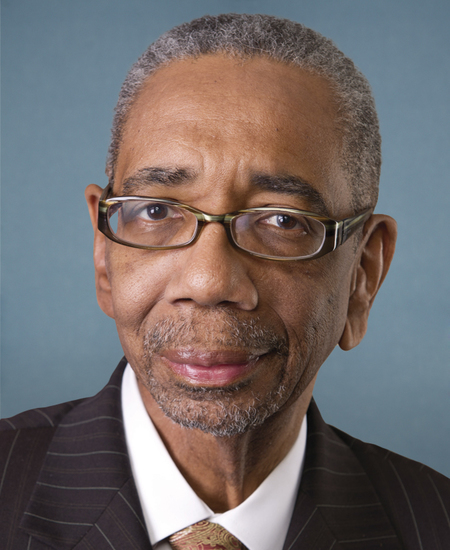
Rep. Bobby L. Rush
Sponsored bills
COVID-19 Vaccine Developers Gold Medal Act This bill provides for the award of a Congressional Gold Medal to recognize all those whose efforts led to the development of COVID-19 vaccines that received emergency use authorizations.
Extend Unemployment Assistance Act of 2021 This bill extends pandemic unemployment compensation provisions set to expire on September 6, 2021, until February 1, 2022. Extended provisions include benefits to covered individuals who are not eligible for regular unemployment compensation or traditional extended benefits, the $300 weekly benefit increase, waiting week benefits, and federal reimbursement of short-time compensation. The bill also increases the maximum duration of compensation from 79 weeks to 100 weeks.
John R. Lewis Voting Rights Advancement Act of 2021 This bill establishes new criteria for determining which states and political subdivisions must obtain preclearance before changes to voting practices may take effect. Preclearance is the process of receiving preapproval from the Department of Justice (DOJ) or the U.S. District Court for the District of Columbia before making legal changes that would affect voting rights. A state and all of its political subdivisions shall be subject to preclearance of voting practice changes for a 10-year period if 15 or more voting rights violations occurred in the state during the previous 25 years; 10 or more violations occurred during the previous 25 years, at least 1 of which was committed by the state itself; or 3 or more violations occurred during the previous 25 years and the state administers the elections. A political subdivision as a separate unit shall also be subject to preclearance for a 10-year period if three or more voting rights violations occurred there during the previous 25 years. States and political subdivisions that meet certain thresholds regarding minority groups must preclear covered practices before implementation, such as changes to methods of election and redistricting. Further, states and political subdivisions must notify the public of changes to voting practices. Next, the bill authorizes DOJ to require states or political subdivisions to provide certain documents or answers to questions for enforcing voting rights. The bill also outlines factors courts must consider when hearing challenges to voting practices, such as the extent of any history of official voting discrimination in the state or political subdivision.
Protecting Benefits for Disabled Veterans Act of 2021 This bill provides statutory authority for the Department of Veterans Affairs (VA) to assign, for purposes of the disability compensation program, a disability rating of total to a veteran who meets certain parameters and is unable to secure or maintain substantially gainful employment due to a service-connected disability. Specifically, the VA may make such a disability determination if a veteran has a service-connected disability rated at least 60%, or has two or more service-connected disabilities with one being at least 40% and a combined total of at least 70%. The VA may also make a determination on the disability rating in circumstances where a veteran meeting the specified parameters maintains marginal employment (income is less than the poverty threshold), or if the veteran maintains substantially gainful employment (exceeds the poverty threshold) and the VA determines that the rating is appropriate. The bill prescribes what disabilities may be considered as one disability (e.g., disabilities incurred or aggravated as a prisoner of war). The VA may not consider the age of a veteran or eligibility for retirement benefits when making any determination related to disability rating.
Improving Medicare Coverage Act This bill temporarily expands eligibility for Medicare. It also temporarily establishes a premium and cost-sharing assistance program for low-income beneficiaries. Specifically, the bill lowers the age of eligibility for Medicare from 65 to 60. The Centers for Medicare & Medicaid Services must establish procedures to provide for automatic enrollment of qualifying individuals. Enrollment must be completed within 11 months of the bill's enactment. The bill also establishes a program under Medicare to assist low-income Medicare beneficiaries with premiums, coinsurance, deductibles, and other costs. Currently, such assistance is provided through Medicare Savings Programs, which are administered by state Medicaid programs. The bill also establishes a related special enrollment period under Medicare, expands eligibility for assistance to beneficiaries with income up to 200% of the federal poverty line, and provides for joint eligibility determinations with respect to the bill's program and the low-income subsidy program under the Medicare prescription drug benefit. The bill's provisions generally take effect six months after the bill's enactment and terminate five years later.
Prohibition of Medicaid Funding for Conversion Therapy Act This bill prohibits state Medicaid programs from covering conversion therapy. The bill defines conversion therapy as any practice or treatment that seeks to change a person's sexual orientation or gender identity in exchange for monetary compensation.
Harlem Hellfighters Congressional Gold Medal Act This bill provides for the award of a Congressional Gold Medal to the 369th Infantry Regiment, commonly known as the Harlem Hellfighters, in recognition of their bravery and outstanding service during World War I.
Puppies Assisting Wounded Servicemembers for Veterans Therapy Act or the PAWS for Veterans Therapy Act This bill implements a program and a policy related to service dog therapy for veterans. Specifically, the bill requires the Department of Veterans Affairs (VA) to implement a five-year pilot program to provide canine training to eligible veterans diagnosed with post-traumatic stress disorder as an element of a complementary and integrative health program. Eligible veterans are those who are enrolled in the VA health care system and have been recommended for participation by a qualified mental health care provider or clinical team. The VA must seek to enter agreements containing specified elements with accredited nongovernmental entities that have demonstrated ability to provide canine training. Veterans who participate in the program are authorized to adopt the dog they assisted in training if their health provider determines it is in the best interest of the veteran. The VA must establish processes to document and track the progress of participating veterans with respect to health benefits and improvements. The Government Accountability Office must brief Congress and submit a report on the program. The bill also authorizes the VA to provide service dogs to veterans with mental illnesses, regardless of whether they have a mobility impairment.
No Federal Funding for Confederate Symbols Act This bill prohibits federal funds from being used for the creation, maintenance, or display of any Confederate symbol on federal public land or other federal property. An exception to such prohibition is provided (1) if the use of such funds is necessary to allow for the removal of the Confederate symbol to address public safety; or (2) in the case of a Confederate symbol created, maintained, or displayed in a museum or educational exhibit.