

Maddy summaryHRES 677 is a symbolic House resolution condemning Russia for actions that worsen global food insecurity. It specifically targets Russia's invasion of Ukraine, including its blockade of Ukrainian Black Sea ports, attacks on grain infrastructure, and suspension of the Black Sea Grain Initiative - measures that disrupted Ukraine's role as a major global grain exporter (supplying 11% of world cereals). The resolution demands Russia cease targeting grain facilities, resume participation in the Grain Initiative, and stop weaponizing food shortages. It affirms that Russia's actions, not sanctions, are the cause of rising global food insecurity, which the resolution links to U.S. national security. This resolution does not enact new laws but formally expresses congressional opposition to Russia's tactics.
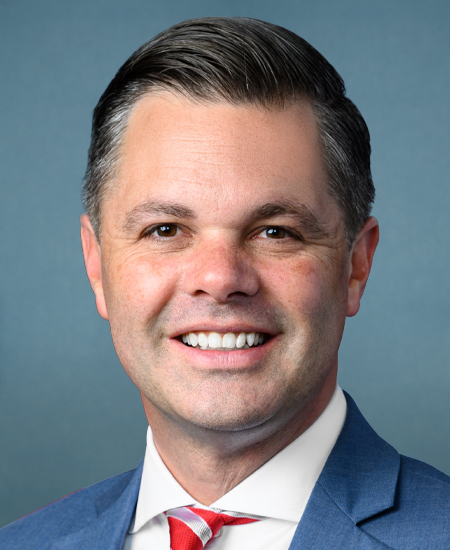
Rep. Zachary Nunn
Sponsored bills
Maddy summaryHR 5413, the Prevent Youth Suicide Act, requires all schools serving grades 6-12 that receive federal education funds to implement specific suicide prevention and support protocols within 210 days of enactment. The bill mandates evidence-based staff training every two years to identify student suicide risks, establish referral systems to mental health resources, reduce stigma through awareness campaigns, and adopt trauma-informed care practices. Schools must also create postvention plans for after a suicide occurs, including grief counseling support and collaboration with mental health professionals. These requirements apply directly to school districts and institutions receiving federal education funding under applicable programs. The Secretary of Education will provide technical assistance and monitor compliance with these rules.
Maddy summaryHR 940, the Information Security Investment Act of 2023, requires Members of Congress (including delegates and resident commissioners) and the President and Vice President to complete mandatory training on handling classified information. Members must finish this training within 90 days of taking office (or 180 days for the first session of the 118th Congress), while the President and Vice President must complete it within 30 days of starting their term and every two years thereafter. The bill establishes specific deadlines for completing this training and mandates that relevant committees (House Administration and Senate Rules) issue regulations to implement the requirement. This procedural bill directly affects elected officials and the executive branch leadership by imposing standardized training obligations on handling classified information.
Maddy summaryThis resolution supports designating September 22 as "National Military and Veterans Suicide Awareness Day" to raise public awareness about suicide prevention among active-duty service members and veterans. It does not create new policies or funding but aims to highlight mental health challenges like PTSD and depression that contribute to higher suicide rates in these communities. The resolution emphasizes reducing stigma and encouraging help-seeking during Suicide Prevention Awareness Month (September). It directly affects military personnel, veterans, and the public by promoting national attention to this issue through a designated awareness day.
Maddy summaryHR 5312, the Supporting Healthy Mothers and Infants Act of 2023, updates the WIC program by replacing the term "drug abuse" with "substance use disorder" throughout its rules to reduce stigma and improve care. It requires the development of evidence-based nutrition education materials for pregnant and postpartum individuals with substance use disorder, as well as for infants affected by prenatal exposure or neonatal abstinence syndrome. The bill mandates outreach to potentially eligible individuals and creates an online clearinghouse for nutrition resources, with $1 million authorized for fiscal year 2024. This directly affects WIC participants - mothers and infants impacted by substance use disorder - by providing more accurate, supportive resources under the program.
Cybersecurity in Agriculture Act of 2023 This bill directs the National Institute of Food and Agriculture (NIFA) to establish an agriculture cybersecurity program. Under the program, NIFA must provide grants to or enter into cooperative agreements with eligible entities to establish a network of five Regional Agriculture Cybersecurity Centers to carry out research, development, and education on agriculture cybersecurity related to seed agriculture, horticulture, animal agriculture, and the agriculture supply chain. An eligible entity is a college or university that has programs in food and agriculture sciences and cybersecurity that coordinate regional industry partners, cooperatives, government authorities, and other stakeholders to (1) strengthen security, privacy, and resiliency; (2) bolster the independent networks; and (3) develop a skilled workforce. The program must also establish a national network of such regional centers and designate one college or university to coordinate the national network's activities.
Investing in Rural America Act This bill allows Farm Credit System (FCS) institutions to provide financing and technical assistance for essential community facility projects as part of the Department of Agriculture's Community Facilities Direct Loan & Grant Program. (This program provides funding to develop essential community facilities in rural areas.) The FCS financing and technical assistance may be provided in order to make capital available to develop, build, maintain, improve, or provide other support for essential community facilities in rural communities (e.g., certain facilities that provide healthcare, community support, public safety, educational, or utility services). Under the bill, the financing provided by an FCS institution may not exceed 15% of the institution’s total assets unless the FCS institution offers at least one non-FCS lending institution an interest in the financing under reasonable terms and conditions acceptable to the borrower. The FCS institution must also report the offer to the Farm Credit Administration (FCA). The FCA must submit an annual report to Congress on the activities undertaken by FCS institutions under this bill, including through the partnerships between FCS institutions and other lending institutions. The FCA must post the report on the agency's website.
Maddy summaryHR 4745, the Delivering for Rural Seniors Act of 2023, creates a pilot program to expand home delivery of food packages under the Commodity Supplemental Food Program (CSFP) for low-income seniors in rural areas. The bill authorizes $10 million annually (2024-2026) for competitive grants to state agencies, which must prioritize rural service providers to cover costs like transportation, staffing, and outreach for home delivery. It requires grantees to report on delivery metrics, costs, and effectiveness annually. The program directly affects rural CSFP participants facing transportation barriers to accessing food assistance.
Maddy summaryThe ReConnecting Rural America Act of 2023 provides federal funding through grants, loans, and combinations of both to build broadband infrastructure in rural areas. It requires projects to provide at least 100 Mbps downstream and 100 Mbps upstream service, with priority given to areas where at least 90% of households lack such service. The bill authorizes $650 million annually from 2024-2028 for this program, targeting rural communities that currently lack adequate broadband access, while requiring cost-sharing of up to 25% and technical assistance for applicants. Eligible entities include state/local governments, tribes, cooperatives, and corporations, but not individuals or general partnerships. The program will expire on September 30, 2028.
This bill requires various changes to the passport application process and addresses related issues. The bill requires all U.S. regular passports to contain a written notice advising travelers (1) to check travel.state.gov for updated travel warnings, (2) to register with the Department of State prior to overseas travel, (3) that many countries deny entry to travelers whose passport expires within six months, and (4) to renew their passports within at least one year of the expiration date. Further, the bill makes permanent existing State Department authority to assess a surcharge on the passport application fee to cover the costs of increased demand prompted by certain legal requirements. This authority currently expires on September 30, 2026. For three years starting from this bill's enactment, the State Department may use direct hire authority to expedite the hiring of individuals into Passport and Visa Examining positions (Series 0967). Finally, the bill requires the Department of State to report to Congress about passport processing wait times, agency plans for a public outreach campaign, and related information.