

Nationwide Consumer and Fuel Retailer Choice Act of 2025 This bill amends the Clean Air Act to address the limitations on Reid Vapor Pressure (a measure of gasoline's volatility) that are placed on gasoline during the summer ozone season. Specifically, the bill applies the waiver for Reid Vapor Pressure requirements that is applicable to gasoline blended with 10% ethanol (E10) to gasoline blended with up to 15% ethanol (E15). This change allows gasoline that is blended with 10% to 15% ethanol to be sold year-round. Currently, states may be excluded from the waiver for Reid Vapor Pressure requirements by submitting documentation supporting that the waiver would increase air pollution. The bill nullifies existing state exclusions, but states may submit documentation after enactment of the bill to be excluded going forward. The bill also modifies the Renewable Fuel Standard Program, which requires transportation fuel sold or introduced into commerce in the United States to contain minimum volumes of renewable fuel. Under the existing program, obligated parties, such as small refineries, must satisfy the volume obligations by either blending renewable fuels into their gasoline or diesel fuel products or by acquiring credits that represent the required renewable fuel volume. The bill directs the Environmental Protection Agency to return compliance credits to small refineries under certain circumstances.
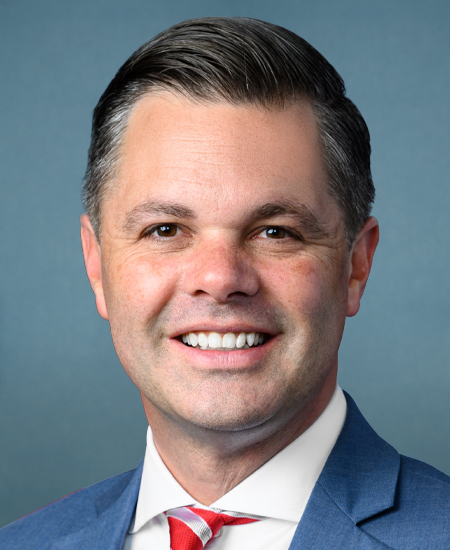
Rep. Zachary Nunn
Sponsored bills
Maddy summaryHRES 64 is a non-binding House resolution affirming the U.S.-South Korea alliance. It highlights historical ties (dating to 1882), economic partnerships (including 2023 trade data), and security cooperation (like the 1953 Mutual Defense Treaty), while celebrating Korean American contributions to U.S. society. The resolution formally supports strengthening security, economic, and cultural ties between the two nations and notes the 2025 anniversary of Korean liberation. It does not create new laws or funding, but serves as a symbolic statement of congressional support for the alliance.
Maddy summaryThis bill would amend federal law to strengthen penalties for organized retail crime by expanding definitions of theft to include digital goods, gift cards, and setting a $5,000 aggregate value threshold for charges over a 12-month period. It would establish a new "Organized Retail and Supply Chain Crime Coordination Center" under Homeland Security to coordinate Federal, State, local, and Tribal law enforcement efforts against cross-jurisdictional theft groups. The Center would share information with retailers, transportation companies, and law enforcement agencies, track crime trends, and produce annual reports on organized retail crime. This legislation directly affects retailers, supply chain businesses, and law enforcement agencies, while targeting organized crime groups responsible for a 93% increase in larceny incidents and rising safety concerns for retail employees. The bill aims to address significant financial losses and supply chain disruptions noted in the National Retail Federation's 2023 data.
Maddy summaryThe Connected Vehicle Security Act of 2026 restricts the importation, sale, and manufacture of vehicles and related technology from specific countries, including China, Russia, Iran, and North Korea, to address national security concerns. The law defines prohibited items as connected vehicles, their software, and hardware components and sets different effective dates, with vehicle bans starting in 2027 and hardware restrictions beginning in 2030. A government official can grant exceptions for specific items after reviewing security risks and notifying Congress, while the agency must publish annual reports on enforcement actions and compliance.
Maddy summaryThis bill expands the review authority of the Committee on Foreign Investment in the United States to include real estate transactions involving specific foreign nations and entities linked to them. It designates certain locations, such as military bases, agricultural land, and critical infrastructure, as "sensitive sites" where purchases or leases by foreign adversaries face stricter scrutiny. Under the new rules, these transactions are presumed to pose an unresolvable national security risk unless the committee provides clear evidence that the threat can be mitigated. The legislation also ensures that existing state laws restricting foreign ownership of farmland remain in effect and requires the committee to issue new regulations within 120 days of enactment.
Maddy summaryThis bill requires federal agencies to analyze indirect economic costs on small businesses when creating new rules, including costs affecting businesses that interact with regulated entities (like suppliers or partners). It creates a new process allowing small businesses to petition the Small Business Administration's Chief Counsel to review agency certifications claiming a rule won't significantly impact them. Agencies must then provide detailed cost analyses, publish guidance online for small business feedback, and face penalties if they fail to cooperate with reviews. The bill does not change existing regulations but adds new review steps for small business input.
Maddy summaryThe Workforce Housing Tax Credit Act creates a new federal tax credit to encourage the development and rehabilitation of affordable housing for middle-income families. This credit applies to buildings where at least 60% of units are rent-restricted and occupied by individuals earning 100% or less of the area median income, with at least 20% of those units specifically targeted for middle-income households. The bill establishes a 15-year credit period based on a percentage of the building's qualified basis, which is determined by factors such as the building's cost, location, and whether it is new or existing. To qualify, developers must enter into binding agreements with housing agencies that include long-term commitments to maintain affordable rents and prevent the displacement of tenants, while also adhering to specific financial feasibility and reporting requirements.
Maddy summaryThis resolution expresses support for designating April as National Foster Sibling Connections Month to highlight the importance of keeping siblings together in the foster care system. It acknowledges that separating siblings often leads to negative outcomes like placement instability and mental health challenges for children. The bill encourages federal, state, and local agencies to prioritize policies that maintain sibling connections and improve data tracking on these separations.
Maddy summaryThe Protecting Sibling Relationships in Foster Care Act creates a five-year pilot program to award up to five grants for developing specialized foster care programs focused on keeping siblings together. These grants are available to state agencies, tribal or local organizations, and community nonprofits that have proven expertise in managing foster care placements. Recipients must use the funds to create evidence-based programs specifically designed for groups of three or more siblings, including those with wide age gaps or complex needs like trauma or disabilities. To qualify, applicants must submit detailed plans describing how they will place siblings jointly and provide data on current placement challenges. The program is authorized a maximum of $10 million, and grantees are required to report on the number of children served, group sizes, placement methods, and outcomes.
Maddy summaryThis bill modernizes housing assistance programs for Native American tribes and Native Hawaiians by streamlining environmental reviews, extending funding authorization through 2032, and expanding loan guarantee options. Key provisions include consolidating environmental review requirements to reduce paperwork for tribes, allowing 99-year leasehold interests on trust lands for housing, and creating new rental assistance specifically for homeless or at-risk Native American veterans. The legislation also clarifies rent rules, waives certain housing counseling certifications for tribal entities, exempts tribal housing projects from some federal civil rights and Buy America requirements, and establishes a direct loan guarantee process for tribal housing projects.