

Maddy summaryHR 8683 requires the Secretaries of Defense and State to map global strategic ports critical to U.S. interests (military, economic, or diplomatic) and track China's efforts to build or buy such ports. Within 180 days of enactment, they must submit a strategy to counter Chinese port investments, including analyzing Chinese port capabilities, ongoing projects, and vulnerabilities like cyber attacks linked to China. The bill also mandates coordination with agencies like the Export-Import Bank to promote U.S. or allied alternatives to Chinese port investments. It directly affects federal agencies responsible for defense, diplomacy, and development finance, focusing on monitoring and strategic planning rather than immediate policy changes.
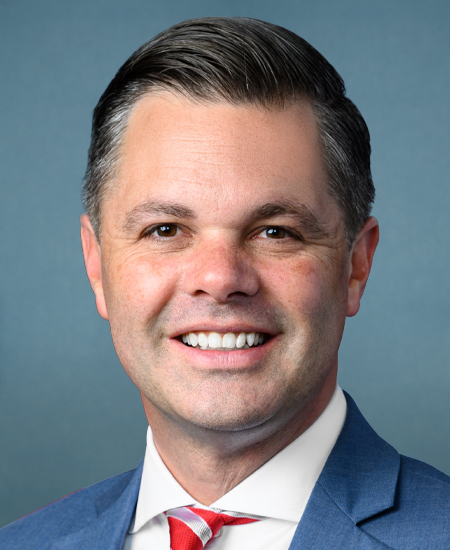
Rep. Zachary Nunn
Sponsored bills
Maddy summaryHR 3433, the "Give Kids a Chance Act of 2024," requires pharmaceutical companies developing certain cancer drugs to conduct pediatric studies if the drugs target molecular pathways relevant to childhood cancers. It directly affects drug manufacturers submitting new applications for cancer treatments, particularly those combining previously approved adult cancer drugs or containing a single new active ingredient. The bill amends FDA regulations to mandate these pediatric investigations only when specific conditions are met, such as when a drug's molecular target is relevant to pediatric cancer growth. The FDA must issue implementing guidance within 12 months, and reports to Congress will track implementation and effectiveness starting 2 years after enactment.
Maddy summaryHJRES 136 is a resolution seeking to block an Environmental Protection Agency (EPA) rule that would have set new emissions standards for light and medium-duty vehicles sold in 2027 and later model years. The EPA rule, published in April 2024, aimed to require vehicle manufacturers to meet stricter pollution limits for these vehicles. If passed, this resolution would cancel the rule, preventing the EPA from enforcing the new standards. It uses a congressional process that allows Congress to reject agency rules with a simple majority vote.
Maddy summaryHR 9765, the Improving Retirement Security for Family Caregivers Act of 2024, allows certain unpaid family caregivers to contribute to Roth IRAs at the standard annual limit. It directly affects unpaid caregivers who provided at least 500 hours of in-home care (e.g., bathing, meal prep, medication management) for a child or an adult with special needs (including elderly adults with age-related conditions) while working fewer than 500 hours paid during the year. The bill amends tax rules to treat these caregivers as if they meet the standard Roth IRA contribution income limits, enabling them to build retirement savings without being disqualified due to low paid employment. This change applies to taxable years beginning after December 31, 2024.
Maddy summaryHR 9745, the Lifesaving Gear for Police Act of 2024, removes barriers for state and local law enforcement agencies to access existing federal equipment. It prohibits federal agencies from enforcing any regulations (since May 15, 2015) that limit the transfer of Department of Defense or other federal equipment to police departments, unless Congress passes those rules into law. The bill also requires agencies to return or replace equipment recalled since 2015 under those regulations, provided the agency requests it, meets existing eligibility rules, and the equipment is available. This directly affects police departments that previously had equipment seized or denied under the blocked regulations. The law focuses on restoring access to current equipment-sharing programs, not creating new funding or gear.
Maddy summaryHR 9699, the Pay Our Troops Act, ensures military personnel and key support staff continue receiving pay during government funding gaps in fiscal year 2025. It appropriates funds to cover pay and allowances for active-duty troops, Department of Defense civilians, and qualifying contractors supporting military operations, if regular appropriations aren't enacted. The funding remains in effect until the earliest of: a new appropriations law, a funding resolution without such funding, or January 1, 2026. This bill does not change pay rates or create new policies - it guarantees existing pay continuity during budget transitions.
Maddy summaryThis bill modifies Medicaid and CHIP rules to let eligible out-of-state healthcare providers enroll without extra state screening. It applies to providers already in Medicare or their home state program, with low fraud risk, serving children under 21 with complex medical conditions. Providers would receive 5 years of enrollment under this streamlined process, eliminating state-level barriers. The change directly affects children seeking specialized care across state lines and the providers who serve them.
Maddy summaryThe PROTECT Our Children Reauthorization Act of 2024 reauthorizes and updates the 2008 PROTECT Our Children Act, primarily focusing on strengthening federal efforts to combat child exploitation. It requires the National Strategy for Child Exploitation Prevention to be updated every four years instead of every two, with detailed provisions including trend analysis, resource estimates, and assessments of Internet Crimes Against Children (ICAC) task forces. The bill also modifies ICAC task force operations to include liability protections for prioritization decisions (unless misconduct occurs), expands coordination requirements with Tribal and military agencies, and increases funding to $70 million for 2025, $80 million for 2026, and $90 million for 2027. These changes directly affect federal agencies like the DOJ, FBI, and ICAC task forces, as well as state and local law enforcement partners working on child exploitation cases. The legislation aims to enhance data-driven coordination and resource allocation for preventing and prosecuting child exploitation crimes.
Maddy summaryThe 21st Century Workforce Partnerships Act creates two grant programs to strengthen connections between education and workforce development. It provides competitive grants to secondary schools for career pathways programs in high school or middle school, requiring partnerships with businesses and industry partners, and to colleges for programs leading to recognized credentials in high-demand fields. Both programs require matching funds from non-Federal sources, partnerships with employers, and alignment with existing workforce development strategies. The bill includes requirements for measuring job quality, employment outcomes, and program sustainability, with priority given to serving students with barriers to employment. It aims to improve educational pathways for students toward better employment opportunities in growing industries.
Maddy summaryThis bill reauthorizes the High Intensity Drug Trafficking Areas (HIDTA) Program with $400 million annually for fiscal years 2026 through 2031. It requires the federal drug control director to identify and promote "promising practices" that improve investigations of drug trafficking linked to overdoses, enhance law enforcement coordination on drug and firearm crimes, and implement evidence-based substance use disorder prevention. Starting in 2026, the director must review these practices, develop them for HIDTA regions, and share them with all participating agencies. The bill directly affects the HIDTA Program and the Office of National Drug Control Policy by establishing funding levels and new procedural requirements.