

Maddy summaryHR 4477, the PRICE Act, creates a new federal grant program to improve affordable manufactured housing communities. It provides funds for infrastructure, repairs, safety upgrades, and community services in communities that are affordable to low- and moderate-income residents (at or below 120% of area median income) and either owned by residents or committed to remaining affordable. Eligible projects include replacing homes (excluding pre-1976 units), weatherization, accessibility modifications, and resident services like eviction prevention. The program prioritizes projects that preserve long-term affordability for low-income residents and is open to community groups, local governments, tribes, and nonprofit housing organizations.
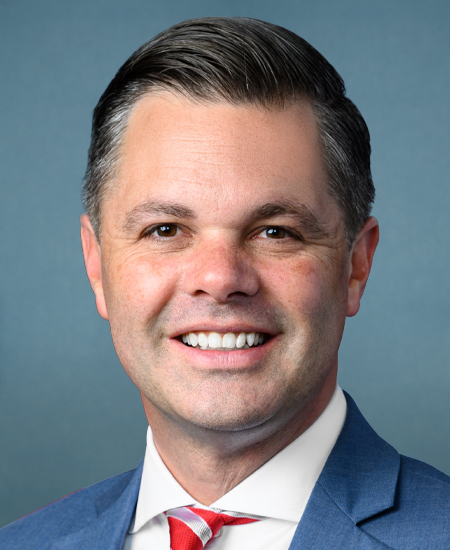
Rep. Zachary Nunn
Sponsored bills
Maddy summaryThis bill requires a nonpartisan review of rising costs for transit buses in the U.S. The Comptroller General will analyze factors driving high manufacturing and procurement costs, compare U.S. prices to other countries, and examine how supplier challenges affect federal transit programs like the Low/No Emission Grant Program. The review will assess strategies such as joint state procurement that might reduce costs and speed up delivery. The findings will be reported to Congress within 18 months, but the bill itself does not change funding or directly alter bus procurement processes.
Maddy summaryHR 1919, the "Anti-CBDC Surveillance State Act," prohibits the Federal Reserve from developing, testing, or issuing any central bank digital currency (CBDC) or similar digital assets. It specifically bans the Fed from offering direct financial products to individuals, maintaining individual accounts, or issuing CBDCs directly or indirectly through intermediaries like banks. The bill also blocks the Fed from using any digital asset for monetary policy and clarifies that physical currency's privacy protections remain intact. This policy directly affects the Federal Reserve System's ability to create or manage digital monetary tools.
Maddy summaryThe Strong Farms, Strong Future Act amends the Conservation Stewardship Program to prioritize climate and soil health outcomes. It requires the Secretary of Agriculture to create "climate change mitigation bundles" - groups of conservation practices designed to reduce greenhouse gas emissions or increase carbon sequestration - for different farm types (like cropland, pasture, and forest land) and ensures these bundles are equally available to organic and conventional farmers. The bill updates contract renewal rules to mandate producers adopt new conservation practices that improve soil health and reduce emissions over time, with payments tied to these outcomes. This directly affects farmers and ranchers enrolled in the program by changing eligibility for contract renewals and payments based on measurable environmental improvements.
Maddy summaryThe COUNTER Act of 2025 requires the U.S. government to assess and counter China's overseas military basing activities. It mandates the Director of National Intelligence to submit a classified risk assessment within 180 days of enactment, focusing on locations where China maintains or seeks military infrastructure. The State Department must then develop a strategy within 180 days, identifying at least five high-risk locations, detailing current efforts to prevent China from establishing bases, and outlining effective actions for partner nations to reject such access. The bill directs the creation of an interagency task force to implement this strategy and conduct quadrennial reviews of the approach. This legislation applies to U.S. government agencies, not directly to foreign nations or citizens.
Maddy summaryThis bill extends the Public Health and Bio-Preparedness Workforce Loan Repayment Program through fiscal years 2026 to 2030, replacing the previous 2023-2025 funding period. It directly affects public health workers (such as epidemiologists, laboratory staff, and emergency response personnel) who have federal student loans. The key provision reauthorizes existing funding to help these workers repay student debt by providing federal reimbursements. This maintains a critical workforce retention tool for agencies like the CDC and state health departments without creating new benefits or altering eligibility. The change is procedural, solely adjusting the program's funding timeline.
Maddy summaryThe Bridge Investment and Modernization Act of 2025 extends federal funding for bridge infrastructure projects through fiscal years 2027-2031, authorizing $3.05 billion in 2027 rising to $3.25 billion in 2031. It modifies an existing program under the Infrastructure Investment and Jobs Act to maintain consistent annual funding levels for bridge repairs and replacements. The bill also streamlines the bridge selection process by removing a specific administrative requirement (Section 124(c)(5)(B) of Title 23, U.S. Code). This directly affects federal transportation agencies and state departments responsible for managing bridge infrastructure projects.
Maddy summary# Summary of "Dignity for Immigrants while Guarding our Nation to Ignite and Deliver the American Dream Act" This comprehensive immigration bill proposes multiple pathways to legal status and permanent residency for undocumented immigrants while creating new employment and workforce development programs. ## Key Provisions: 1. **Dignity Program (Subtitle III)**: - Creates a 7-year program for eligible undocumented immigrants requiring $7,000 in restitution payments to an H-1B fund - Provides deferred action on removal, work authorization, and travel privileges - Requires participants to maintain employment/education, pay taxes, and comply with all laws - Upon completion, participants receive "Dignity Status" valid for 7 years with renewal options 2. **Workforce Development (Division C)**: - Directs restitution payments to fund apprenticeships and work-based learning programs - Establishes industry partnerships to support small- and medium-sized businesses - Focuses on "in-demand industry sectors" with targeted training programs - Requires 12 months of post-employment support services for participants 3. **Family Reunification (Section 3111-3115)**: - Expands discretionary authority for family-based relief - Creates new "family purpose" nonimmigrant visa category (90-day limit) - Modernizes military naturalization for service members - Includes protections for children affected by visa backlogs 4. **Backlog Reduction (Section 3201-3203)**: - Creates premium processing for long-pending cases ($20,000 fee) - Increases per-country caps from 7% to 15% - Protects children from "aging out" of family-based visas 5. **Student and Worker Visas (Section 3301-3305)**: - Modernizes student visa categories with "dual intent" provisions - Recognizes doctoral STEM graduates as "extraordinary ability" - Streamlines visa processing through a new Immigration Agency Coordinator The bill aims to balance immigration reform with workforce development, creating a pathway to legal status while directing funds toward American workers through apprenticeships and training programs in high-demand fields.
Farmers First Act of 2025 This bill extends through FY2030 and revises the Farm and Ranch Stress Assistance Network (FRSAN). This Department of Agriculture program provides competitive grants to states, Indian tribes, and qualified nonprofit organizations to provide stress assistance programs (i.e., professional agricultural behavioral health counseling, helplines, and resources) to individuals engaged in farming, ranching, and agriculture-related occupations. The bill specifies that the grant funding for farm telephone helplines and websites may also be used for crisis lines. Further, FRSAN grant recipients may establish referral relationships with providers, including Certified Community Behavioral Health Clinics, health centers, rural health clinics, and critical access hospitals.
Maddy summaryHR 4391 authorizes the U.S. State Department to lead a Minerals Security Partnership with international allies, aiming to build secure supply chains for critical minerals used in clean energy, defense, and technology. It establishes mechanisms for joint projects, cost-sharing on infrastructure, and market-based incentives to reduce reliance on countries like China and Russia for minerals such as lithium and cobalt. The bill requires environmental and social standards for project selection and directs the creation of a public database to share project information and attract private investment. This legislation directly affects U.S. foreign policy coordination, international partners, and companies involved in critical mineral supply chains.