

Maddy summaryThis bill authorizes the U.S. President to lend or lease defensive military equipment to Taiwan’s government to strengthen its ability to defend against potential aggression from China’s military, including scenarios like naval blockades, amphibious assaults, or missile strikes. It requires Taiwan to pay for damaged or lost equipment and to repay the U.S. for defense services or construction over 12 years, with interest rates subject to congressional review. The bill mandates a 90-day report to Congress assessing Taiwan’s defense needs, supply chain challenges, and timelines for delivering and integrating military equipment. It does not create new policy but establishes procedures for U.S. defense support to Taiwan under specific conditions.
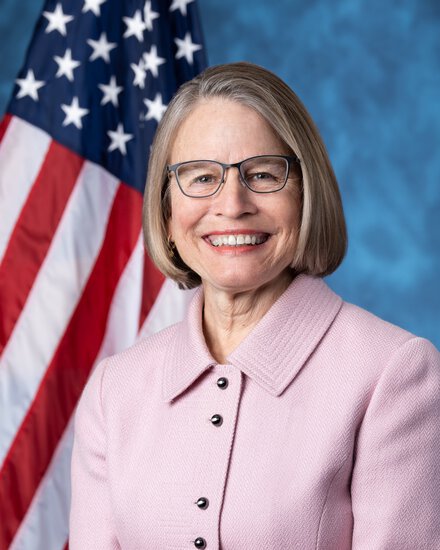
Rep. Mariannette Miller-Meeks
Sponsored bills
Maddy summaryThis bill requires colleges to provide pre-loan counseling to students before they take out federal student loans, including an estimate of monthly payments compared to expected income after expenses (using government data) and a full breakdown of all debt (federal, private, and future costs). It also mandates that lenders send borrowers quarterly statements during non-payment periods (like while in school), showing loan balances, interest rates, payments made, and how making small payments can reduce total interest. These changes apply directly to students receiving federal loans, colleges, and loan servicers. The goal is to improve transparency about long-term repayment impacts before borrowing begins.
Maddy summaryThis bill amends the Higher Education Act to exempt certain family-owned assets from being counted when calculating federal student aid eligibility. Specifically, it excludes family farms where the family resides and small businesses with 100 or fewer full-time equivalent employees owned and controlled by the family. These assets will no longer be considered when determining a student's financial need for aid programs. The change directly affects students from qualifying family farms or small businesses when applying for federal financial aid. The exemption applies to assets held by the family, not just the business itself.
Maddy summaryThis is a non-binding resolution expressing the House of Representatives' symbolic support for designating February 27-March 3, 2023, as "Public Schools Week." It does not create new laws, allocate funding, or directly affect any individuals or institutions. The resolution highlights the importance of public schools to democracy, equity, and student success through a series of supporting statements. As a procedural resolution, it has no legal effect beyond acknowledging the significance of public education.
Maddy summaryHR 1202, the REDI Act, amends the Higher Education Act to allow medical and dental residents to temporarily pause federal student loan payments without accruing interest during their internship or residency programs. This directly affects borrowers with federal student loans who are enrolled in qualifying medical or dental training programs. The key provision adds a new rule (paragraph 6) ensuring these borrowers qualify for a deferment period where they don't pay principal and interest accrues at 0%. The change modifies existing loan rules to explicitly include medical/dental residents under the "in-school" deferment category. This policy change provides immediate financial relief during a critical training phase for healthcare professionals.
Maddy summaryHR 1200, the National Right-to-Work Act, prohibits requiring workers to join a union or pay dues as a condition of employment in both private-sector workplaces (covered by the National Labor Relations Act) and railroad industries (covered by the Railway Labor Act). The bill amends key sections of these laws to eliminate provisions that allowed union security agreements, meaning workers in unionized settings would no longer be forced to pay dues to retain their jobs. This directly affects employees in unionized workplaces across the U.S., particularly those in industries with existing union contracts that included mandatory dues. The law changes the legal framework to ensure union membership and dues payment remain voluntary for all workers.
Maddy summaryHR 1190, the "Disclosing Foreign Influence in Lobbying Act," amends the Lobbying Disclosure Act of 1995 to require lobbyists to disclose the name and address of any foreign government or political party (other than the client) that directs, plans, supervises, or controls their lobbying activities. This change directly affects registered lobbyists who work with foreign entities, mandating them to report these foreign influences in their filings. The key provision adds a new requirement to disclosure forms, specifying that foreign governments or political parties involved in controlling lobbying efforts must be named, even if they are not the direct client. This focuses on transparency about foreign involvement in U.S. lobbying, without altering the core lobbying registration framework.
Maddy summaryHR 1180, the "Billion Dollar Boondoggle Act of 2023," requires federal agencies managing large projects to publicly report on cost overruns and delays. It directly affects Executive agencies and independent regulatory agencies that fund projects exceeding $1 billion in cost overruns or being more than five years behind schedule. The bill mandates annual reports including project descriptions, original vs. current costs (adjusted for inflation), reasons for delays, contractor details, and any bonuses awarded. These reports must be submitted to the Office of Management and Budget and made available to the public. The law focuses on transparency around major federal projects without specifying policy changes to project management.
Maddy summaryThe STUDENT Act (HR 1125) requires lenders to disclose the total interest a borrower would pay over the life of a federal student loan under a standard 10-year repayment plan. This provision directly affects students taking out federal loans by providing clearer information about the full cost of borrowing upfront. The bill amends the Higher Education Act to add this specific disclosure requirement to loan terms. The change aims to increase transparency in student loan financing without altering repayment terms or interest rates.
Maddy summaryHR 1088, the Shirley Chisholm Congressional Gold Medal Act, authorizes a posthumous Congressional Gold Medal to honor Congresswoman Shirley Chisholm, the first African-American woman elected to Congress (1968) and the first Black candidate for a major party's presidential nomination (1972). The bill directs the Treasury Secretary to design and strike a gold medal featuring Chisholm's image, which will be presented by Congress and then permanently displayed at the Smithsonian Institution. Duplicate bronze medals may be sold to the public to cover production costs, with proceeds deposited into the U.S. Mint fund. This bill commemorates Chisholm's legacy and achievements without creating new laws or affecting any current policies.