

Maddy summaryHR 1068, the Securing America’s Critical Minerals Supply Act, amends the Department of Energy Organization Act to define "critical energy resource" as any energy resource essential to U.S. energy systems with a vulnerable supply chain. The bill requires the Energy Secretary to conduct ongoing assessments of these resources, strengthen domestic supply chains through diversification and increased production, develop alternatives, improve recycling technology, and evaluate risks from import reliance. This legislation directly affects the Department of Energy, which must now lead these efforts in consultation with energy sector stakeholders and federal agencies. The key mechanisms focus on preventing supply disruptions for resources critical to energy technologies and systems, without specifying particular minerals or industries.
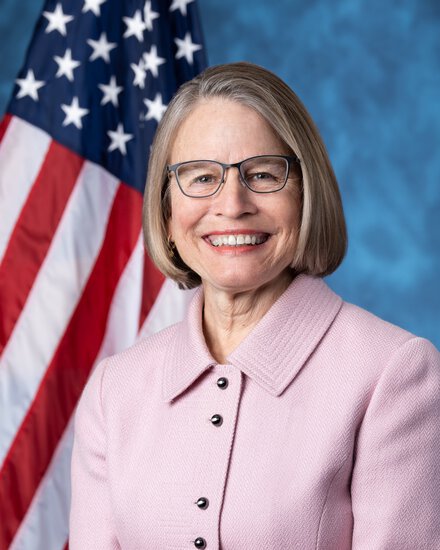
Rep. Mariannette Miller-Meeks
Sponsored bills
Maddy summaryThe Build the Wall Now Act requires the Department of Homeland Security to immediately resume construction of physical barriers (such as reinforced fencing and levee walls), tactical infrastructure (including access gates and lighting), and border surveillance technology along the US-Mexico border that was underway or planned before January 20, 2021. It prohibits canceling existing contracts for border barrier projects and mandates using funds appropriated for border construction since October 2016. The bill grants the Secretary of Homeland Security new authority to waive numerous environmental, historic preservation, and land management laws to expedite construction, including exemptions from the Clean Air Act, Endangered Species Act, and National Environmental Policy Act. It also prohibits using federal funds to implement or enforce Presidential Proclamation 10142 from January 2021.
Department of Veterans Affairs Telehealth Strategy Ac t This bill requires the Department of Veterans Affairs (VA) to submit a strategy to Congress for the telehealth services furnished by the Veterans Health Administration. Additionally, the VA must report on the utilization of end-user devices provided to veterans by the VA to facilitate telehealth during FY2023 and FY2024.
Better Interoperability for Devices Act of 2023 or the BID Act of 2023 This bill requires the Food and Drug Administration to report on the interoperability of medical devices, including associated standards, data, and costs.
Maddy summaryThis bill creates a new definition for "currently accepted medical use with severe restrictions" under the Controlled Substances Act, specifically for certain investigational drugs. It applies to drugs designated as breakthrough therapies by the FDA or authorized for expanded patient access under specific emergency protocols for serious diseases with no other treatment options. The definition excludes drugs that are already fully approved under standard FDA pathways or that lose their expanded access status. If a drug no longer meets these strict criteria, the Attorney General must reclassify it into the highest restriction category (Schedule I) within 90 days of notification from the Health Secretary. This changes how certain experimental treatments are classified under federal drug laws.
Maddy summaryThis bill authorizes a Congressional Gold Medal to honor the "Hello Girls" - female telephone operators who served in the Army Signal Corps during World War I. They provided critical battlefield communications in France (connecting 26 million calls), wore military uniforms, and faced combat risks, but were denied veteran benefits for 60 years due to being classified as civilian contractors. The medal recognizes their pioneering service, devotion, and the decades-long struggle to gain military recognition. The award follows similar recognition for other WWII women veterans and aims to correct the historical injustice they faced.
Maddy summaryThe PHIT Act of 2023 allows individuals and families to deduct certain fitness expenses as medical costs on their federal taxes. It covers gym memberships, fitness classes, and specific equipment used exclusively for exercise (like home workout gear), with a yearly limit of $1,000 ($2,000 for joint returns). Expenses for activities like golf, hunting, or non-exercise-focused facilities (e.g., private clubs) are excluded, and equipment must be used solely for physical activity. This directly affects taxpayers who pay for qualifying fitness programs, making these costs partially tax-deductible under revised IRS rules.
Maddy summaryThis bill prohibits foreign governments (specifically China, Iran, North Korea, and Russia) from acquiring or transferring interests in two types of U.S. land: agricultural land used for growing corn or soybeans destined for renewable energy production, and land designated for wind energy infrastructure. It amends the Defense Production Act to add a new restriction (subsection (r)) blocking such transactions involving these lands. The policy directly affects foreign entities from the listed countries seeking to invest in U.S. renewable energy agriculture or wind projects. This creates a clear legal barrier to foreign ownership of these specific energy-related assets without altering existing renewable energy incentives.
This joint resolution proposes a constitutional amendment that prohibits an individual who is not a U.S. citizen from voting in federal, state, or local elections for public office or voting on any ballot initiative or referendum held in the United States.
This resolution supports the designation of National FFA Week. It also (1) recognizes the important role of the National FFA Organization (Future Farmers of America) in developing the next generation of leaders who will change the world, and (2) celebrates the 90th anniversary of the iconic FFA jacket.