Credit Union Board Modernization Act This bill revises the frequency of meetings required to be held by a credit union's board of directors. Specifically, the bill requires monthly meetings for new credit unions during their first five years and for credit unions with a low soundness rating. All other credit unions must hold at least six meetings annually, with at least one meeting held during each fiscal quarter. Currently, all credit union boards must meet at least once a month.
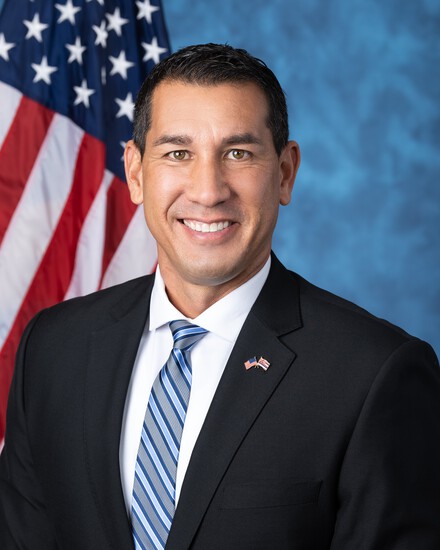
Rep. Kaiali’i Kahele
Sponsored bills
This bill designates the facility of the United States Postal Service located at 3900 Crown Road Southwest in Atlanta, Georgia, as the John R. Lewis Post Office Building.
This resolution recognizes the 15th anniversary of the establishment of Asian American and Native American Pacific Islander-serving institutions and supports the designation of an Asian American and Native American Pacific Islander-serving institutions Week.
Reduce and Eliminate Mental Health Outpatient Veteran Copays Act or the REMOVE Copays Act This bill prohibits the Department of Veterans Affairs from imposing or collecting any co-payment for a veteran's first three mental health outpatient care visits in a calendar year. However, such prohibition must not apply with respect to the imposition or collection of copayments for medications.
National Center for the Advancement of Aviation Act of 202 2 This bill establishes the National Center for the Advancement of Aviation to (1) develop a skilled and robust U.S. aviation and aerospace workforce; (2) serve as a national independent forum to support collaboration and cooperation between aviation and aerospace stakeholders regarding the advancement of the U.S. aviation and aerospace workforce; and (3) serve as a repository for research conducted by institutions of higher education, research institutions, or other stakeholders regarding the aviation and aerospace workforce, or related technical and skill development. The center must perform the following duties improve access to aviation and aerospace education and related skills training to help grow the U.S. aviation and aerospace workforce; support Armed Forces personnel and veterans seeking to transition to a career in civil aviation or an aerospace-related field through outreach, training, apprenticeships, or other means; and amplify and support the research and development efforts conducted as part of the National Aviation Research Plan and work done at the Federal Aviation Administration Technical Centers regarding the aviation and aerospace workforce. Additionally, the center may issue grants to certain entities to create, develop, deliver, or update middle and high school aviation curricula and aviation curricula used at institutions of higher education, secondary educations institutions, or by technical training and vocational schools; support the professional development of educators using the curricula; establish new education programs that teach technical skills used in aviation maintenance; establish scholarships, internships or apprenticeships for individuals pursuing employment in the aviation maintenance industry; support outreach about educational opportunities and careers in the aviation maintenance industry; and support the transition to career in aviation maintenance, including for members of the Armed Forces.

Longshore and Harbor Workers' COVID-19 Compensation Act of 2022 This bill establishes a conclusive presumption that certain workers diagnosed with COVID-19 are entitled to workers' compensation benefits under the Longshore and Harbor Workers' Compensation Act (LHWCA). It also provides funding to reimburse employers for costs associated with LHWCA benefits related to COVID-19. The LHWCA provides for medical, disability, and survivor benefits for specified private-sector maritime workers. The presumption applies to workers who were diagnosed with COVID-19 between January 27, 2020, and January 27, 2024, and who, during the incubation period, faced a risk of COVID-19 exposure while carrying out job duties. In addition, the bill establishes and provides funding for the Longshore COVID-19 Fund to reimburse employers for costs related to such COVID-19 claims. To be reimbursed, employers must comply with applicable safety and health guidance to prevent occupational exposure to COVID-19.
Savings for Servicemembers Act This bill modifies the tax deduction for the travel expenses of members of a reserve component of the Armed Forces to decrease the distance from home requirement from 100 miles to 50 miles.
Maximizing Outcomes through Better Investments in Lifesaving Equipment for (MOBILE) Health Care Act This bill allows a health center that currently receives funding through a Health Resources & Services Administration Health Center Program grant to use a New Access Point grant to set up a mobile unit regardless of whether the health center also establishes a permanent health care delivery site. New Access Point grants help health centers establish new delivery sites to provide comprehensive primary care to medically underserved populations. Under current law, health centers may only use the grants to set up a mobile unit if they also establish a permanent site.
National Liberty Memorial Preservation Act This bill extends through FY2027 the authority of the National Mall Liberty Fund D.C. to establish a memorial on eligible federal land to honor the slaves and free Black persons who served as soldiers and sailors or provided civilian assistance during the American Revolution.
Break the Cycle of Violence Act This bill establishes federal grant programs and related entities to support violence intervention initiatives. Specifically, the bill directs the Department of Health and Human Services (HHS) to award grants for coordinated community violence intervention initiatives in communities disproportionately impacted by homicides and community violence. HHS must also establish several related entities, including an Office of Community Violence Intervention to administer programs and activities related to violence intervention; the Community Violence Intervention Advisory Committee to advise and assist the office and HHS; and the National Community Violence Response Center to provide training and technical assistance, coordinate research, and develop data collection policies. Additionally, the bill directs the Department of Labor to award grants for job training and workforce programs in communities disproportionately affected by gun violence to connect youth ages 16 to 24 to in-demand occupations.