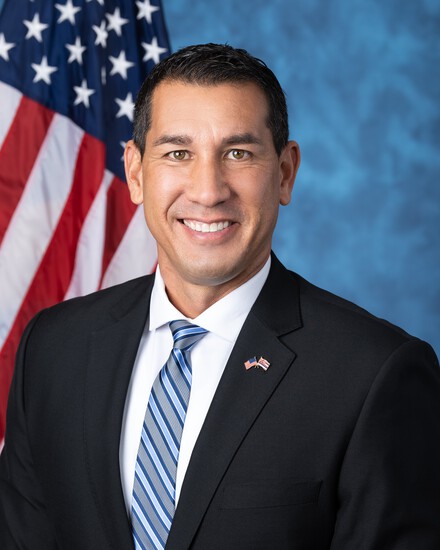
Photo of Kaiali’i Kahele
D United States House · District 2 · Hawaii

Rep. Kaiali’i Kahele

Compare
Total votes
958
all sessions
Attendance
99%
8 missed
Near the chamber average
With party
99%
of cast votes
Higher than 82% of chamber peers
Bipartisan score
0%
crosses aisle rarely
Lower than 83% of chamber peers
Sponsored
500
bills & resolutions
Near the chamber average
Committees
0
assignments
500 bills and resolutions

Sponsored bills

Total
500
Primary
17
Co-sponsor
483
This page
500
matching current filters
Co-sponsor HR 1539
In committee · United States House · Co-sponsor
PROTECT Act

Providing Rational Options Toward the Elimination of Catastrophic Terrorism Act of 2021 or the PROTECT Act This bill directs (1) the Department of Homeland Security (DHS) to develop and provide guidance on terrorism preparedness and response to assist in the development of plans for addressing active shooter and mass casualty incidents, including in facilities identified by DHS as vulnerable targets; and (2) the Federal Emergency Management Agency (FEMA) to consider the threat from active shooters in allocating grant funds under the Urban Area Security Initiative and the State Homeland Security Grant Program.

In committee Mar 4, 2021 1 co-sponsor
Co-sponsor HR 1541
In committee · United States House · Co-sponsor
PREVENT Act of 2021

Preventing Radical Extremist's Violent Endeavors Now and Tomorrow Act of 2021 or the PREVENT Act of 2021 This bill expands the duties of the Office for State and Local Government Coordination in the Department of Homeland Security to include, for purposes of countering violent extremist threats (1) providing training from specially trained clinical social workers, psychologists, religious and community leaders, and law enforcement personnel to assist local efforts in securing the homeland; and (2) in coordination with the Federal Bureau of Investigation, providing to state and local governments specialists, analysts, and agents trained to counter terrorism and white nationalism to assist local efforts at responding to such threats.

In committee Mar 4, 2021 1 co-sponsor
Co-sponsor HR 276
In committee · United States House · Co-sponsor
Congressional Oversight of Unjust Policing Act

Congressional Oversight of Unjust Policing Act This bill establishes the U.S. Commission on Unjust Policing to investigate law enforcement activities and decisions related to the security breach at the U.S. Capitol on January 6, 2021. Specifically, the commission must investigate decisions made by leadership of the U.S. Capitol Police (USCP), the Federal Bureau of Investigation, the U.S. Secret Service, and the Department of Homeland Security leading up to and during the siege at the Capitol, including an assessment of whether conscious and unconscious bias was a factor in the miscalculation of the risk posed by protesters to Members of Congress and their staff. The commission must also investigate whether current USCP officers have ties to white supremacist and other extremist groups, movements, and organizing efforts, and whether any USCP officers neglected their duty and colluded with protestors or other law enforcement entities. Further, the commission must recommend specific measures and reforms related to realigning (1) USCP priorities and practice to address disparate use of force and surveillance targets in and around the Capitol; and (2) USCP recruitment, hiring, and retention policies and practices to address conscious and unconscious biases.

In committee Mar 4, 2021 1 co-sponsor
Co-sponsor HR 151
In committee · United States House · Co-sponsor
Preventing Future Pandemics Act of 2021

Preventing Future Pandemics Act of 2021 This bill establishes measures to address global public health risks posed by wildlife markets, which are commercial markets that sell or slaughter wildlife for human consumption as food or medicine in communities where alternative nutritional or protein sources are available. Specifically, the bill prohibits importing, exporting, purchasing, or selling live wild animals in the United States for human consumption as food or medicine. The Department of the Interior must hire, train, and deploy at least 50 new U.S. Fish and Wildlife Service law enforcement attachés around the world, and the U.S. Agency for International Development must increase specified activities to address the threats and causes of zoonotic (animal-to-human transmission) disease outbreaks. Additionally, the United States must work with other United Nations member states to urge a global ban on commercial wildlife markets and enforcement of laws to end wildlife trafficking. Further, the President may impose sanctions against a foreign country or foreign nationals that the Department of State has determined are taking certain actions that enable or facilitate commercial wildlife markets. Among other reports required by the bill, the National Academies of Sciences, Engineering, and Medicine must conduct a study and submit a report that includes an evaluation of (1) the impact that consumption of terrestrial wildlife as food or medicine has on the transmission of novel viral and other pathogens, (2) the role of consuming terrestrial wildlife as food or medicine in the transmission of microbes from animals to humans, and (3) the conditions at live wildlife markets that lead to this transmission.


In committee Mar 4, 2021 1 co-sponsor
Co-sponsor HR 1581
In committee · United States House · Co-sponsor
Build America’s Libraries Act

Build America's Libraries Act This bill establishes and provides funds through FY2024 for the Build America's Libraries Fund, from which the Institute of Museum and Library Services (IMLS) must allocate funding to states and, through them, need-based grants to libraries to make long-term improvements to library facilities. The IMLS must also award grants to Indian tribes and organizations that primarily serve and represent Native Hawaiians. Specifically, the bill requires each state that receives an allocation, and each library that receives a grant, to carry out certain activities to improve library facilities. These activities include constructing and renovating library facilities, investing in infrastructure projects to improve internet access and connectivity, improving indoor air quality, and making facilities accessible to individuals with disabilities. The bill also outlines administrative and oversight provisions, including by requiring library projects to use iron and steel products that are produced in the United States.

In committee Mar 3, 2021 1 co-sponsor
Co-sponsor HR 869
In committee · United States House · Co-sponsor
RISE Act of 2021

Research Investment to Spark the Economy Act of 2021 or the RISE Act of 2021 This bill authorizes the Departments of Agriculture, Commerce, Defense, Education, Energy, the Interior, Health and Human Services, and Transportation, National Aeronautics and Space Administration (NASA), National Science Foundation, and Environmental Protection Agency to provide support for research regarding COVID-19 (i.e., coronavirus disease 2019) or research disrupted by the COVID-19 pandemic. Support may be used to provide supplemental funding to extend the duration of a grant to a research institution, national laboratory, or individual that was awarded prior to the enactment of this bill, or to expand the purposes of such a grant as specified; issue awards to research the effects of the current pandemic and potential future pandemics; and provide flexibility on awards to account for facility closures or other limitations during the COVID-19 public health emergency. Agencies must provide the support as rapidly as possible. Provided funds shall remain available through FY2021.

In committee Mar 3, 2021 1 co-sponsor
Co-sponsor HR 1459
In committee · United States House · Co-sponsor
Ultra-Millionaire Tax Act of 2021

Ultra-Millionaire Tax Act of 2021 This bill imposes a tax on the net value of all taxable assets of the taxpayer on the last day of any calendar year (wealth tax). The amount of such tax shall be equal to the sum of 2% of the amount of taxpayer assets exceeding $50 million but not in excess of $1 billion, plus the applicable percentage (3% or 6% if certain legislation is in effect) of the net value of such taxable assets exceeding $1 billion. There is no tax on the net value of taxable assets not in excess of $50 million. The bill defines net value of all taxable assets as the value of all property of the taxpayer, real or personal, tangible or intangible, wherever situated reduced by any debts (including secured debts) owed by the taxpayer. The definition excludes property with a value of $50,000 or less, tangible personal property, certain property used in a trade or business, and collectibles. The Internal Revenue Service (IRS) must audit annually not less than 30% of taxpayers required to pay the tax imposed by this bill. The bill provides funding to the IRS for FY2022-FY2032 for enforcement of the requirements of this bill, taxpayer services, and for business system modernization.

In committee Mar 1, 2021 1 co-sponsor
Co-sponsor HR 97
In committee · United States House · Co-sponsor
Federal Death Penalty Abolition Act of 2021

Federal Death Penalty Abolition Act of 2021 This bill prohibits the imposition of a death penalty sentence for a violation of federal law. It eliminates statutory authority for the death penalty as a sentencing option for federal offenses. It also requires a person who was sentenced to death before enactment of this bill to be resentenced.

In committee Mar 1, 2021 1 co-sponsor
Co-sponsor HR 1344
In committee Feb 26, 2021 1 co-sponsor
Co-sponsor HR 1332
In committee · United States House · Co-sponsor
Telehealth Modernization Act

Telehealth Modernization Act This bill modifies requirements relating to coverage of telehealth services under Medicare. Specifically, the bill extends certain flexibilities that were initially authorized during the public health emergency relating to COVID-19 (i.e., coronavirus disease 2019). Among other things, the bill allows (1) rural health clinics and federally qualified health centers to serve as the distant site (i.e., the location of the health care practitioner); (2) the home of a beneficiary to serve as the originating site (i.e., the location of the beneficiary) for all services (rather than for only certain services); and (3) all types of practitioners to furnish telehealth services, as determined by the Centers for Medicare & Medicaid Services.

In committee Feb 26, 2021 1 co-sponsor
Showing 441 to 450 of 500 bills
Previous 1 … 44 45 46 … 50 Next