

This resolution expresses the sense of Congress that legislation and policies that address poverty, low wages, and related issues should be prioritized. Among other priorities, the resolution commits to updating the poverty measure; raising the minimum wage; expanding unemployment insurance; ensuring that all workers receive paid family and medical leave; implementing a federal jobs guarantee; guaranteeing safe and quality housing, a right to water, high-quality public education, and quality health care for all; enacting relief from household and personal debt that cannot be paid; ensuring that state, local, and tribal governments are adequately funded; expanding and protecting the right to vote; eliminating persistent racial inequities; protecting the constitutional rights of assembly and free speech; enacting comprehensive and just immigration reform; ensuring all the rights of Native and Indigenous peoples and tribal nations; transforming the economy into a green renewable energy economy; demilitarizing U.S. foreign policy, borders, and policing; enacting fair taxes on corporations and the wealthy; using deficit spending to meet pressing needs; and encouraging states and cities to enact policies that follow the direction provided by this resolution.
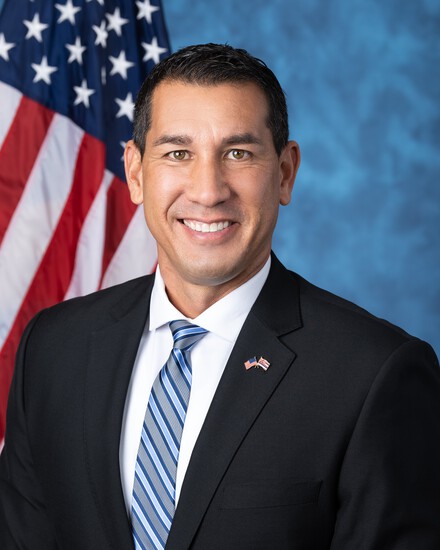
Rep. Kaiali’i Kahele
Sponsored bills
Healthcare for Our Troops Act This bill addresses TRICARE Reserve Select coverage and eligibility for Selected Reserve members of the Ready Reserve and their families. Among other elements, the bill provides eligibility for TRICARE Reserve Select to Selected Reserve members of the Ready Reserve who are eligible for or enrolled in the Federal Employees Health Benefits Program.
Gold Star Children Act This bill broadens the categories of individuals eligible for veterans' preference in the civil service. Specifically, it makes children of certain permanently disabled or deceased veterans eligible for veterans' preference treatment in the federal civil service.
Peace on the Korean Peninsula Act This bill requires the Department of State to report to Congress on various issues relating to North Korea. Specifically, the State Department must report to Congress a review of the restrictions on travel by U.S. nationals to North Korea, including whether such restrictions should be adjusted to allow travel to North Korea to attend a commemoration of a relative. The State Department must also report to Congress a clear roadmap for achieving permanent peace on the Korean Peninsula.
Diversifying by Investing in Educators and Students to Improve Outcomes For Youth Act or the Diversify Act This bill revises the Teacher Education Assistance for College and Higher Education (TEACH) grant program. The TEACH program awards grants to undergraduate and graduate students who commit to teaching in a high-need field and in an elementary or secondary school that serves low-income students. First, the bill raises the maximum amount for TEACH grants. Second, the bill allows TEACH grants to cover the full cost of attendance. Currently, these grants may be used only for tuition, fees, and on-campus housing. The bill allows teaching in a high-need early childhood education program to count toward service requirements for the program. Next, the bill eliminates the process for converting a TEACH grant to a loan if a recipient does not complete the requirements of the program. Further, the bill prohibits the Department of Education (ED) from instituting or creating a monetary penalty for failure or refusal to complete the service requirement. In addition, the bill requires ED to send an electronic certificate to grant recipients who have completed their service requirement. The bill also exempts the TEACH program from sequestration, which is a process of automatic, usually across-the-board spending reductions under which budgetary resources are permanently cancelled to enforce specific budget policy goals.
Northern Mariana Islands Entrepreneurship Act of 2021 This bill expands eligibility for the Microloan Program of the Small Business Administration to include the Northern Mariana Islands.
This resolution condemns the acts of gun violence that led to the tragic loss of eight lives in Georgia on March 16, 2021.
This resolution recognizes the forthcoming centennial of the Tulsa Race Massacre of 1921. The resolution acknowledges the historical significance of this event as one of the largest single instances of state-sanctioned violence against Black people in American history; honors the lives and legacies of the estimated 300 Black individuals who were killed during the massacre and the nearly 9,000 who were left homeless and penniless; condemns efforts to cover up the truth and shield the white community, especially government officials, from accountability; condemns the continued legacy of racism and white supremacy against Black people in the United States, particularly in the form of police brutality; encourages education about the massacre, the history of white supremacy that fueled the massacre, and subsequent attempts to deny or cover up the massacre, in all elementary and secondary education settings and in institutions of higher education; and recognizes the commitment of Congress to acknowledge and learn from the history of racism and racial violence to reverse the legacy of white supremacy and fight for racial justice.
Medicare for All Act of 2021 This bill establishes a national health insurance program that is administered by the Department of Health and Human Services (HHS). Among other requirements, the program must (1) cover all U.S. residents; (2) provide for automatic enrollment of individuals upon birth or residency in the United States; and (3) cover items and services that are medically necessary or appropriate to maintain health or to diagnose, treat, or rehabilitate a health condition, including hospital services, prescription drugs, mental health and substance abuse treatment, dental and vision services, and long-term care. The bill prohibits cost-sharing (e.g., deductibles, coinsurance, and copayments) and other charges for covered services. Additionally, private health insurers and employers may only offer coverage that is supplemental to, and not duplicative of, benefits provided under the program. Health insurance exchanges and specified federal health programs terminate upon program implementation. However, the program does not affect coverage provided through the Department of Veterans Affairs or the Indian Health Service. The bill also establishes a series of implementing provisions relating to (1) health care provider participation; (2) HHS administration; and (3) payments and costs, including the requirement that HHS negotiate prices for prescription drugs. Individuals who are age 18 or younger, age 55 or older, or already enrolled in Medicare may enroll in the program starting one year after enactment of this bill; other individuals may buy into the program at this time. The program must be fully implemented two years after enactment.
Citizenship for Essential Workers Act This bill establishes a mechanism for eligible aliens who worked as essential workers during the declared COVID-19 (i.e., coronavirus disease 2019) public health emergency to apply for and obtain permanent resident status. The bill also narrows certain grounds for deportability and inadmissibility. To be eligible for permanent resident status under this bill, an alien must have earned income at any point during the COVID-19 emergency period doing work deemed essential by the Department of Homeland Security (DHS) or a state or local government. An alien may also be eligible if that alien is a parent, spouse, or child of (1) an eligible alien who died from COVID-19, or (2) a member of the Armed Forces. Certain aliens shall be ineligible, such as an alien who was a refugee on January 1, 2021. To obtain permanent resident status under this bill, an applying alien must satisfy additional requirements, including by passing a background check. Furthermore, the bill repeals provisions providing for three-year bars and permanent bars to admission into the United States. (Generally, these bars apply to aliens who were previously removed or unlawfully present in the United States.) The bill also narrows the scope of certain crime-based grounds for inadmissibility or deportability, such as by redefining the term conviction to exclude expunged convictions. The Department of Justice or DHS may waive certain grounds of inadmissibility or deportability (1) for humanitarian purposes, (2) to ensure family unity, or (3) for the public interest.