

Radiation Exposure Compensation Act Amendments of 2021 This bill expands two programs that compensate individuals who were exposed to radiation during certain nuclear testing or uranium mining and subsequently developed medical conditions, including cancers. First, the bill expands and extends a program that compensates individuals who were exposed to radiation from atmospheric nuclear testing or other sources and subsequently developed specified cancers. Under current law, this program compensates individuals who were present in a designated geographic area during a period of nuclear testing and certain individuals employed in uranium mining. The bill expands the designated areas to include Colorado, Idaho, Montana, New Mexico, and Guam and additional areas in Arizona, Nevada, and Utah; makes more individuals who worked in uranium mining eligible for the program; increases the amount of compensation awarded to and provides medical benefits for eligible claimants; and extends for 19 years following the bill's enactment the fund that supports this program and the statute of limitations for filing claims (currently, the program terminates on July 10, 2022). Second, the bill makes certain individuals employed in uranium mines or mills eligible for a program that compensates workers, including Department of Energy employees and contractors, for illnesses caused by occupational exposure to radiation and hazardous substances during development and testing of the nation's nuclear weapons stockpile. The bill also establishes a grant program in the National Institute of Environmental Health Sciences for institutions of higher education to study the epidemiological impacts of uranium mining and milling among individuals without occupational exposure.
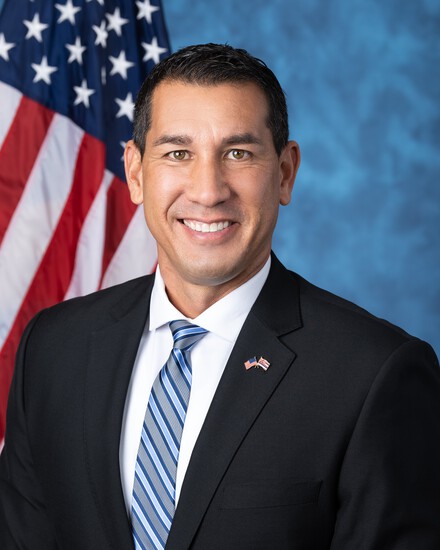
Rep. Kaiali’i Kahele
Sponsored bills
Allied Health Workforce Diversity Act of 2021 This bill allows the Department of Health and Human Services to provide grants to accredited education programs to increase diversity in the physical therapy, occupational therapy, respiratory therapy, audiology, and speech-language pathology professions. Grants may be used to provide scholarships or to support recruitment and retention of students from underrepresented groups.
Expanding Access to Fertility Care for Servicemembers and Dependents Act This bill entitles members of the armed forces and their dependents (including the reserve components) who are performing active service and are entitled to medical care under TRICARE to assisted reproductive technology services (e.g., in vitro fertilization). Such services must be provided, regardless of (1) whether the assisted reproductive technology service is related to the treatment of a service-connected disability; (2) whether the member has a serious illness or injury resulting from a service-connected disability; (3) the ability of the member or dependent to conceive a pregnancy or carry a pregnancy to term; or (4) the sex, gender, sexual orientation, or marital status of the member or dependent.
Strength in Diversity Act of 2021 This bill establishes a program through which the Department of Education may award planning and implementation grants to specified educational agencies (e.g., local educational agencies) to improve diversity and reduce or eliminate racial or socioeconomic isolation in publicly funded early childhood education programs, public elementary schools, or public secondary schools.
Aviation Noise and Emissions Mitigation Act This bill requires the Environmental Protection Agency to establish pilot grant programs to measure and mitigate aircraft and airport noise and emissions (e.g., greenhouse gases and toxic pollutants) in communities near airports and air flight pathways.
This bill requires the Department of Veterans Affairs (VA) to establish the Advisory Committee on United States Outlying Areas and Freely Associated States to provide advice and guidance to the VA on matters relating to veterans residing in American Samoa, Guam, Puerto Rico, the Commonwealth of the Northern Mariana Islands, the U.S. Virgin Islands, the Federated States of Micronesia, the Republic of the Marshall Islands, and the Republic of Palau. Among other duties, the committee must advise the VA on how to improve its programs and services to better serve veterans living in the listed areas.
Access to Birth Control Act This bill requires pharmacies to comply with certain rules related to ensuring access to contraceptives. Specifically, pharmacies must provide without delay a customer with any contraceptive or related medication that is in stock. If the contraceptive is not in stock, the pharmacy must immediately inform the customer and either order the contraceptive or refer the customer to a pharmacy that has it in stock. Laws in some states provide pharmacists with the right to refuse to dispense contraceptive-related drugs on religious or conscience grounds. Pharmacies may refuse to provide a contraceptive to a customer (1) if the customer lacks a valid prescription for a prescription contraceptive or is unable to pay for the contraceptive, or (2) based on a pharmacy employee's professional clinical judgment. The bill also establishes a private cause of action and civil monetary penalties for violations of the bill.
This resolution (1) censures Representative Paul Gosar for posting a certain video on his social media accounts that depicts violence against Representative Alexandria Ocasio-Cortez and President Joseph R. Biden , and (2) removes him from the Committee on Natural Resources and the Committee on Oversight and Reform.
Traveling Exotic Animal and Public Safety Protection Act of 2021 This bill prohibits the use of exotic or wild animals in performances of a traveling animal act, such as a circus, carnival, or parade. The prohibition does not apply to zoos, aquariums, research facilities, wildlife sanctuaries, and other entities. The prohibition also does not apply to domestic animals or farm animals.
Protecting our Veterans' Memories Act This bill requires the Department of Veterans Affairs (VA) to pay a state, state agency, or political subdivision of a state $525 as a plot or internment allowance for spouses and children of veterans who are buried in a cemetery owned by the state, agency, or political subdivision. Specifically, the bill requires the VA to pay a plot or internment allowance for spouses, surviving spouses (including if they have remarried), or minor children (those under 21 or under 23 if they are attending an approved educational institution). The VA may pay the allowance for unmarried adult children of certain veterans.