Native American Language Resource Center Act of 2021 This bill authorizes the Department of Education to make a grant to or enter into a contract with an eligible entity (e.g., an institution of higher education) to establish, operate, and staff a Native American language resource and training center. The center must serve as a resource to improve the capacity to teach and learn Native American languages.
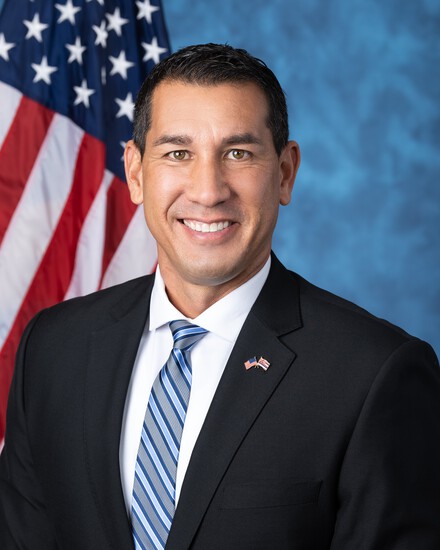
Rep. Kaiali’i Kahele
Sponsored bills
Community Services Block Grant Modernization Act of 2022 This bill reauthorizes the Community Services Block Grant program through FY2032 and otherwise modifies the program. The program supports various antipoverty activities, primarily through formula-based allotments to states, Indian tribes, and territories. In particular, the bill makes changes to the program's administration and leadership; performance measurement; and allotments to states and territories. The bill also expands eligibility for services and activities funded by the program to 200% of the federal poverty line (FPL). Under current law, eligibility is generally set at the FPL.
Rights for the Transportation Security Administration Workforce Act of 2022 or the Rights for the TSA Workforce Act of 2022 This bill modifies the workplace rights, protections, and benefits applicable to Transportation Security Administration (TSA) personnel. Specifically, the bill by December 31, 2022, eliminates personnel authorities of the Department of Homeland Security (DHS) and the Department of Transportation governing the conditions of employment for TSA employees, thus making TSA employees subject to the personnel management system applicable to other federal employees; sets forth transition rules that protect the pay rates, leave rights, and other rights of TSA employees; and requires DHS to consult with the exclusive representative of TSA screening employees to carry out the conversion of those positions. The bill also permits the TSA to consult with organizations representing federal air marshals to address concerns, including mental health and suicide rates; directs the TSA to ensure its employees are provided proper guidance regarding prevention and protections against COVID-19; requires the TSA to provide a one-time bonus payment of $3,000 to each TSA employee carrying out duties that require substantial contact with the public during the COVID-19 national emergency; and requires the Government Accountability Office to report on implementation of the bill, TSA recruitment efforts, and specified TSA personnel policies.
Federal Firefighters Fairness Act of 2022 This bill makes it easier for federally employed firefighters who contract certain illnesses to qualify for federal workers' compensation. Specifically, the bill provides that chronic obstructive pulmonary disease, mesothelioma, and specified other cancers of those employed in fire protection activities for at least five years are presumed to be proximately caused by such employment for purposes of a disability or death claim under the federal workers' compensation program. This presumption also applies to federal employees employed in fire protection activities for at least five years who experience a sudden cardiac event or stroke within 24 hours of performing a fire protection activity. The bill also requires the Department of Labor to conduct a review to determine whether breast cancer, gynecological cancer, and rhabdomyolysis should be included under the presumption and to conduct periodic reviews to determine whether other diseases should be included. In addition, a person may petition Labor to include another disease under the presumption. An employee in fire protection activities is a firefighter, paramedic, emergency medical technician, rescue worker, ambulance personnel, or hazardous material worker who (1) is trained in fire suppression; (2) has the legal authority and responsibility to engage in fire suppression; (3) is engaged in the prevention, control, and extinguishing of fires or response to emergency situations where life, property, or the environment is at risk, including the prevention, control, suppression, or management of wildland fires; and (4) performs such activities as a primary responsibility.

Transatlantic Telecommunications Security Act This bill directs the Department of State and other federal agencies to help certain countries improve the security of their telecommunications networks and addresses related issues. Assistance provided under this bill shall be available to projects in a country that falls below certain gross domestic product per capita thresholds and is (1) a NATO member state that shares a border with Russia, or (2) a European country that has not participated in or aided Russia's invasion of Ukraine. A project located in such a country shall be eligible for assistance if the project (1) improves telecommunications networks; (2) is inclusive, transparent, economically viable, sustainable, supplied only with secure equipment and services, and compliant with international standards and laws; and (3) does not use equipment or services from China or Russia or replaces such equipment or services. To support eligible projects, the State Department shall provide diplomatic and political support and shall also encourage international financial institutions to provide investment support. The U.S. Trade and Development Agency, the U.S. International Development Finance Corporation, and other specified federal agencies shall also provide project support, such as feasibility studies and finance-related support, as necessary. The State Department must also appoint, from among its existing personnel, an International Telecommunication Union Security Campaign Director. The director must, among other duties, lead efforts to promote candidates for elections at the International Telecommunication Union who will support and defend democratic values, internet freedom, and telecommunication security.
Maddy summaryHRES 1098 designates May 10, 2022, as National Asian American, Native Hawaiian, and Pacific Islander (AANHPI) Mental Health Day. The resolution symbolically recognizes the mental health challenges faced by the AANHPI community, including low service utilization rates and high suicide rates among youth. It encourages federal, state, and local health agencies to improve mental health awareness and culturally appropriate care for AANHPI communities. The resolution does not create new laws or funding but serves as a formal acknowledgment of these issues.
This resolution extends collective bargaining rights prescribed in the Congressional Accountability Act of 1995 to employees of the House of Representatives.
Aviator Cancer Examination Study Act or the ACES Act This bill requires the Department of Veterans Affairs to seek to enter into an agreement with the National Academies of Sciences, Engineering, and Medicine to study the incidence and mortality of cancer among individuals who served in the regular or reserve components of the Navy, Air Force, or Marine Corps as air crew members of a fixed-wing aircraft or personnel supporting generation of such an aircraft.
Don Young Veterans Advancing Conservation Act This bill requires the National Oceanic and Atmospheric Administration (NOAA) to establish the Veterans Advancing Conservation Grant Program to award grants, on a competitive basis, to facilitate the training and employment of veterans for marine and coastal conservation activities (e.g., coral restoration and rehabilitation). NOAA must coordinate with the Department of the Interior and the Department of Veterans Affairs to implement the program.
This resolution recognizes the significance of Asian/Pacific American Heritage Month as an important time to celebrate the contributions of Asian Americans, Native Hawaiians, and Pacific Islanders to the history of the United States. The resolution also recognizes that the Asian American, Native Hawaiian, and Pacific Islander communities enhance the rich diversity of the United States.